Ham Radio Simplex vs Repeater: When to Use Each and How to Make a Direct Contact
Ham Radio Simplex Vs Repeater

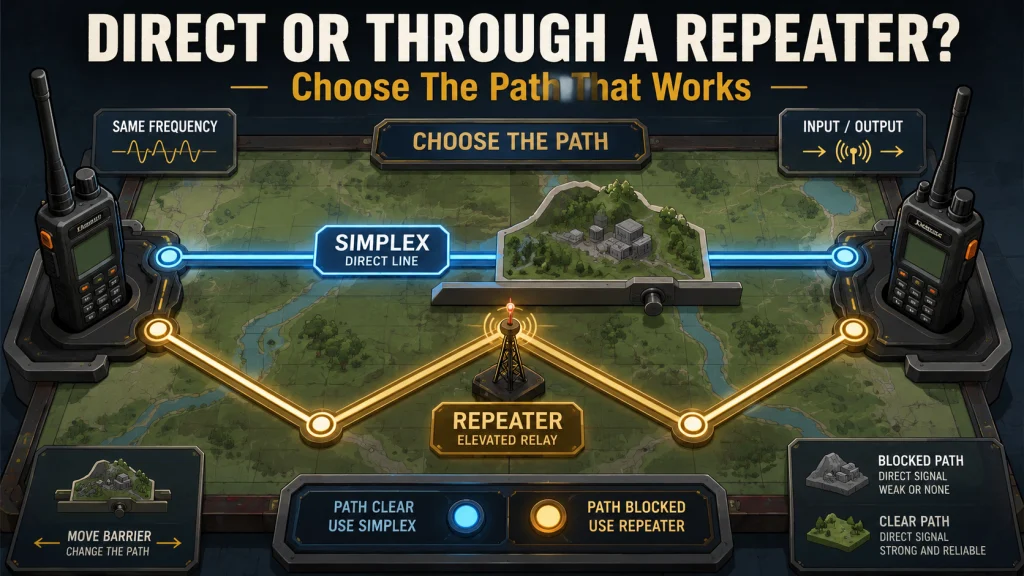
A repeater relays your signal through a well-positioned station, while simplex lets two amateur stations communicate directly on one frequency. Use a repeater when its coverage, activity, or elevation solves a path problem; use simplex when the stations can already hear each other, need a direct local channel, or want to move an extended conversation … Read more

Best Mobile Ham Radio Antenna: Why This Decision Matters More Than Which Radio You Buy

Best Mobile Ham Radio Antenna

The best mobile ham radio antenna is the one whose radiator, mount, vehicle surface, feedline, and clearance limits work as one system. A well-placed, properly matched antenna can improve usable VHF/UHF performance more than moving between two otherwise similar mobile radios. Start with the vehicle and operating route, then choose the mount, antenna length, band … Read more

Ham Radio Amateur Extra License: What It Adds, Who Actually Needs It, and Whether It Is Worth the Effort

Ham Radio Amateur Extra License

The Amateur Extra license opens every remaining FCC amateur privilege. Its clearest practical value is additional room in several HF bands, plus eligibility for an accredited Volunteer Examiner to administer every current examination element. It does not increase transmitter power, improve propagation, or repair a weak station. For many operators, General already supports every voice, … Read more

What Do You Need to Start Ham Radio? The Minimum Gear List for a New Technician

What Do You Need To Start Ham Radio

A new Technician needs four connected pieces to make a first local contact: a VHF/UHF handheld, a workable programming method, an antenna, and one verified local repeater. The included antenna is usually enough for the first coverage test, while a programming cable or supported wireless method may be the missing item that turns an unopened … Read more

Ham Radio vs Scanner and Shortwave: Choose Transmitting, Monitoring, or Broadcast Listening

Ham Radio Vs Scanner And Shortwave

Choose a ham transceiver when you want licensed two-way amateur communication, a scanner when you want fast monitoring of compatible local channelized systems, and a shortwave receiver when your priority is international, amateur, broadcast, and other HF listening. Receive coverage printed on a radio does not prove that it can follow trunked systems, decode a … Read more

Ham Radio Nets for Beginners: How to Find, Listen to, and Check Into Your First Net

Ham Radio Nets For Beginners

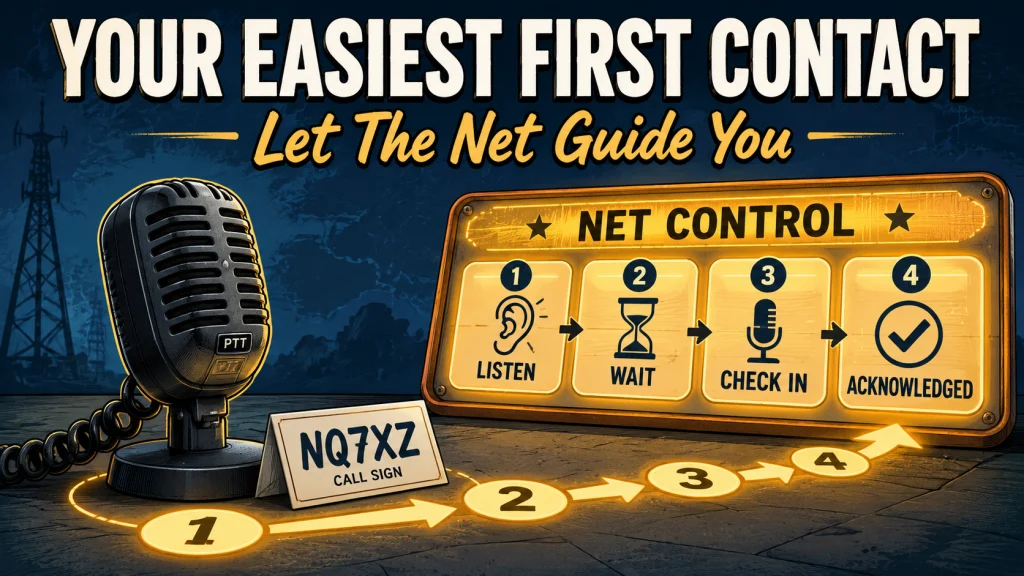
A scheduled voice net is one of the easiest ways to make a first structured contact because the time, frequency, listener, and check-in process are already defined. Start by finding a current local net, listening through its preamble, and following the net control station’s instructions instead of relying on a universal script. You may be … Read more

Mobile Ham Radio Power Output: What 25W, 50W, and 65W Actually Change in Practice

Mobile Ham Radio Power Output

Moving from 25W to 50W doubles transmitter power, but it adds only about 3 dB to the outgoing signal, not twice the range. A 65W setting adds about 4.15 dB over 25W and only about 1.14 dB over 50W, so the practical difference depends on the antenna system, terrain, feedline loss, supply voltage, receiver conditions, … Read more

How to Study for the Ham Radio General License: What Changes After Technician

How To Study For Ham Radio General License

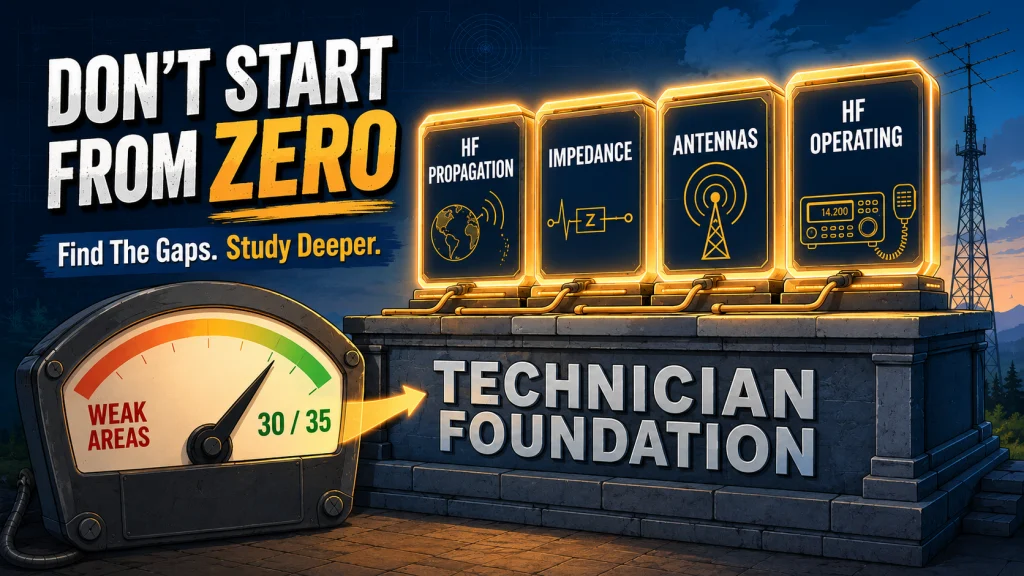
The General exam uses the same 35-question format as Technician, and 26 correct answers are required to pass, but the study task is different. As a Technician, you can reuse your foundation in regulations, operating practice, safety, antennas, and basic electronics while spending most of your effort on deeper HF propagation, HF operating, impedance, circuits, … Read more

How Long Does It Take to Get a Ham Radio License? The Real Timeline From Study to Call Sign

How Long Does It Take To Get A Ham Radio License

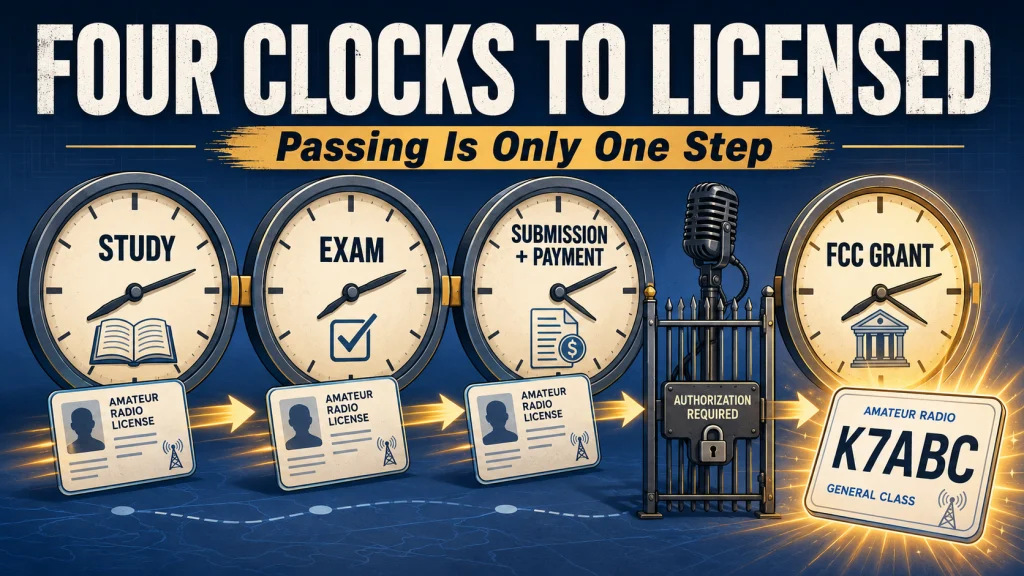
A new US Technician license may take a few well-aligned days or several weeks, with study readiness and exam availability usually accounting for most of the calendar. The current 2026-2030 Technician pool contains 409 questions, while the exam draws 35; after passing, a new applicant must pay the $35 FCC application fee and wait for … Read more

Ham Radio vs Smartphone Satellite SOS: Built-In Emergency Feature or Full Radio Service?

Ham Radio Vs Smartphone Satellite Sos

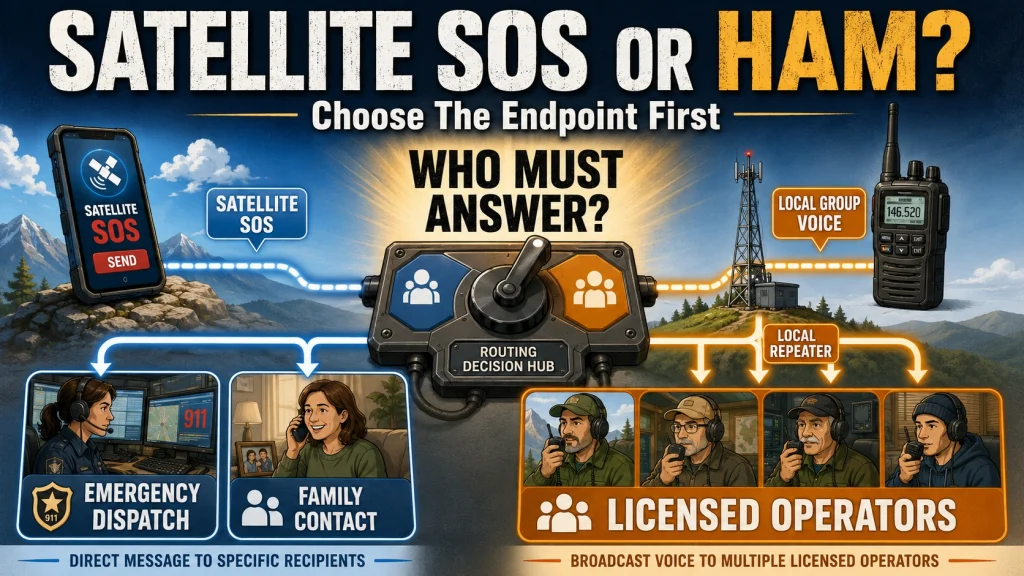
A supported smartphone satellite feature can add a valuable emergency or messaging path when cellular and Wi-Fi service disappear, but it does not replace every job ham radio can perform. The right comparison depends on the exact phone feature, who must receive the message, where the service works, and whether you need private contact, local … Read more

Ham Radio Repeater Etiquette: Rules, Conventions, and Local Variations

Ham Radio Repeater Etiquette

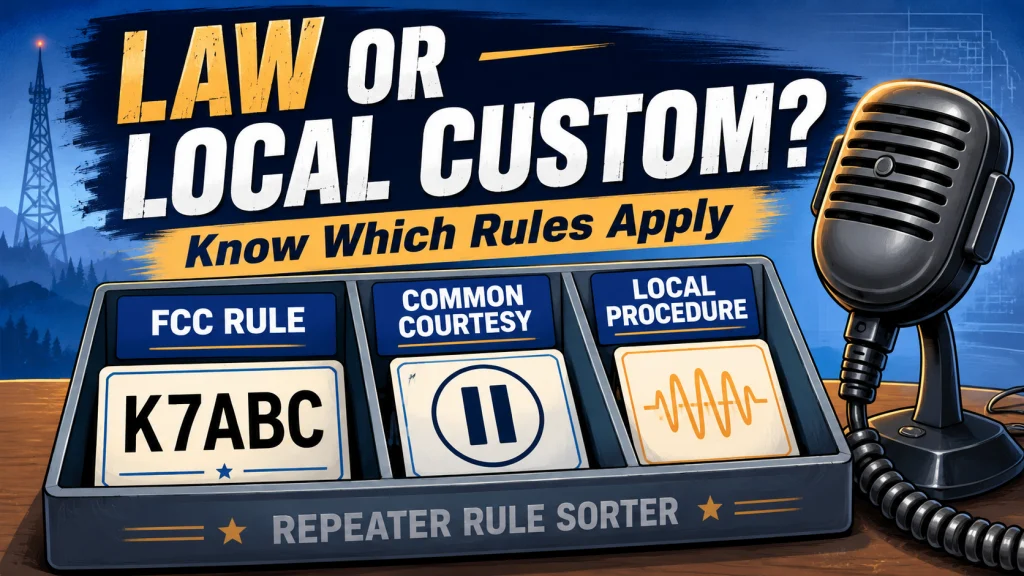
Good repeater behavior starts with separating FCC requirements from local operating customs. You must identify correctly, avoid prohibited transmissions and deliberate interference, and yield to emergency communications, while practices such as saying “monitoring,” avoiding CQ, or waiting through a particular courtesy tone are conventions that can vary by system. Listen long enough to understand what … Read more

Best Ham Radio for Offroad and Overland Use: Radio, Antenna, Power, and Backup

Best Ham Radio For Offroad

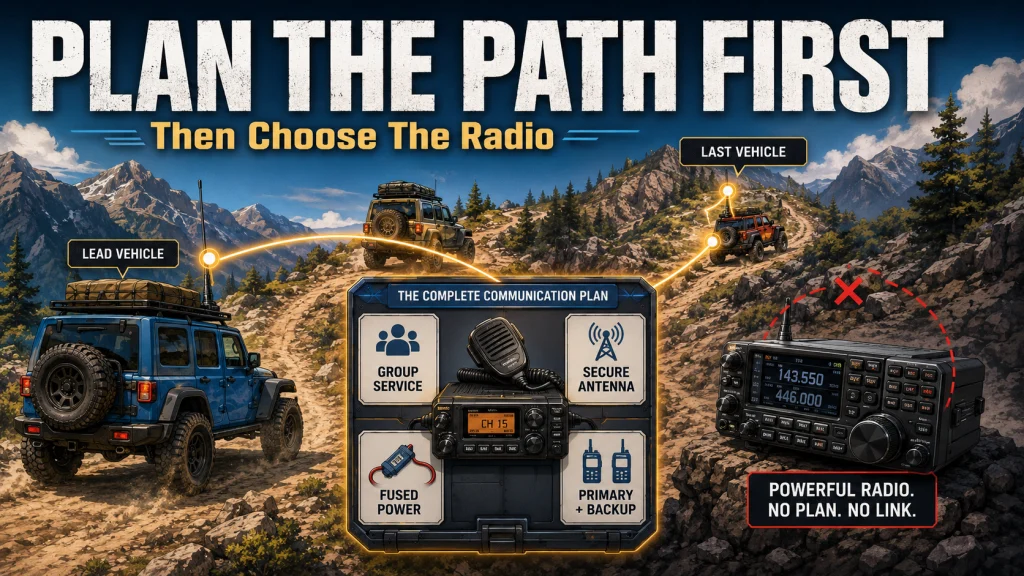
The best off-road ham radio setup combines a legal group service, a route-appropriate transceiver, a secure antenna, dependable vehicle power, and a practiced operating plan. Start by deciding who must communicate with whom, then choose the equipment that supports that path. Amateur radio can be a strong convoy and local-contact tool, but terrain, coverage, and … Read more