The best handheld ham radio is the one that fits the communication you can actually make in your area, not the one with the longest feature list. Start by deciding between analog FM and a specific digital voice system, then judge the radio by receiver behavior, controls, battery support, environmental claims, and local repeater compatibility. A lower-cost handheld can be enough for casual local use, while emergency planning and digital networks create different requirements. By the end, you should know which buying path fits your situation and what to verify before spending money.
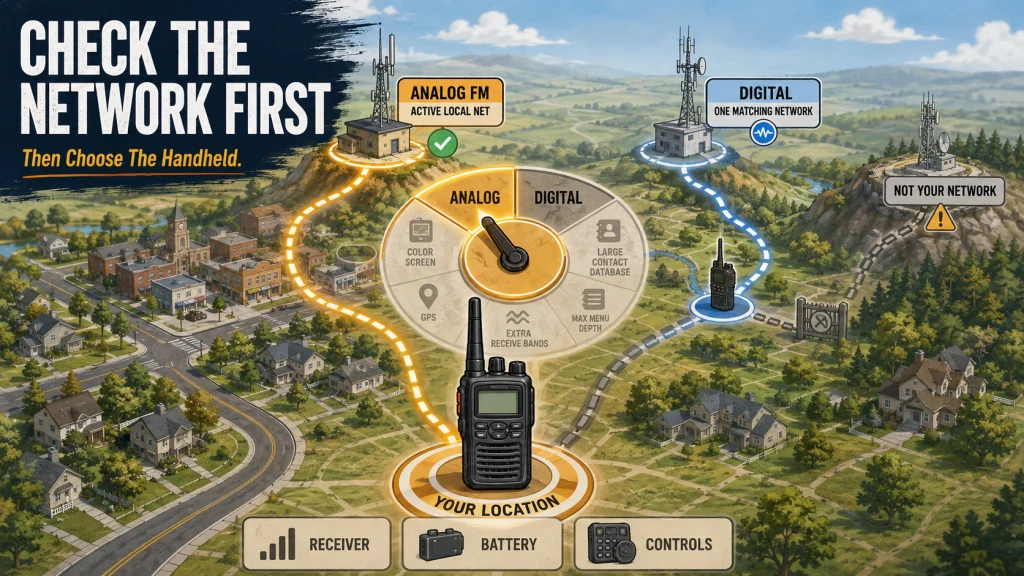
Choose the Job Before You Choose the Handheld
The question I hear most often after an exam session is some version of, “What radio should I buy?” It usually comes before the new licensee has found a local repeater, listened to a net, or decided whether the radio is for neighborhood contacts, hiking, travel, public-service practice, or a go-kit. That order creates trouble because handhelds that look similar on a product page can lead to very different operating experiences.
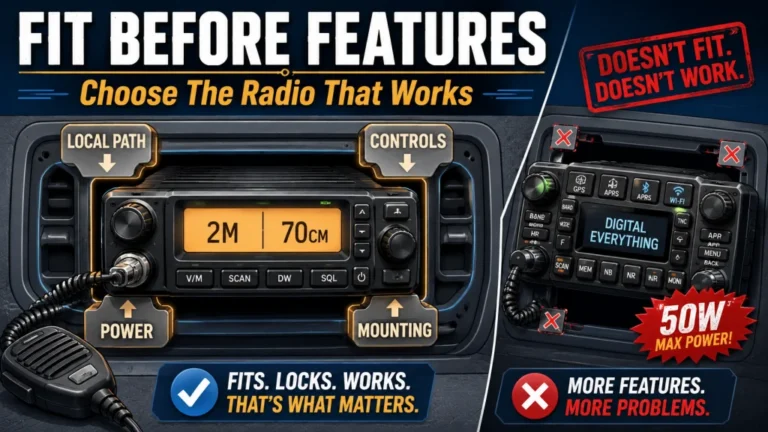
The best handheld ham radio for beginners is not automatically the cheapest analog radio or the most advanced digital one. It is the radio that gets the operator through a repeatable first activity without adding unnecessary barriers. If the first goal is checking into a nearby analog net, simple controls and reliable repeater access matter more than a color screen, GPS, or several digital protocols that nobody nearby uses.
| Your first real use | What should drive the decision | What can wait |
|---|---|---|
| Local analog repeater and simplex | Receiver behavior, easy controls, repeater compatibility, battery availability | Digital voice, large contact databases, network features |
| Hiking or travel | Battery replacement, charging options, size, antenna connection, weather protection | Maximum menu depth and rarely used receive coverage |
| Emergency-preparedness practice | A written communication plan, repeated power, known local frequencies, clear operating procedure | Marketing labels such as “tactical” or “emergency radio” |
| Digital voice network | The exact protocol used by nearby repeaters or your intended hotspot network | Brand loyalty before infrastructure is checked |
This decision table is more useful than a single winner because a handheld is only one part of the path. The license privileges, programmed channels, local infrastructure, antenna position, and operator confidence all affect whether the radio gets used. Readers who are still deciding between a handheld, a vehicle radio, and an HF station should first look at choosing the right ham radio type before narrowing the purchase to an HT.
Make the Analog or Digital Decision First
Analog FM is usually the shortest route from a new call sign to a local contact. You program a repeater frequency, offset, and access tone, listen before transmitting, and follow the local check-in procedure. That does not make analog primitive. It makes it a practical starting point when the local activity you want is already on analog repeaters or simplex channels.
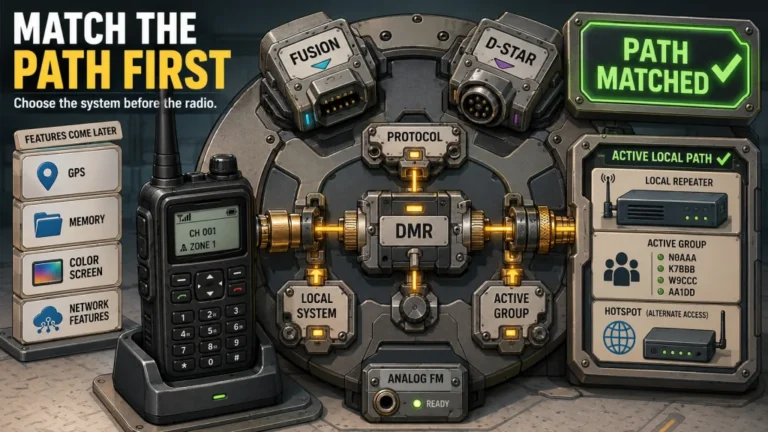
Digital voice adds useful network features, but “digital” is not one compatible system. DMR, System Fusion, and D-STAR do not become interchangeable just because all three carry digital voice. A handheld built for one protocol will not directly join a repeater running another, so the local network has to be chosen before the radio.
I usually ask a new licensee whether they have found a local repeater before I ask which handheld they are considering. That one question exposes the real decision. A modest analog radio with an active net nearby can be more useful than an expensive digital radio connected to no local activity, while a well-supported digital network can justify the added setup for an operator who wants those linked conversations.
The Budget Analog Path: Low Cost with More Verification
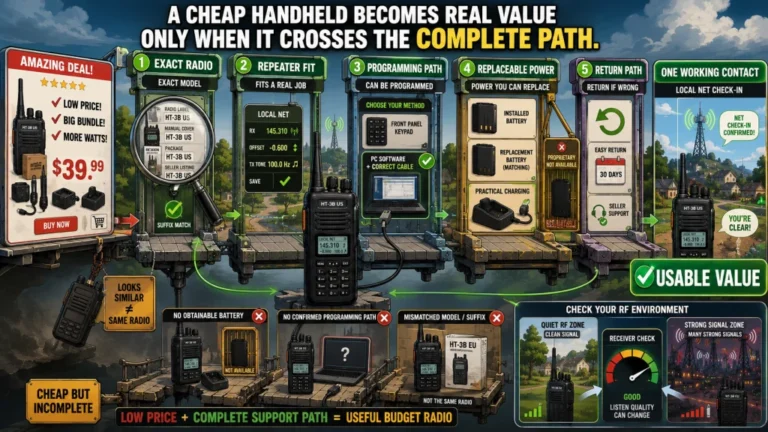
A budget analog handheld can be a reasonable first step when the goal is to learn local repeater use without committing much money. The trade-off is not just case material or display quality. Lower-cost families may have multiple suffixes and revisions, inconsistent included accessories, different programming behavior, and varying documentation even when the listings look nearly identical.
Receiver behavior matters more than many buyers expect. In a quiet rural area, a basic receiver may work well enough for nearby repeaters. In a dense RF environment near broadcast towers, commercial sites, or strong local transmitters, a handheld can appear deaf because its front end is being overloaded, even though the advertised transmit power looks competitive. A small wattage difference cannot fix a receiver that struggles in the place where you use it.
The best budget choice is therefore not merely the lowest current price. Verify the exact variant, supported bands, programming cable and software path, replacement battery availability, warranty source, return policy, and whether the seller clearly identifies what is included. The detailed budget handheld decision guide is the better place to compare that path without mixing it with premium analog and incompatible digital radios.
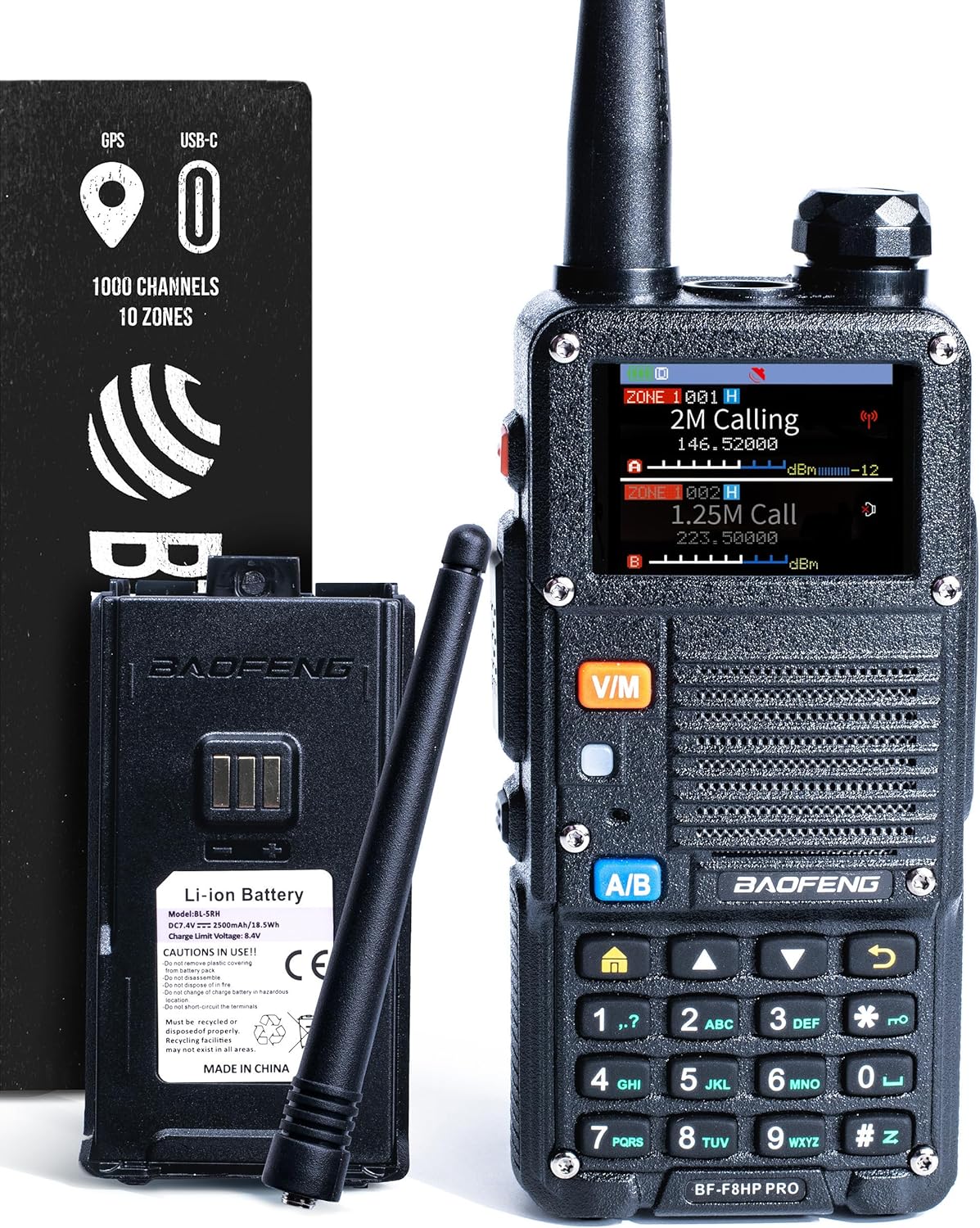
The BF-F8HP PRO is an amateur handheld covering VHF, UHF, and the 1.25 meter band. It provides up to 1000 programmable channels along with GPS and NOAA weather reception. The radio also has an IP54 rating and supports direct USB-C battery charging.
Check On AmazonIf you click this link and buy, we earn a commission at no additional cost to you.
The Long-Support Analog Path: Paying for Fewer Surprises
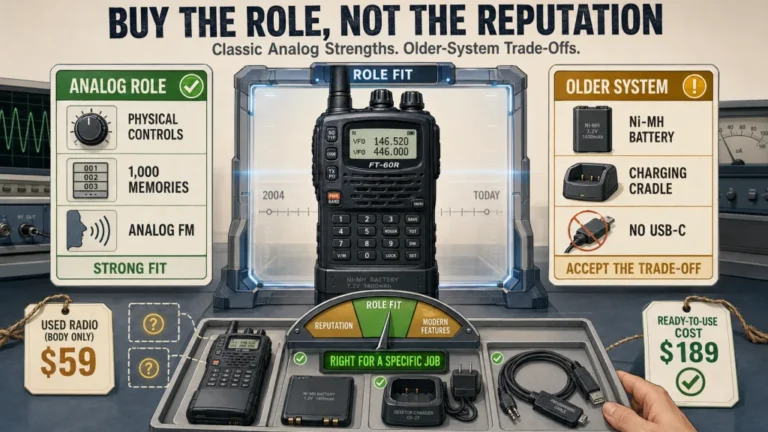
Some operators would rather pay more for mature documentation, stable accessories, predictable controls, and a support channel that remains understandable years later. That can be a better value than a long feature list, especially when the radio is expected to stay in a household, vehicle kit, or training setup for a long time. The purchase is less about prestige and more about reducing the number of unknowns around daily use.
This path also suits readers who want front-panel operation that can be learned and repeated without rebuilding a codeplug or navigating a large digital contact structure. A radio can still require computer programming for convenience, but basic repeater entry and field adjustment should not feel impossible. The real benefit is that the owner can return to the radio after several months and still understand how to change a tone, power level, memory, or scan setting.
A long-running analog model can be useful as a case study in documentation, accessory stability, and control design, but age alone does not make it the best current purchase. The FT-60R ownership case study examines that specific trade-off without turning one familiar radio into a universal answer for every buyer.
The Emergency-Preparedness Path Starts with a Communication Plan
A handheld does not become an emergency solution because the listing uses words such as rugged, tactical, or survival. The useful question is who you plan to contact, on which amateur frequencies, through which repeater or simplex channel, from which locations, and how the radio will be powered after the first battery is empty. Without those answers, a more durable case only protects an untested plan.
Repeated power deserves more attention than headline battery capacity. Check whether spare batteries are obtainable, whether the charging method works from the power sources in your plan, whether an empty battery can be replaced without taking the radio out of service, and whether the radio retains its programmed memories. A sealed battery with an impressive rating may be convenient for daily use but limiting if replacement packs become unavailable.
Environmental claims need exact language. “Weather resistant” is not the same as a published ingress-protection rating, and neither phrase tells you how the radio should be handled with accessory covers open. Read the manual for the tested condition, required seals, and exclusions instead of assuming the entire setup remains protected while an external microphone, programming cable, or charger is attached.
Legal service compatibility matters as well. A ham license authorizes operation in the Amateur Radio Service within the privileges of that license, not on every frequency a handheld can display. GMRS transmitting requires equipment certified for GMRS under Part 95E, and an amateur license does not make an amateur transceiver legal for GMRS use. The emergency communication buying framework goes deeper into power, durability, legal use, and realistic planning.

The BTECH UV-PRO is a dual-band VHF/UHF amateur handheld with a published IP67 rating. It includes GPS and Bluetooth functions and can be programmed through BTECH's supported app system. Its rechargeable battery supports USB-C charging for additional power flexibility.
Check On AmazonIf you click this link and buy, we earn a commission at no additional cost to you.
The Digital Path: Choose the Network Before the Brand
Digital voice can connect a handheld through a compatible repeater or personal hotspot to talkgroups, rooms, or reflectors beyond the local RF footprint. That capability is useful only after the local radio link and network setup are understood. It does not remove the need for a usable signal into the repeater, correct programming, a valid call sign configuration, and the operating habits expected on that network.
DMR commonly adds codeplug structure, talkgroups, color codes, time slots, and radio ID setup. System Fusion centers on C4FM operation and its linked network environment. D-STAR uses its own routing, repeater, and reflector conventions. These systems solve similar communication goals through different workflows, so a reader should not choose among them by screen size or menu count.
Start locally. Check which repeaters can be reached from the places where you will operate, whether they are active, which protocol they carry, and whether a club or local group provides current programming information. A repeater database is a starting point, not proof that a machine is active or reachable from your house. The process in finding usable local ham repeaters helps turn a map entry into a realistic coverage check.
A hotspot can provide another route, but it changes the use case rather than erasing the protocol decision. It depends on local internet and power, and it does not prove the handheld can reach an over-the-air repeater during a wider outage. Readers committed to digital voice should use the digital handheld selection framework to compare protocol, setup burden, network fit, and support before comparing radios.

The Yaesu FT-5DR is a 5 watt 144/430 MHz handheld supporting both C4FM digital voice and analog FM. It provides two independent receivers for real dual-band operation. The radio also includes a 2200mAh lithium-ion battery, built-in GPS, and APRS capability.
Check On AmazonIf you click this link and buy, we earn a commission at no additional cost to you.
Why the UV-5R Question Needs Its Own Answer
One low-cost radio family appears in beginner discussions so often that it can distort the entire handheld decision. Buyers may see a familiar name, a very low price, and a large amount of community documentation, then assume every variant is identical and every criticism or endorsement applies to all of them. That is too broad to be useful.
The right questions are the exact model suffix, seller, firmware behavior, included battery and charger, programming support, receiver performance in the intended environment, and the limits of the unit being considered. A familiar name can make troubleshooting easier because many owners have documented common procedures, but popularity does not remove the need to verify the specific radio in the listing.
The UV-5R buyer decision analysis handles those variant, programming, compliance, and use-case limits separately. Keeping that discussion outside a general roundup prevents one heavily searched radio from becoming the default answer to a question that should begin with the operator’s actual plan.
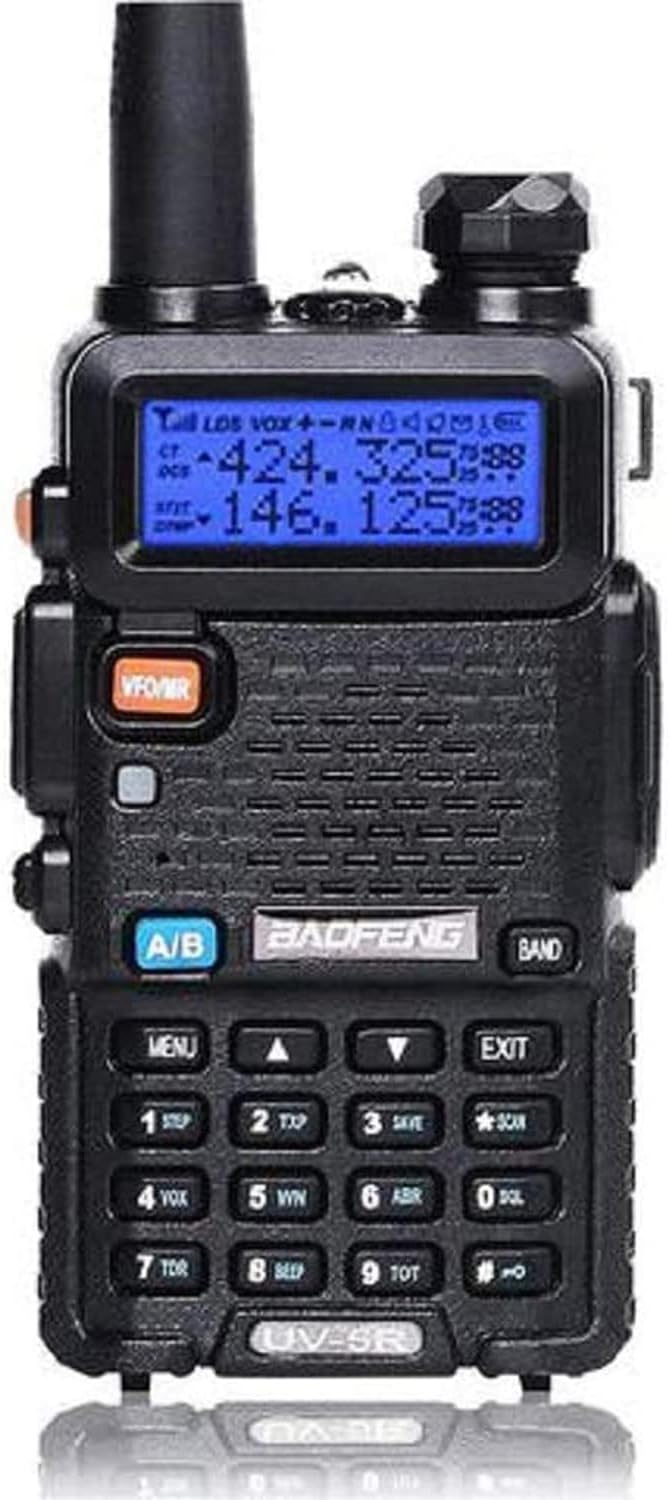
This BAOFENG UV-5R listing is a dual-band handheld identified for 144 to 148 MHz and 420 to 450 MHz amateur operation. The package uses an 1800mAh lithium-ion battery. The listing identifies the exact product as the black UV-5R configuration under ASIN B074XPB313.
Check On AmazonIf you click this link and buy, we earn a commission at no additional cost to you.
Use This Handheld Buying Checklist Before You Order
The best HT ham radio for your situation should survive a basic verification pass before price becomes the deciding factor. Work through the list using the manufacturer manual, official specifications, current seller information, and local repeater data. A missing answer is not always a reason to reject the radio, but it is a reason to know what uncertainty you are accepting.
- Exact identity: Confirm the complete model name, suffix, package contents, and seller. If an FCC ID is advertised or relevant, verify that it belongs to the exact device rather than a different variant.
- Bands and modes: Check transmit bands, receive coverage, analog or digital modes, and whether those capabilities match your license privileges and intended contacts.
- Local compatibility: Verify reachable repeater frequencies, offsets, tones, and the exact digital protocol where applicable.
- Receiver environment: Consider whether you operate near strong RF sources, in a quiet rural area, inside buildings, or from elevated outdoor locations.
- Controls and programming: Decide what must be possible from the front panel and what you are willing to manage with computer software.
- Battery system: Check replacement-pack availability, charging inputs, spare-battery cost, and whether the system fits your travel or backup-power plan.
- Environmental protection: Look for a specific published rating and the conditions required to maintain it. Do not substitute broad marketing language for a test claim.
- Support: Review manual quality, firmware availability where relevant, warranty terms, accessory continuity, and the return policy.
Programming deserves a separate plan because even a good handheld can sit unused when the owner cannot enter a local repeater correctly. The ham radio programming guide explains the setup path without turning this buying article into a software tutorial. Complete that first programming task soon after purchase, while the seller’s return window and your own memory of the controls are still fresh.
The best portable ham radio is the one you can power, program, and operate in the place where you expect to use it. That may be a basic analog handheld for a local net, a better-supported analog radio for long ownership, an emergency-focused setup built around repeatable power, or a digital radio chosen for a known network. The checklist keeps those paths separate so a feature from one use case does not distract you from a requirement in another.

The BTECH PC03 is a USB-A programming cable built around an FTDI interface and a Kenwood K1 two-pin radio connector. It is listed as compatible with radios including the BAOFENG UV-5R, BF-F8HP, and UV-82HP. The cable is designed for computer-based radio programming without a separate proprietary programming interface.
Check On AmazonIf you click this link and buy, we earn a commission at no additional cost to you.
Final Thoughts: Buy for the Contact You Plan to Make
I have watched new licensees get stuck because they treated the radio purchase as the finish line. Passing the exam gave them permission to operate, and buying the handheld gave them equipment, but neither step chose a repeater, programmed a memory, or supplied the words for a first check-in. The operator who defines one first activity usually makes a better purchase than the operator who tries to buy every possible future feature at once.
Choose analog or a specific digital network, identify the local activity, decide what level of programming and battery management you will accept, and then compare radios inside that narrower path. Wattage belongs on the checklist, but it does not outrank receiver behavior, terrain, antenna position, local infrastructure, controls, support, or a power plan. Buy the handheld that removes the next barrier to getting on the air.
Explore More Handheld Radio Guides
Once you know which path fits your use, the next guide can handle the narrower trade-offs without mixing unrelated buyers into one ranking. Use these focused comparisons to examine the category, case study, or operating goal that matches your decision.
| Guide | What it helps with |
|---|---|
| Budget Handheld Radios | Compares low-cost analog choices through variant consistency, programming, receiver behavior, support, and environmental limits. |
| FT-60R Case Study | Examines the value and limits of mature documentation, stable accessories, and a long-running analog design. |
| Emergency Ham Radio Planning | Builds the radio decision around communication partners, repeatable power, durability claims, and legal service use. |
| Digital Handheld Radios | Separates DMR, System Fusion, and D-STAR decisions by protocol, infrastructure, setup burden, and local support. |
| UV-5R Decision Guide | Handles the exact variant, programming, compliance, receiver, and use-case questions behind the familiar low-cost name. |
Do not read all five as a shopping list. Pick the one that matches the communication you plan to attempt first, then judge the radios inside that narrower decision.
FAQs
📻 Should my first handheld ham radio be analog or digital?
Choose analog FM when your first goal is a local analog repeater or simplex contact and you want the shortest setup path. Choose digital only after confirming the exact protocol used by reachable repeaters, your intended group, or the hotspot network you plan to use.
📡 How much range should I expect from a handheld radio?
There is no dependable single range number. Terrain, antenna height, buildings, the repeater’s location, receiver conditions, and whether you are using simplex or a repeater usually matter more than a small difference in rated output power.
🔋 Is a larger battery always better?
No. Capacity matters, but replacement availability, charging options, battery age, radio duty cycle, and your backup-power plan determine whether the battery system remains useful. A slightly smaller pack that can be replaced and charged from several sources may fit travel or preparedness better.
🌧️ Does weather resistant mean waterproof?
No. Look for a specific ingress rating and read the conditions in the manual, including whether accessory covers must remain closed. Marketing language without a defined rating should not be treated as permission to submerge or expose the radio to heavy weather.
💻 Do I need a computer to program a handheld?
Not always, but computer programming is often faster for multiple memories and digital configurations. Before buying, confirm which basic tasks can be completed from the front panel and which require software, a cable, or a manufacturer-specific programming application.
🧭 Is a top handheld ham radio list enough to make the decision?
No. A ranking can mix analog, digital, budget, emergency, and premium-support buyers who need different things. Use a list only after you have chosen the use case, local repeater path, programming burden, and battery requirements that apply to you.