Can a Ham Radio Listen to Police, Fire, Aircraft, and Weather?

Can Ham Radio Listen To Police

A ham radio may receive some police, fire, aircraft, weather, marine, railroad, business, or public-works traffic, but frequency coverage alone does not prove that the audio will be useful. Four conditions must agree: the radio must tune the frequency, support the modulation or digital format, follow the way the channels are organized, and encounter a … Read more

Ham Radio vs Scanner: A Transceiver for Amateur Bands or a Receiver Built to Follow Many Systems?

Ham Radio Vs Scanner

A ham radio and a scanner can both receive radio signals, but they are built around different jobs. Choose a ham transceiver when licensed two-way amateur operation is the main goal; choose a scanner when following several local receive systems, trunked networks, alerts, or recorded traffic is the main goal. Wide frequency coverage does not … Read more

Ham Radio vs Shortwave Radio: Two-Way Amateur Operation or Listen-Only HF Reception?

Ham Radio Vs Shortwave Radio

Shortwave and ham radio overlap on parts of the HF spectrum, but they solve different problems. A shortwave receiver is the simpler choice when the goal is to listen to distant broadcasts and other supported signals without transmitting. Ham radio is the better path when the goal is two-way contact, nets, technical experimentation, or digital … Read more

Ham Radio vs Scanner and Shortwave: Choose Transmitting, Monitoring, or Broadcast Listening

Ham Radio Vs Scanner And Shortwave

Choose a ham transceiver when you want licensed two-way amateur communication, a scanner when you want fast monitoring of compatible local channelized systems, and a shortwave receiver when your priority is international, amateur, broadcast, and other HF listening. Receive coverage printed on a radio does not prove that it can follow trunked systems, decode a … Read more

Ham Radio vs Smartphone Satellite SOS: Built-In Emergency Feature or Full Radio Service?

Ham Radio Vs Smartphone Satellite Sos

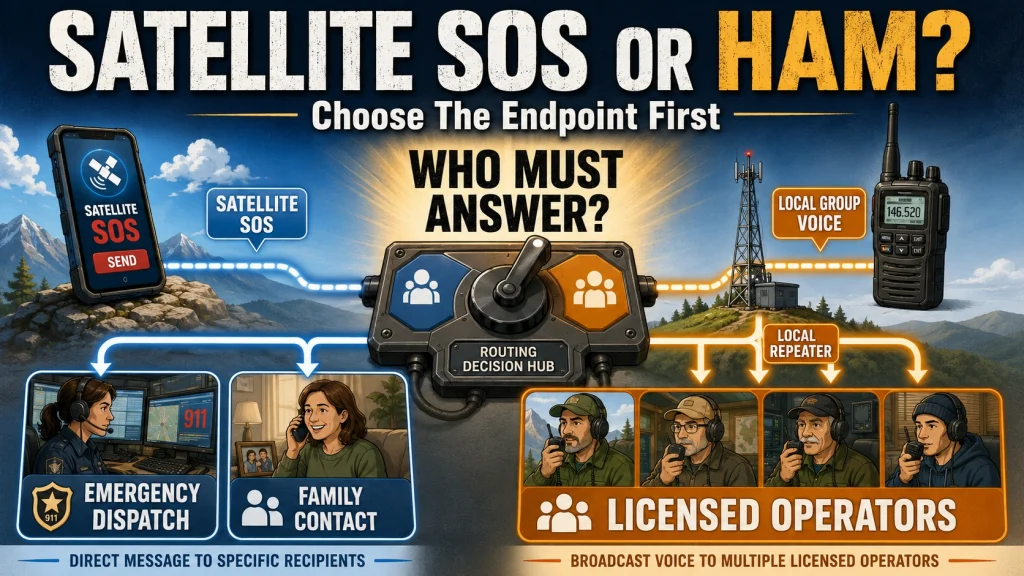
A supported smartphone satellite feature can add a valuable emergency or messaging path when cellular and Wi-Fi service disappear, but it does not replace every job ham radio can perform. The right comparison depends on the exact phone feature, who must receive the message, where the service works, and whether you need private contact, local … Read more

Ham Radio vs Satellite Phone: Open Radio Networks or Direct Voice to a Specific Number?

Ham Radio Vs Satellite Phone

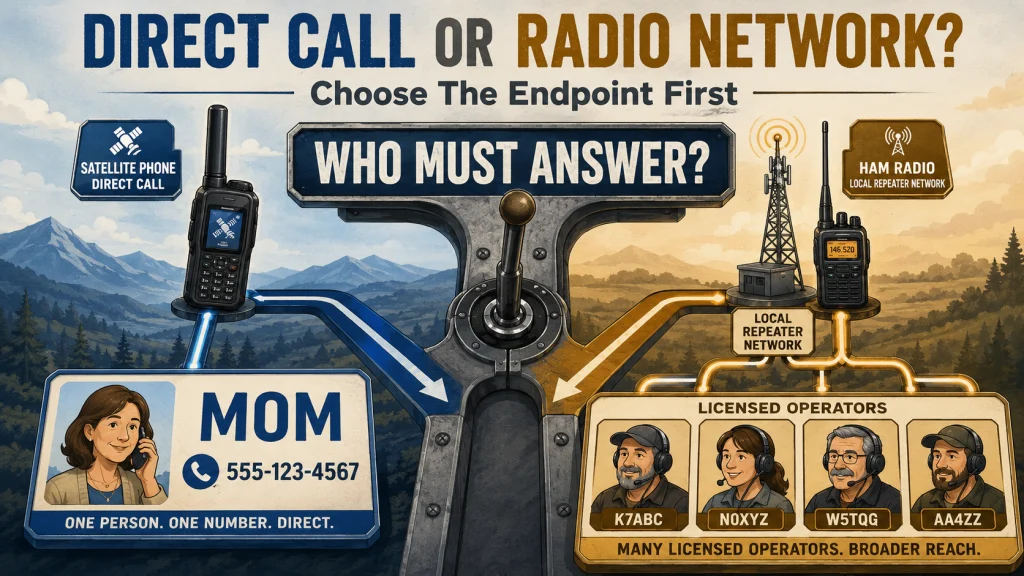
A satellite phone is built to call a specific number through a paid commercial network, while ham radio connects licensed operators over reachable amateur frequencies. Choose satellite voice when a named person, office, dispatcher, or expedition contact must receive a direct call beyond cellular coverage. Choose ham radio when the real need is local group … Read more

Ham Radio vs Satellite Messenger: Local Voice and Networks or Two-Way Text and Interactive SOS?

Ham Radio Vs Satellite Messenger

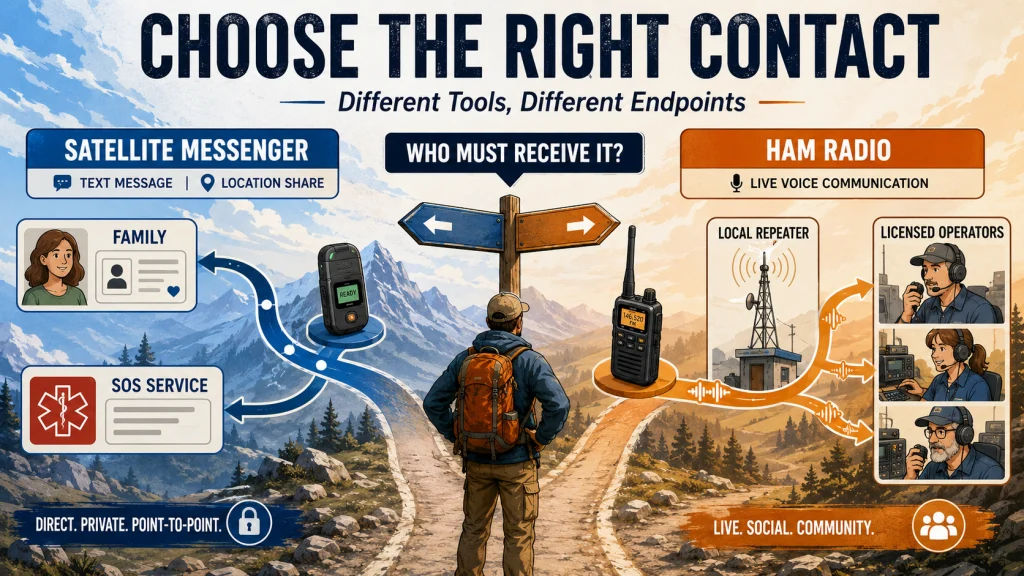
Ham radio and a dedicated satellite messenger solve different communication problems. A satellite messenger is designed to send location-linked messages to specific contacts and provide an interactive SOS path through a commercial service, while ham radio connects a licensed operator with reachable repeaters, simplex partners, nets, or HF stations. Choose the messenger when specific-contact text, … Read more

Ham Radio vs Meshtastic: Voice Radio or Encrypted Low-Data Mesh?

Ham Radio Vs Meshtastic

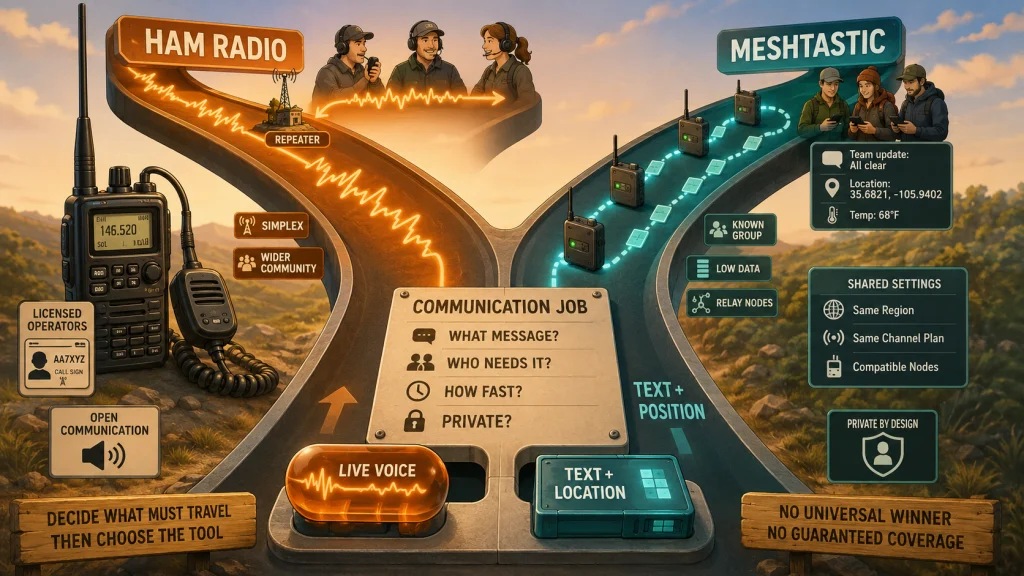
Ham radio and Meshtastic solve different communication problems. Ham radio is an operator-licensed service built for voice, many data modes, repeaters, direct contacts, experimentation, and access to a wider amateur community; Meshtastic is a low-data LoRa system built around text, position, telemetry, and relayed packets among compatible nodes. Meshtastic is usually the better fit when … Read more

Ham Radio vs Modern Off-Grid Alternatives: Mesh, Satellite Messaging, Satellite Phone, and Phone SOS

Ham Radio Vs Modern Alternatives

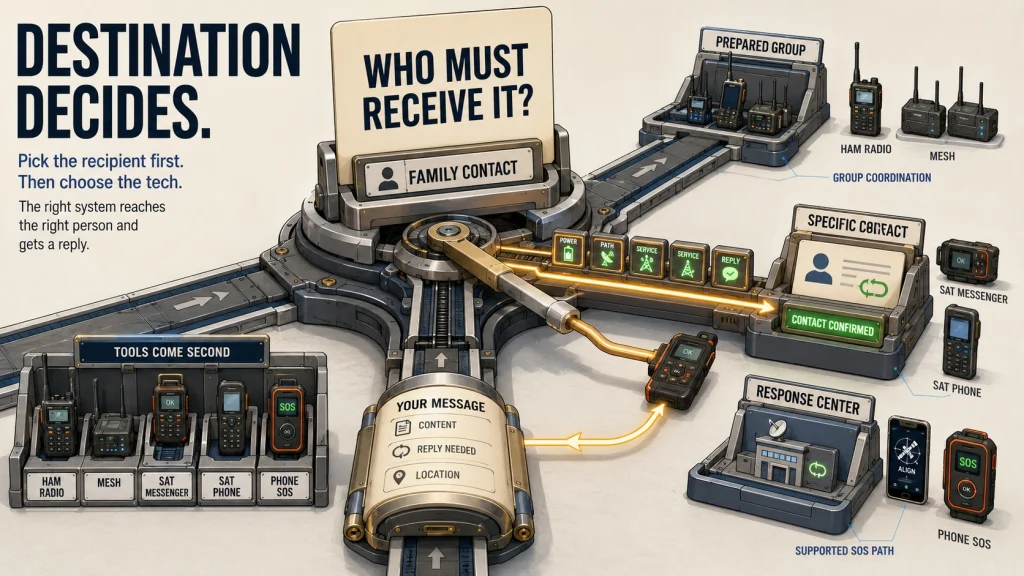
Ham radio, local mesh, satellite messaging, satellite phones, and phone-based satellite SOS do not solve the same contact problem. The right choice depends first on who must receive your message, then on the infrastructure, power, sky view, subscription, and operating skill that the path requires. Ham radio is strongest when you need flexible communication with … Read more

Can Ham Radio Talk to GMRS, FRS, or CB Radios? Receive Capability Is Not Transmit Authority

Can Ham Radio Talk To Gmrs

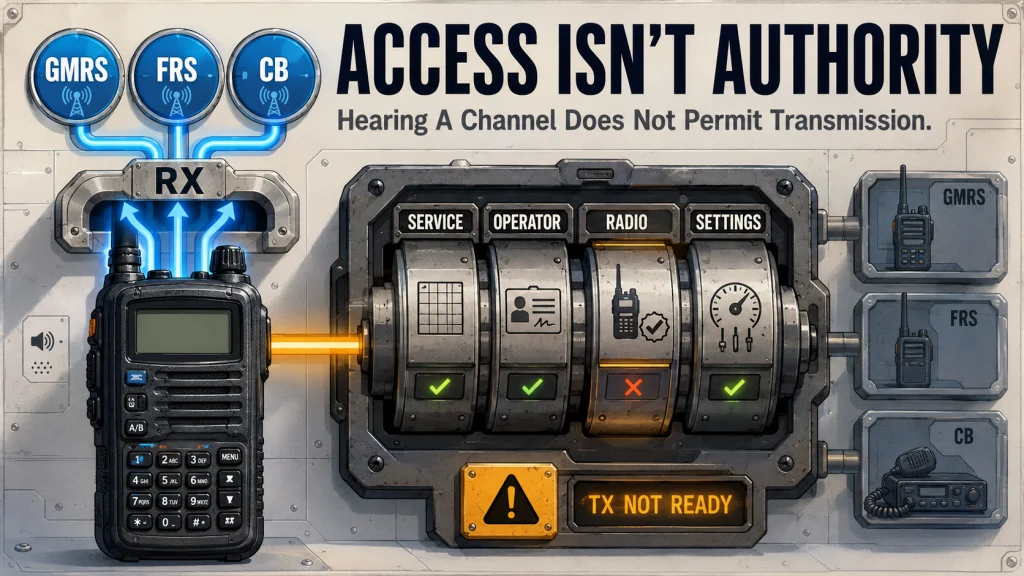
A ham radio may be able to receive GMRS, FRS, or CB signals, but hearing a signal and being authorized to answer are separate questions. To transmit, the operator must be authorized for the intended service, the transmitter must be permitted for that service, and the channel, mode, power, bandwidth, and identification rules must all … Read more

Ham Radio vs Walkie Talkie: When FRS Is Enough and When a Ham License Adds Value

Ham Radio Vs Walkie Talkie

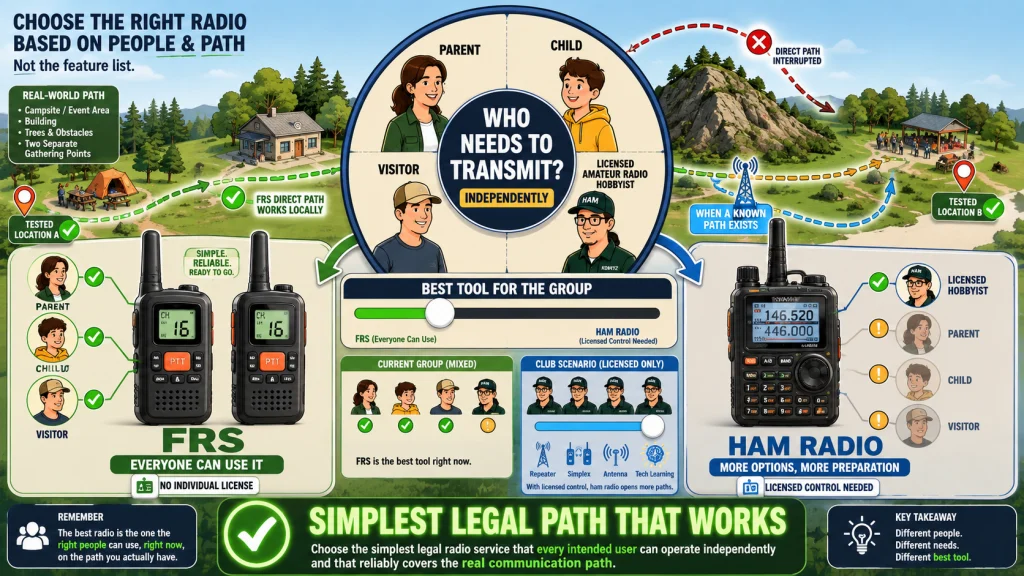
A pair of ordinary FRS walkie-talkies is often the better choice when children, visitors, or family members need immediate legal communication across a small, tested area. Ham radio adds repeaters, more bands, broader operating options, and room to build technical skill, but independent users must be licensed and the setup usually demands more preparation. The … Read more

Ham Radio vs CB Radio: Choose by Community, Range Path, and Operating Goal

Ham Radio Vs CB Radio

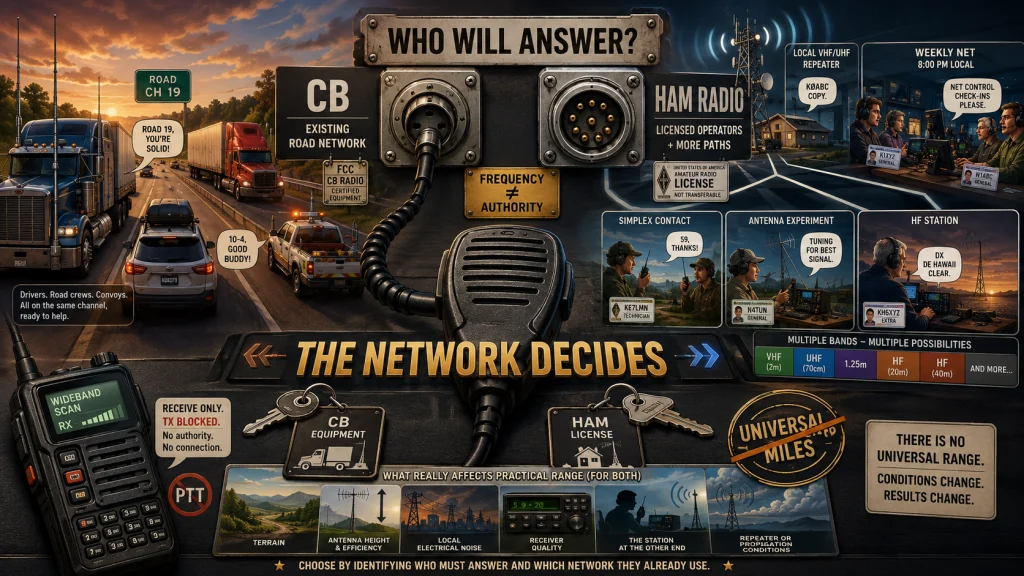
CB can be the better choice when the people you need to reach already use CB for highway, convoy, work-group, or local road communication. Ham radio is the stronger platform when you want a technical hobby, access to multiple bands and modes, local repeaters, organized nets, or broader HF operating privileges. Neither service has a … Read more