Ham Radio Repeater Etiquette: Rules, Conventions, and Local Variations
Ham Radio Repeater Etiquette

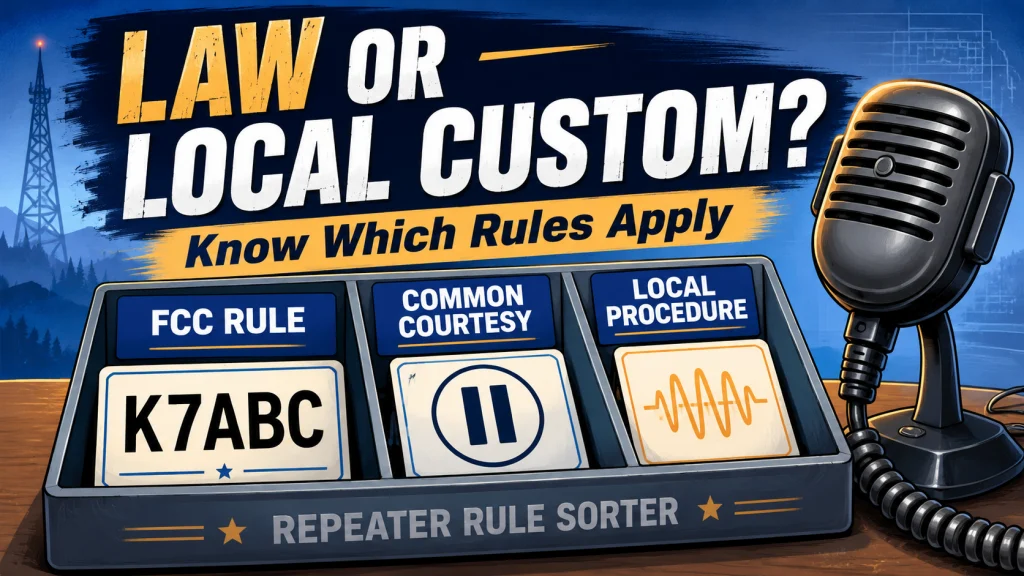
Good repeater behavior starts with separating FCC requirements from local operating customs. You must identify correctly, avoid prohibited transmissions and deliberate interference, and yield to emergency communications, while practices such as saying “monitoring,” avoiding CQ, or waiting through a particular courtesy tone are conventions that can vary by system. Listen long enough to understand what … Read more
Ham Radio Phonetic Alphabet: A Clear Reference for Call Signs and Weak Signals

Ham Radio Phonetic Alphabet

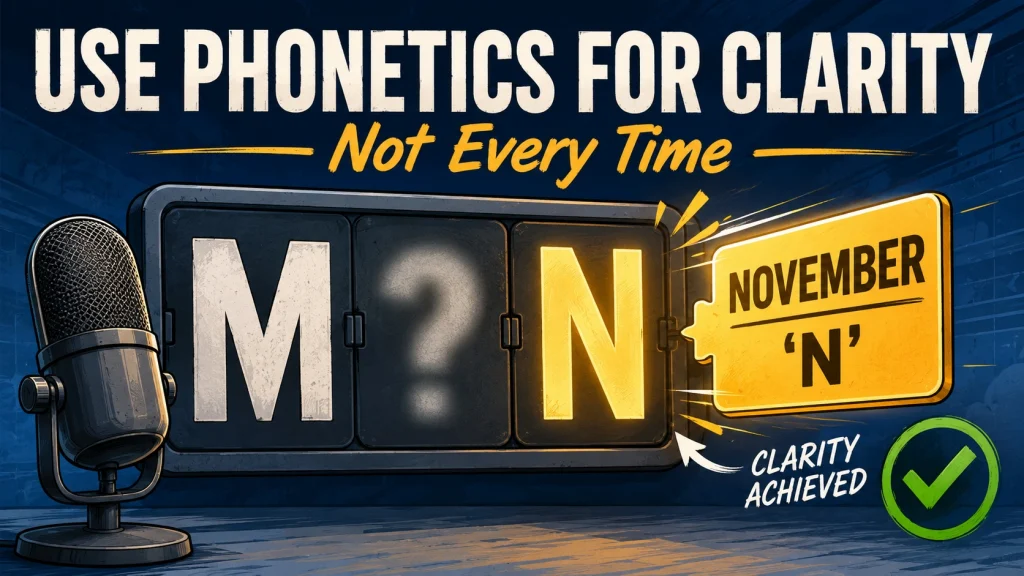
Phonetics are a clarity tool, not a performance ritual. Use the standard alphabet when a call sign, name, location, or other critical detail could be misheard, then return to normal speech once both operators are copying comfortably. The FCC encourages a phonetic alphabet as an aid to clear station identification, but it does not require … Read more

Ham Radio First Contact: What to Say on a Local Repeater and What Happens Next

Ham Radio First Contact

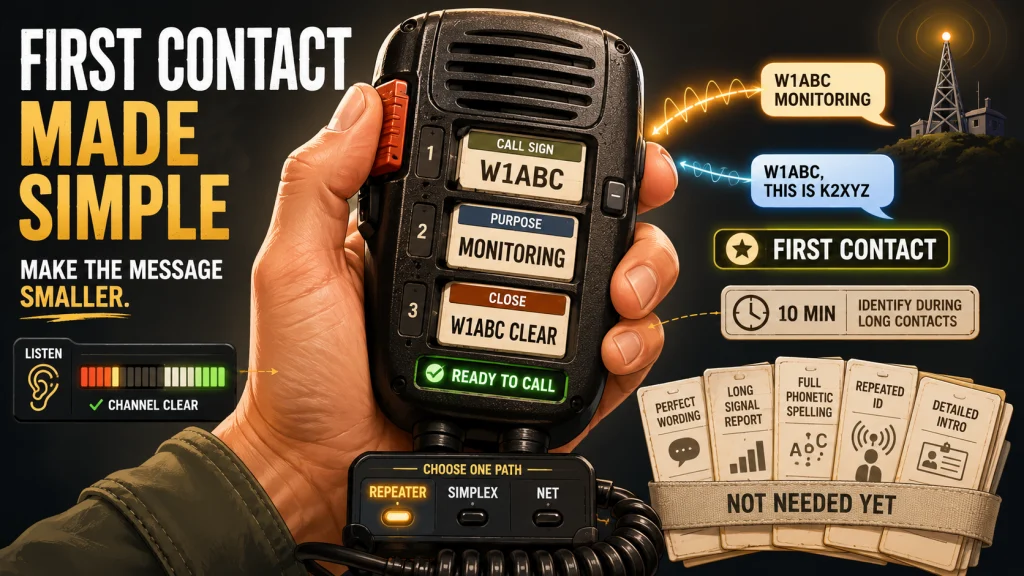
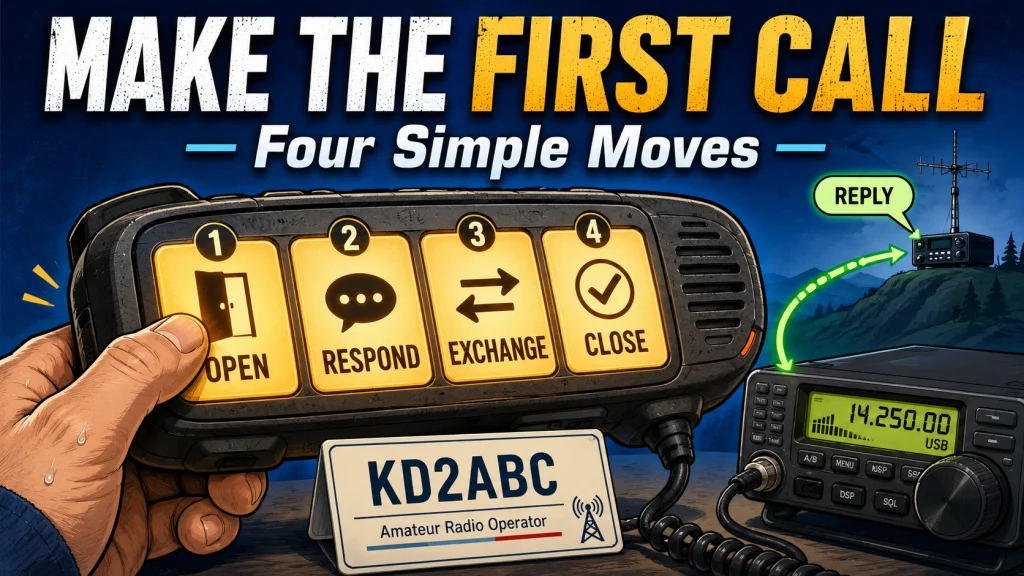
A ham radio first contact on a local analog repeater can be as simple as giving your call sign, answering one station, exchanging names and general locations, and closing with your call sign. The words do not need to be perfect, and the examples below are patterns rather than required scripts. The part that matters … Read more

How to Get on Ham Radio: First Contact, Repeaters, Simplex, and Nets

How To Get On Ham Radio

Getting on the air becomes much easier when you separate three decisions: whether the channel is free, whether the contact belongs on a repeater or simplex frequency, and which parts of the exchange are legally required. A first contact can be brief: identify, make the call, exchange a name and location if appropriate, then close … Read more

Repeater Offset and CTCSS Tone: How the Settings Work Together

Repeater Offset And Ctcss Tone

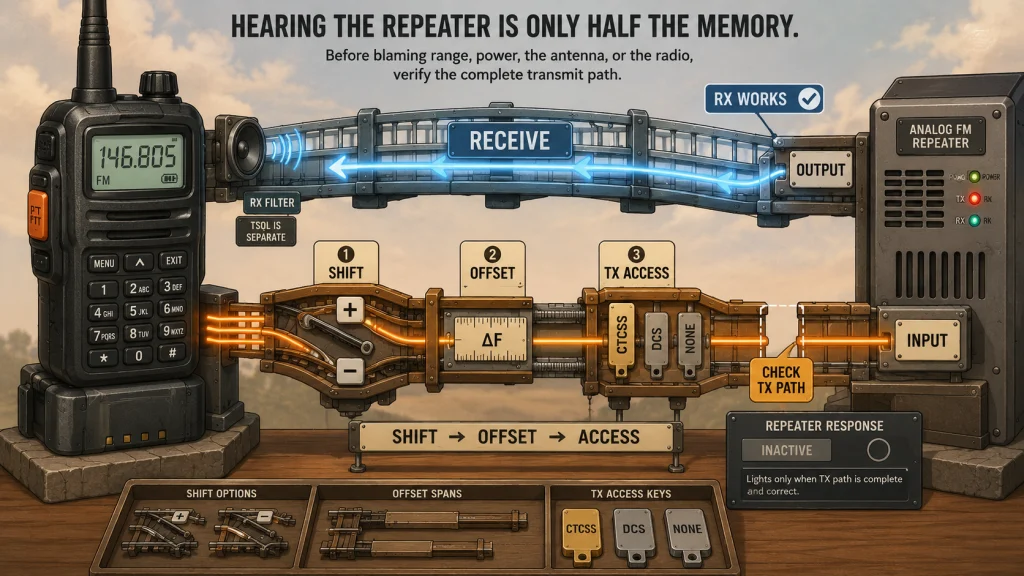
A repeater memory can receive perfectly and still fail when you transmit because the displayed frequency is only one part of the path. The radio must listen on the repeater output, transmit on the correct input, apply the required shift and offset, and send the access tone or code listed for that system. I use … Read more

How to Find Ham Radio Repeaters: Directories, Club Listings, and Activity Checks

How To Find Ham Radio Repeaters

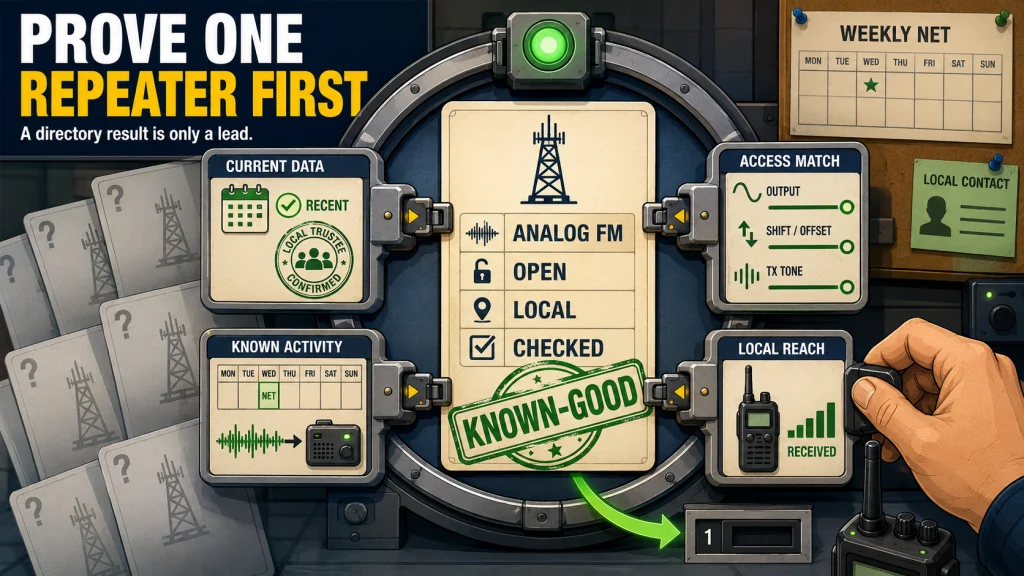
Finding a repeater is not the same as proving that it is active, reachable, open for use, and correctly listed. Start with a current directory, then confirm the operating mode, access data, status, local net schedule, and source date through a club, trustee, or other local record. A nearby analog FM repeater with recent activity … Read more

How to Program a Ham Radio Without a Computer: A Model-Specific Front-Panel Method

How To Program Ham Radio Without Computer

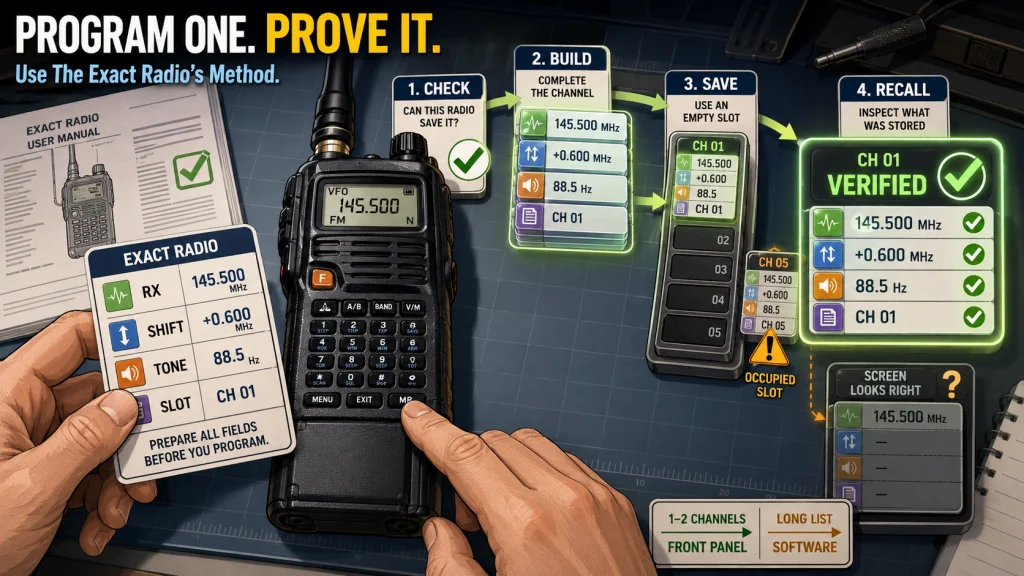
You can program a ham radio without a computer when the exact radio supports front-panel memory editing and you only need to add or change a small number of channels. The reliable method is not a universal button sequence. First confirm what the radio can save from its controls, write down the complete channel data, … Read more

How to Use CHIRP for Ham Radio: A Safe Download, Edit, and Upload Workflow

How To Use Chirp Ham Radio

The safest way to program a ham radio with CHIRP is to confirm exact support, download first, save a clean backup, edit the downloaded image, validate transmit-related fields, and only then upload. A blank spreadsheet, similar-looking model profile, or assumed cable driver can cause connection failures or a damaged configuration. This guide covers CHIRP-next, CSV … Read more

Ham Radio Programming Guide: CHIRP, Front-Panel Entry, Repeater Data, and Tone Settings

Ham Radio Programming Guide

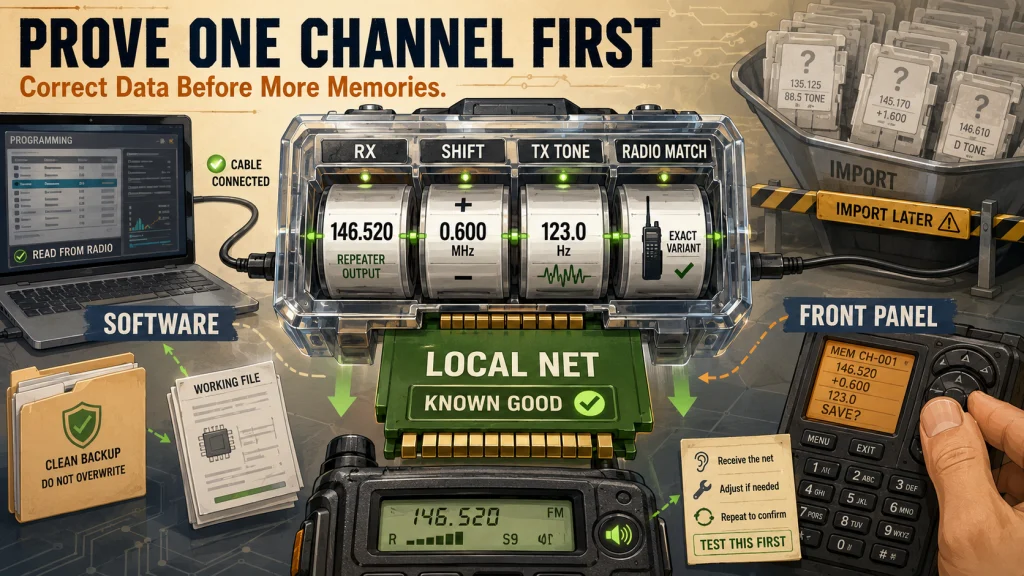
A reliable ham radio programming guide should start with the radio and the repeater data, not with the software. Confirm the exact radio variant, choose CHIRP or front-panel entry based on what that radio supports, and verify the repeater’s output, offset, and access tone before saving anything. Program and test one channel first, keep a … Read more