Ham Radio for Long-Distance Communication: What Makes It Different and How Far You Can Actually Reach

Ham Radio For Long Distance Communication

Ham radio can cross thousands of miles without a satellite subscription or a working internet or cellular network, but it does not provide a guaranteed mileage setting. Long-distance results come mainly from HF signals interacting with the ionosphere, and the usable path changes with the band, time, solar conditions, antenna, local noise, power, mode, and … Read more

Best QRP Ham Radio: Is Low-Power Portable HF Right for You?

Best Qrp Ham Radio

The best QRP ham radio is the one that supports your intended bands, modes, antenna, power source, and operating location without turning low power into an unnecessary handicap. QRP usually means transmitting at 5 watts or less, which can work remarkably well when propagation, antenna efficiency, receiver conditions, and operating technique line up. It is … Read more

Ham Radio for Emergency Preparedness: What It Actually Provides and What It Does Not

Ham Radio For Emergency Preparedness

Ham radio for emergency preparedness is useful when it connects licensed operators who have already tested their local paths, backup power, and check-in procedures. It can move voice and limited data when phone and internet systems fail or become overloaded, but it cannot guarantee that 911, a hospital, or a rescue team is listening. The … Read more

Best HF Ham Radio: Choosing Your First HF Transceiver by Operating Style

Best Hf Ham Radio

The best first HF transceiver is the one that fits where you will operate, the modes you plan to use, your license privileges, and the cost of the complete station around it. A fixed 100-watt radio, a compact field radio, a lower-power portable, and a purpose-built QRP transceiver solve different problems. This guide maps those … Read more

How to Study for the Ham Radio General License: What Changes After Technician

How To Study For Ham Radio General License

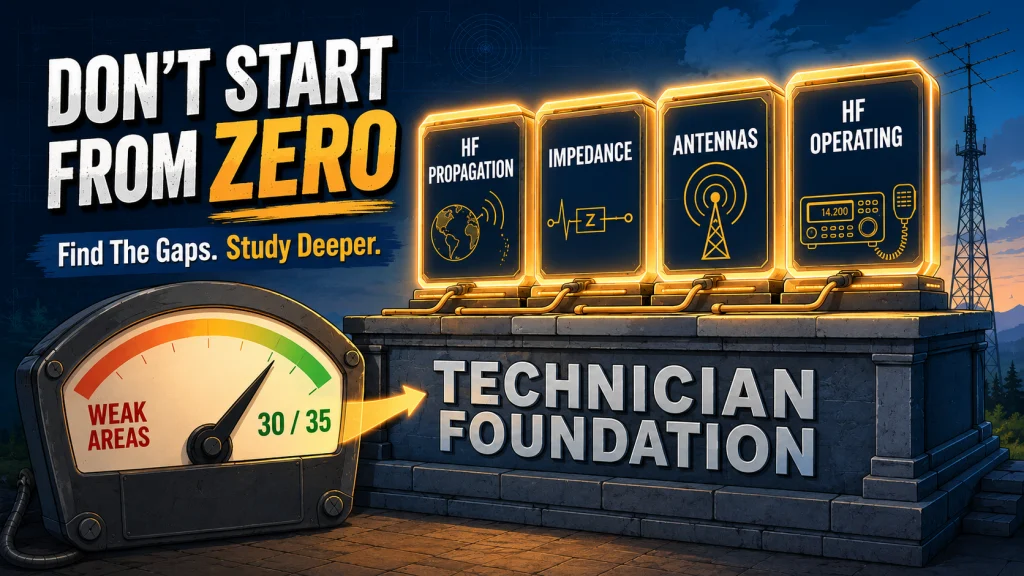
The General exam uses the same 35-question format as Technician, and 26 correct answers are required to pass, but the study task is different. As a Technician, you can reuse your foundation in regulations, operating practice, safety, antennas, and basic electronics while spending most of your effort on deeper HF propagation, HF operating, impedance, circuits, … Read more

Is the Ham Radio General License Worth It? The Honest Decision Framework for Technicians

Is Ham Radio General License Worth It

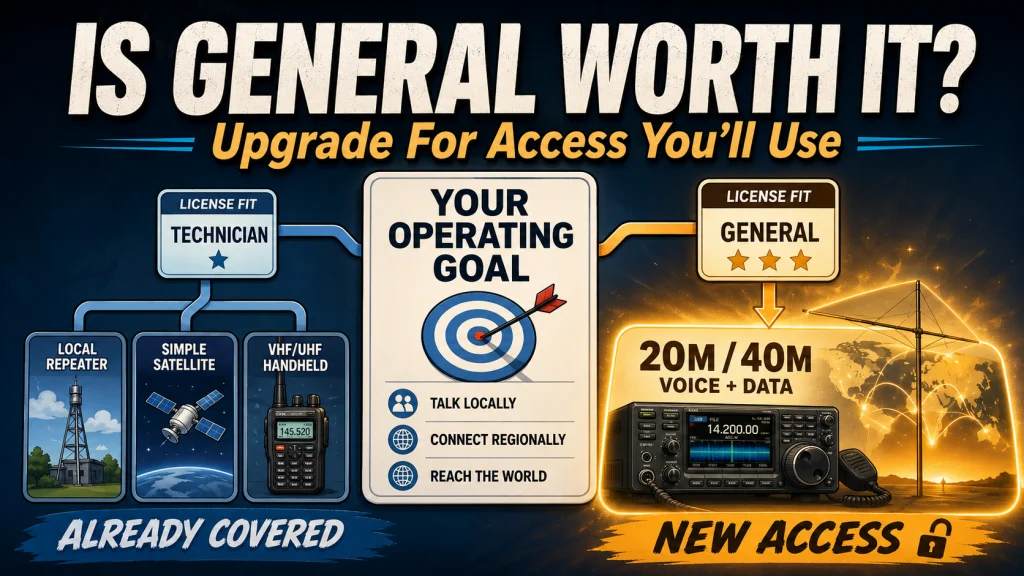
The General license is worth pursuing when you want broad HF voice and data access, especially on working bands such as 20 and 40 meters. It is not a required next step for operators who are satisfied with local VHF/UHF, repeaters, satellites, selected digital activities, or public-service work that stays within Technician privileges. The right … Read more

Ham Radio Technician vs General License: Which One Should You Get First?

Ham Radio Technician Vs General License

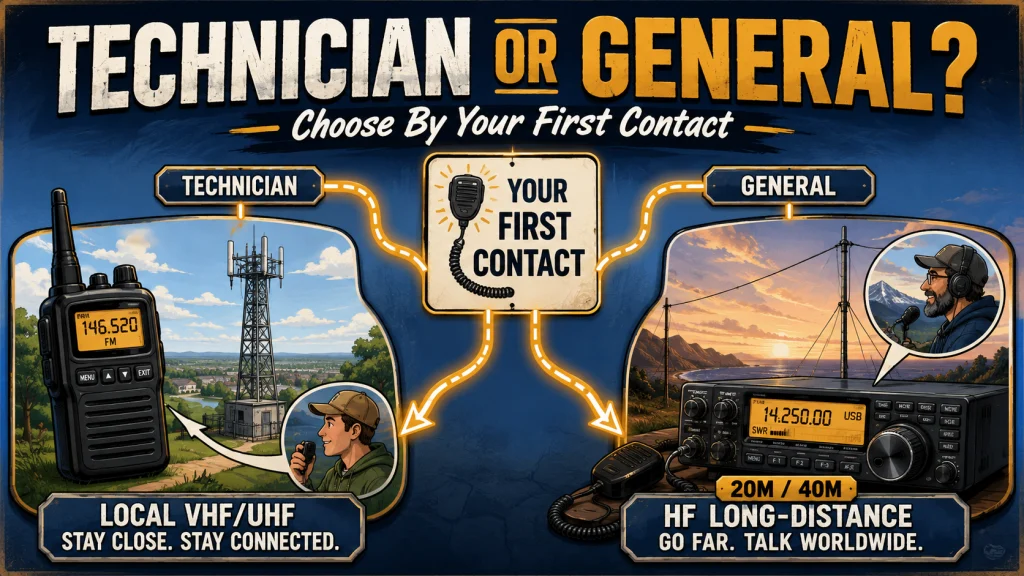
Start with Technician if your immediate goal is local repeater use, nearby simplex contacts, outdoor communication, or learning the hobby without adding another exam to your first milestone. Aim for Technician and General in the same session when you already know that HF voice, longer-distance contacts, and international operating are the reason you want a … Read more

How to Upgrade Your Ham Radio License From Technician to General: The Complete Process

How To Upgrade Ham Radio License Technician To General

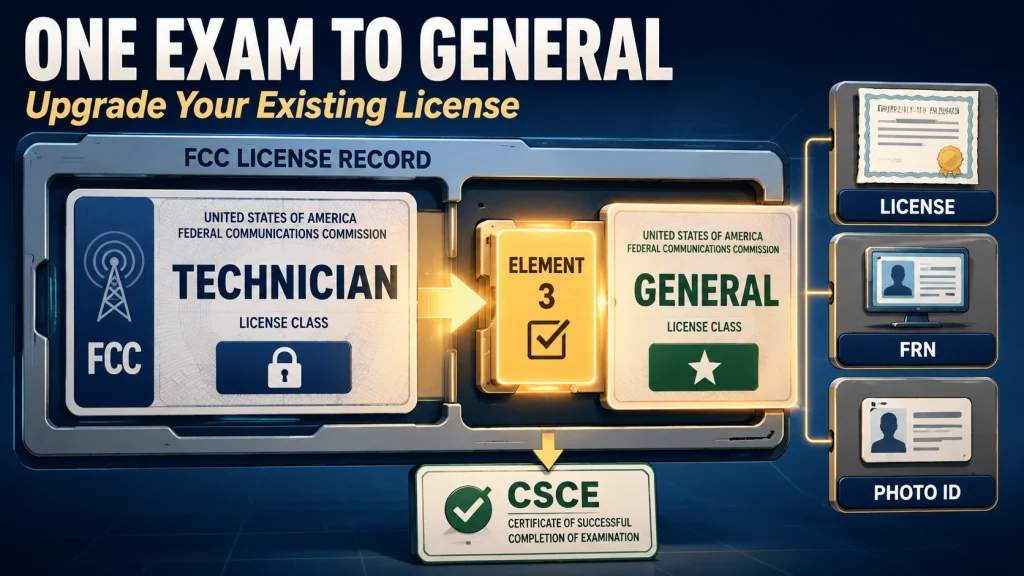
To upgrade from Technician to General, you pass the 35-question Element 3 exam at a Volunteer Examiner session; you do not retake the Technician exam. A current Technician license gives you credit for Element 2, so the practical process is to choose a session, confirm its policies, bring the correct identity and license information, pass … Read more

What Can You Do With a Ham Radio? The Full Scope From Local Repeaters to Space

What Can You Do With A Ham Radio

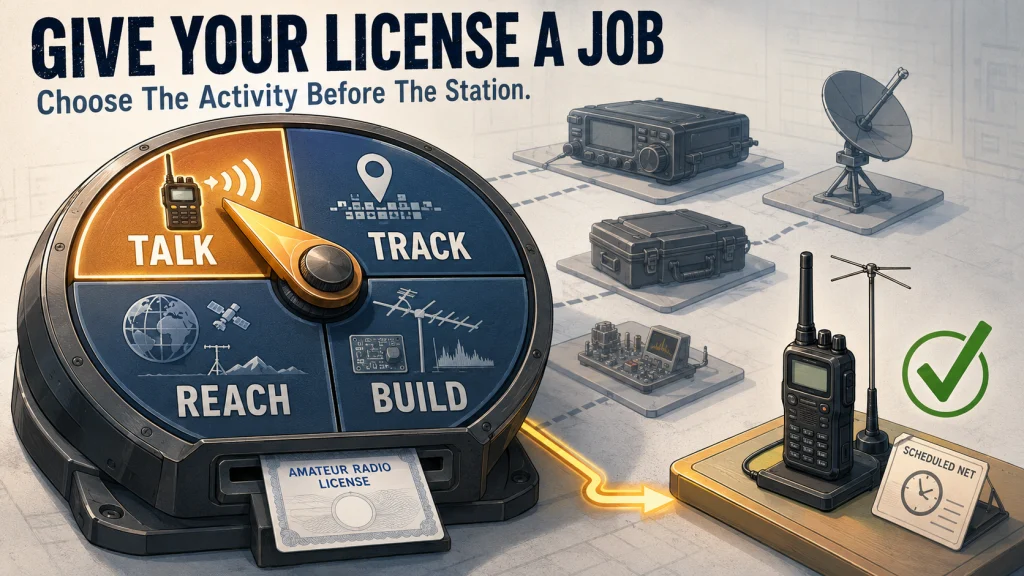
A ham radio can connect you with local operators, carry digital position and message data, support trained public-service communication, reach other countries, work through satellites, and become a platform for technical experimentation. A Technician license already opens a broad range of VHF, UHF, and limited HF activities, while a General license makes the commonly used … Read more