Start with Technician if your immediate goal is local repeater use, nearby simplex contacts, outdoor communication, or learning the hobby without adding another exam to your first milestone. Aim for Technician and General in the same session when you already know that HF voice, longer-distance contacts, and international operating are the reason you want a license. Many exam teams let a candidate attempt General after passing Technician, but session fees, retest charges, scheduling, and time limits vary. The right choice is not the higher license on paper; it is the level that opens the operating you will realistically use.

Choose the License by What You Want to Do
If your real question is, “Which ham radio license should I get first?”, the ham radio Technician vs General license decision becomes much easier once you stop treating the two classes like beginner and advanced school grades. Technician is a complete license for a large amount of local and regional operating. General is an expansion that matters most when you want broad HF access, especially voice communication beyond your local area.
The question I get asked most right after an exam session is what radio to buy, often before the candidate has even asked what their call sign will be. I turn that question around and ask what contact they want to make. A person who wants to join a local net has a different licensing need from someone who wants to talk across the country on 40 meters, even though both are brand-new operators.
Key point: Choose the operating path first. The license class should follow the frequencies and modes required by that path.
This article compares the two entry decisions and the same-session option. It does not teach the full study process, recommend equipment, or cover Extra-class privileges. For the broader sequence from interest to first contact, follow this practical path into ham radio.

ARRL's sixth-edition Technician manual is built for the 2026-2030 exam cycle and includes the current question pool. It explains licensing rules, operating practices, radio basics, and other Technician-level material in a structured study guide. The book fits readers who want a complete route from deciding on Technician to preparing for the exam.
Check On AmazonIf you click this link and buy, we earn a commission at no additional cost to you.
What a Technician License Lets You Do
For a beginner comparing ham radio license levels, Technician gives access to the amateur bands above 30 MHz, subject to the mode and operating rules that apply within each band. For most beginners, that means VHF and UHF repeaters, local simplex communication, scheduled nets, digital operation on those bands, and some amateur-satellite or ISS contacts when the selected frequencies and mode fit Technician privileges.
That is not a trial version of amateur radio. A Technician can build real operating skill by programming a known repeater, learning net procedure, testing simplex range, improving antenna placement, and becoming comfortable with call signs and radio etiquette. Someone interested in community communication or nearby outdoor contacts may use those privileges for years without feeling limited.
Technicians also have limited HF privileges, but the word limited matters. They may use CW on specified portions of 80, 40, and 15 meters. On 10 meters, Technician RTTY and data privileges, including FT8, are limited to 28.000 through 28.300 MHz, while SSB voice is available from 28.300 through 28.500 MHz. A Technician license does not provide general FT8 or data privileges on 20, 40, 80, or 15 meters.
Field Note: A common beginner mistake is hearing that Technician includes HF and assuming it includes the same everyday HF voice access as General. It does not. Ten meters can be excellent when propagation supports it, but it is not a substitute for the broader HF access that motivates most people to upgrade.
Technician is usually enough when the operating plan looks like this:
- Check into a local repeater net.
- Use simplex for nearby licensed contacts.
- Communicate during local public-service or preparedness activities.
- Operate portable on VHF or UHF during hikes and day trips.
- Learn basic programming and on-air procedure before expanding into HF.
Family communication needs one legal clarification: an amateur license belongs to the individual, not the household. Every family member who transmits must hold the appropriate amateur operator license. Technician can still be a practical family option, but it is not one license covering everyone.
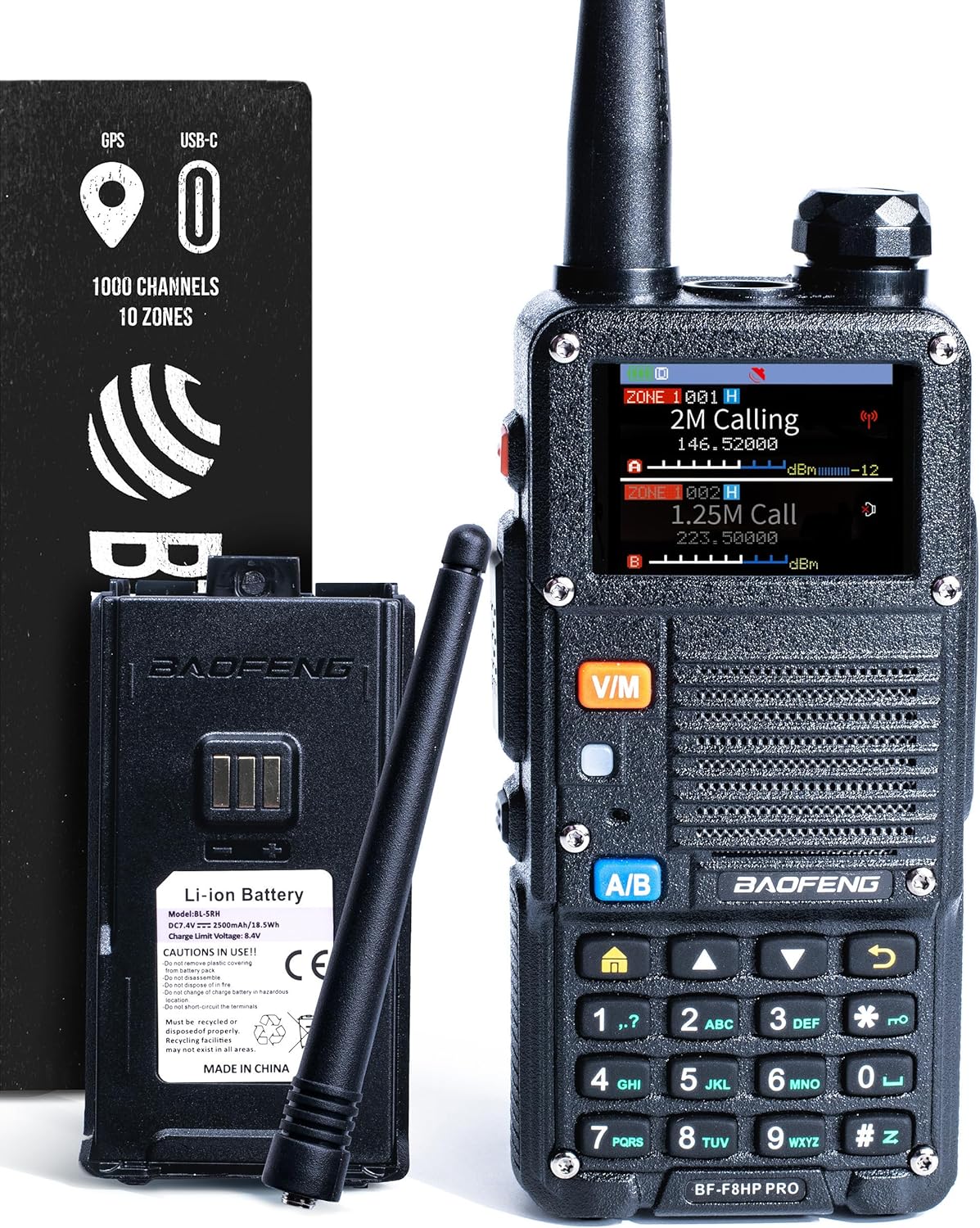
The BF-F8HP PRO is a 10-watt tri-band handheld ham radio with 1,000 channels. It includes GPS, Airband, NOAA and FM receive functions, plus USB-C charging and an IP54 rating. Its handheld format makes it a concrete match for the local repeater and portable radio operation described in this Technician section.
Check On AmazonIf you click this link and buy, we earn a commission at no additional cost to you.
What General Adds Beyond Technician
The Technician-versus-General choice in ham radio becomes clearest here: General keeps the VHF and UHF access you receive with Technician and adds extensive HF privileges. The practical change is not merely more frequencies. It gives you useful portions of the bands where operators commonly make regional, cross-country, and international contacts using voice, CW, and digital modes.
Twenty meters is a good example. General opens most of that band, including a substantial voice segment, while Technician has no ordinary 20-meter operating privileges. General also adds broader access on 40, 80, 15, 10, and the other major HF bands, allowing you to change bands as propagation, time of day, and operating goals change.
| Decision factor | Technician | General |
|---|---|---|
| Local repeaters and simplex | Strong fit | Same access retained |
| VHF and UHF digital operation | Available within band rules | Same access retained |
| HF voice | Limited mainly to 10 meters | Broad access across major HF bands |
| HF data | Limited segments and modes | Broad access within General segments |
| Long-distance flexibility | Possible but restricted | Much stronger because more bands are available |
The real advantage is flexibility. If 10 meters is closed, a Technician cannot move to most other HF options and continue the same kind of contact. A General operator can select another authorized band that better matches current propagation, antenna limits, and the distance they are trying to cover.
General does not guarantee worldwide contacts. HF results still depend on the antenna, station setup, noise, propagation, operating skill, and whether another station is listening. The license removes a major permission barrier, but it does not replace the rest of the communication path.

The Icom IC-7300 is an HF and 50 MHz base-station transceiver using a direct-sampling receiver design. It supports SSB, CW, RTTY, AM, and FM and provides a real-time spectrum scope with waterfall display. That broad HF capability directly matches the additional HF flexibility a General license opens.
Check On AmazonIf you click this link and buy, we earn a commission at no additional cost to you.
Should You Take Technician and General in the Same Session?
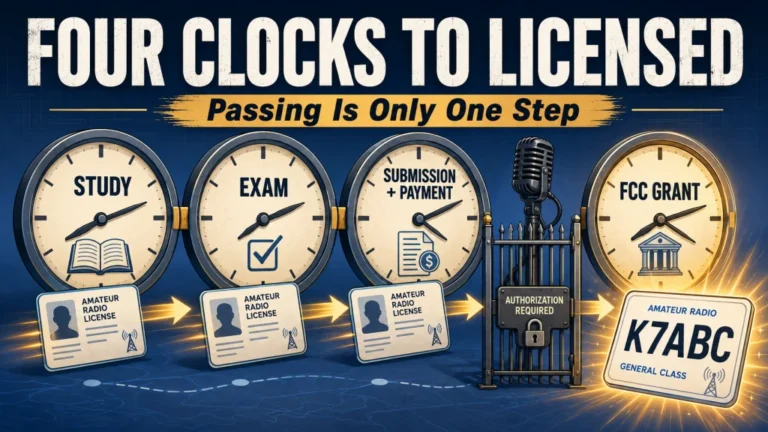
If your question is, “Should I start with Technician or General?”, remember that General cannot be granted until you earn Technician examination credit. Many VE sessions then allow you to continue to the General element immediately after passing Technician. This can be efficient because you are already registered, your identification has been checked, and the exam environment is familiar. It also lets you finish with the privileges you intended to use rather than scheduling another session later.
Do not assume that every session handles fees and timing the same way. Some examining organizations charge one session fee that covers one attempt at each element. Others may have different registration, retest, or scheduling practices, and an online team may need advance notice that you plan to attempt two elements. Confirm those details before exam day.
A failed General attempt does not erase a passed Technician element. That makes an extra attempt reasonable when you are already prepared, but it does not make cramming automatically smart. Protect the first objective: pass Technician cleanly enough that studying General has not confused your band privileges, rules, or basic operating knowledge.
Use this decision path:
- Take Technician first and stop: your Technician practice results are still inconsistent, your exam date is close, or local operating is your only current goal.
- Prepare for both: Technician material feels secure, General practice results are consistently above the passing level, and HF is part of your near-term plan.
- Attempt General without forcing it: the session permits it, the fee structure makes sense, and you can treat a miss as information rather than failure.
The same-session option is useful because it removes another appointment, not because every beginner should rush. Passing one exam and getting on the air is better than delaying everything until you feel ready for two.

ARRL's Tech Q&A 9th Edition is a compact question-and-answer study book for the current 2026-2030 Technician exam cycle. It is designed around the Technician question pool and provides focused review for exam preparation. That makes it useful for a same-session plan because it gives the Technician portion a dedicated final-review resource.
Check On AmazonIf you click this link and buy, we earn a commission at no additional cost to you.
Who Should Start With Technician Only?
Start with Technician only when your immediate use case is local. That includes repeaters, nearby simplex contacts, many community communication activities, and portable VHF or UHF operation. In those situations, General may be useful later, but it does not unlock the contact you are trying to make this month.
Technician-only also makes sense when you are still deciding what part of amateur radio interests you. Getting licensed lets you listen with purpose, join local activity, and discover whether your curiosity turns toward HF, digital modes, antennas, public service, or something else. You are not required to predict the next ten years of the hobby before your first exam.
Limited study time is another valid reason. A person balancing work and family may make more progress by earning Technician, programming one useful local channel, and making a first contact than by postponing the entire process for a second question pool. The lowest-commitment route is often more valuable than the most ambitious route.
Note: Choosing Technician only is mainly a decision about study load and immediate operating goals. It does not close the door on General, and it does not make the first license less useful for the local communication you intend to do.
For a wider view of what beginners can do before choosing a license target, see my ham radio guide for beginners. It helps separate the hobby itself from the assumption that every new operator needs the same privileges.

Gordon West's Technician Class book is the 11th edition for the 2026-2030 Element 2 exam cycle. It is a dedicated license-preparation book rather than a general operating manual. That focused scope fits readers choosing Technician only and wanting one current study resource for the first exam.
Check On AmazonIf you click this link and buy, we earn a commission at no additional cost to you.
Who Should Aim for Technician and General Together?
Aim for both when the reason you want amateur radio is already an HF reason. If you picture talking with operators in other states or countries, changing bands as conditions shift, or using ordinary HF voice outside the narrow Technician segments, General is not an optional badge. It is the permission set your intended activity requires.
Someone with CB experience may also have a useful head start because concepts such as skip, band conditions, and long-distance radio contacts are not entirely new. That background does not replace studying amateur rules, electronics, or band privileges, but it can make the purpose of General feel concrete instead of abstract.
A technical background can help when the Technician material is already comfortable and the additional General theory does not threaten the first pass. The mistake is assuming job experience alone covers Part 97 rules or amateur band limits. An engineer can still miss a licensing question, just as an experienced operator can still miss a circuit calculation.
Both exams are also a sensible target when local exam opportunities are rare or difficult to reach. In that case, preparing for General may reduce travel and scheduling friction. The trade-off is study load, so the plan works only when Technician readiness remains solid.
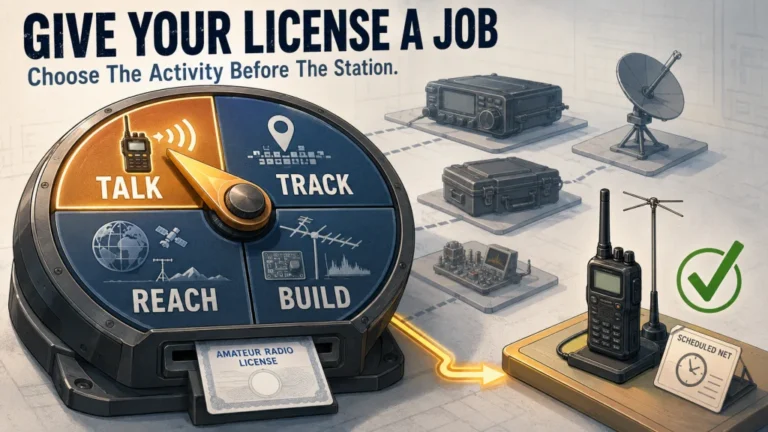
Use one test before committing: describe the first three contacts you want to make. If all three depend on local repeaters or nearby simplex, Technician is enough to begin. If at least one clearly requires broad HF access, studying for General now has a practical reason.

Gordon West's General Class book is the 11th edition for the 2023-2027 Element 3 exam cycle. It is dedicated to General-class license preparation and pairs naturally with a separate Technician study resource. That makes it a good fit for readers who have already decided to prepare for both license elements.
Check On AmazonIf you click this link and buy, we earn a commission at no additional cost to you.
The 10-Year License Changes the Risk of Waiting
An amateur license is normally granted for a 10-year term. A Technician license does not expire early because you did not upgrade, and you do not lose the ability to take General later. That long term removes much of the pressure to solve your entire amateur radio future at the first session.
A later operator-class upgrade is exempt from the FCC application fee. Administrative updates and sequential call-sign requests are also exempt. The current $35 FCC application fee applies to a new license, renewal, rule waiver, or vanity call sign request, while VE and VEC exam-session charges are separate and vary. That means upgrading later may still involve a session fee, but the FCC does not charge another application fee merely to change from Technician to General.
That distinction leads to a practical rule: wait when waiting helps you get on the air sooner, not when it becomes an excuse to avoid the next step indefinitely. A Technician who is using repeaters, learning operating procedure, and studying General with a clear HF goal is progressing. A Technician who bought an HF setup but cannot use the intended bands has created a preventable mismatch.
For the application sequence, exam elements, fees, and license-record steps beyond this comparison, use the complete ham radio license guide. Keeping those mechanics separate makes it easier to focus here on the decision that comes first.

ARRL's General Q&A 7th Edition is a 224-page General upgrade study guide published in 2023. Its question-and-answer format is aimed specifically at moving from Technician to General. It fits this section because upgrading later remains available without requiring the operator to solve every licensing goal at the first session.
Check On AmazonIf you click this link and buy, we earn a commission at no additional cost to you.
Quick Decision Checklist
Use this checklist after you have compared the privileges but before you commit to one or two exams. It reduces the decision to the operating goal, your current preparation, and whether broader HF access solves an immediate need.
- Choose Technician only if your first contacts will use local repeaters, nearby simplex, or portable VHF and UHF operation.
- Choose Technician only if adding General study would weaken your readiness for the first exam.
- Prepare for both if HF voice, longer-distance contacts, or international communication are central to why you want the license.
- Prepare for both if Technician material is already secure and General practice is consistently at a passing level.
- Check the session rules before assuming a second element, retest, or added time will be handled the same by every VE team.
If the checklist still produces a tie, start with Technician and make one real contact. Actual operating will reveal whether broader HF privileges solve a problem you have, rather than a possibility you may never use.

ARRL's General Class License Manual 10th Edition is the current full study manual for the 2023-2027 General exam cycle. It combines General-class study material with questions and answers for the upgrade exam. It fits a decision checklist because readers who choose broader HF privileges can move directly from the decision into structured General preparation.
Check On AmazonIf you click this link and buy, we earn a commission at no additional cost to you.
Final Thoughts: Get the Privileges Your First Real Goal Needs
Technician is the right first stopping point when your plan is local communication, outdoor VHF or UHF use, or learning through actual operating before adding HF. General is the better first target when long-distance HF voice and broad band access are already the reason you are studying. Neither choice is more serious or more legitimate; one is simply a better match for a particular operating path.
My advice is to write down the contact you want to make, identify the band and mode it requires, and then choose the license class. Take both exams in one session when that path points to HF and your preparation supports it. Otherwise, earn Technician, get on the air, and upgrade when General solves a problem you can name.

Ham Radio For Dummies 4th Edition is a broad beginner reference covering amateur-radio licensing, operating, equipment, and modern digital activity. The 2021 fourth edition is designed as a general introduction rather than a single exam question-pool book. It fits the final section by giving a newly licensed or still-deciding reader a wider reference for what comes after the license choice.
Check On AmazonIf you click this link and buy, we earn a commission at no additional cost to you.
FAQs
📝 Can I take the Technician and General exams on the same day?
Many VE sessions allow you to attempt General after you pass Technician. Confirm the team’s registration, timing, fee, and retest rules before the session because practices vary.
📻 Do I have to pass Technician before General?
Yes. A General license requires credit for both the Technician element and the General element. You may earn both at one session, but Technician credit comes first.
🌎 Is General worth it if I want long-distance contacts?
Usually, yes. General provides broad HF access that gives you more bands and modes for regional, national, and international contacts, although results still depend on propagation, antennas, and station setup.
📡 Can a Technician use HF frequencies?
Yes, but only in limited segments and modes. Technician data on 10 meters is limited to 28.000 through 28.300 MHz, SSB voice is available from 28.300 through 28.500 MHz, and specified portions of 80, 40, and 15 meters are CW-only.
💵 Will I pay another FCC fee when I upgrade later?
An ordinary operator-class upgrade is exempt from the FCC application fee. The VE team or examining organization may still charge its own session fee.
⏳ How long is a Technician license valid?
An amateur license is normally granted for 10 years. You can remain a Technician for that term and upgrade to General later when broader HF privileges fit your operating plans.