A scheduled voice net is one of the easiest ways to make a first structured contact because the time, frequency, listener, and check-in process are already defined. Start by finding a current local net, listening through its preamble, and following the net control station’s instructions instead of relying on a universal script. You may be asked for identification, where you are operating, and whether you have anything for the net, but the order and wording vary locally. Repeating the same friendly net for several weeks is often more useful than collecting a long list of schedules you never verify.
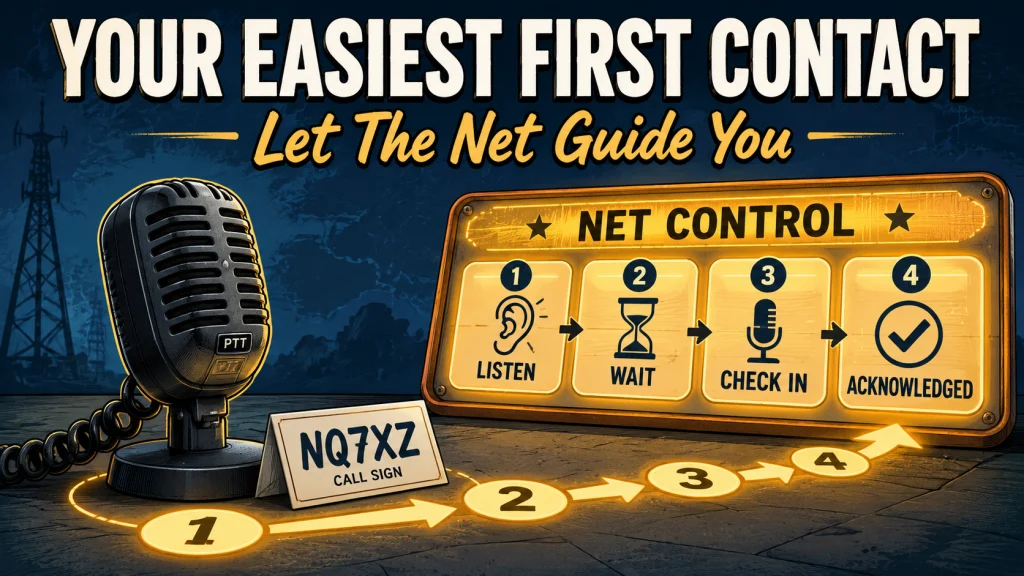
A Scheduled Net Removes the Hardest Part of a First Contact
Ham radio nets for beginners remove several decisions that make a first contact feel difficult. The frequency, scheduled time, expected listener, and check-in process are already defined, so you do not have to create the whole conversation from scratch. You can concentrate on recognizing your turn and giving a clear station identification.
That structure is why I often point a hesitant new licensee toward a local voice net before suggesting random calls on a quiet repeater. The radio may already be programmed correctly, but uncertainty about the opening words keeps the microphone on its hook. A well-run beginner-friendly net turns that open-ended conversation into a short sequence you can hear before attempting it.
Field Note: The new operators who hesitate over a first transmission usually do not need a more capable radio. They need a predictable moment to speak and a person who is ready to answer. A scheduled net provides both.
This article focuses on joining local voice nets as a beginner. It does not teach formal traffic handling, emergency deployment, or net-control operation in depth. Those activities use additional procedures and may require local training, authorization, or practice beyond an ordinary check-in.
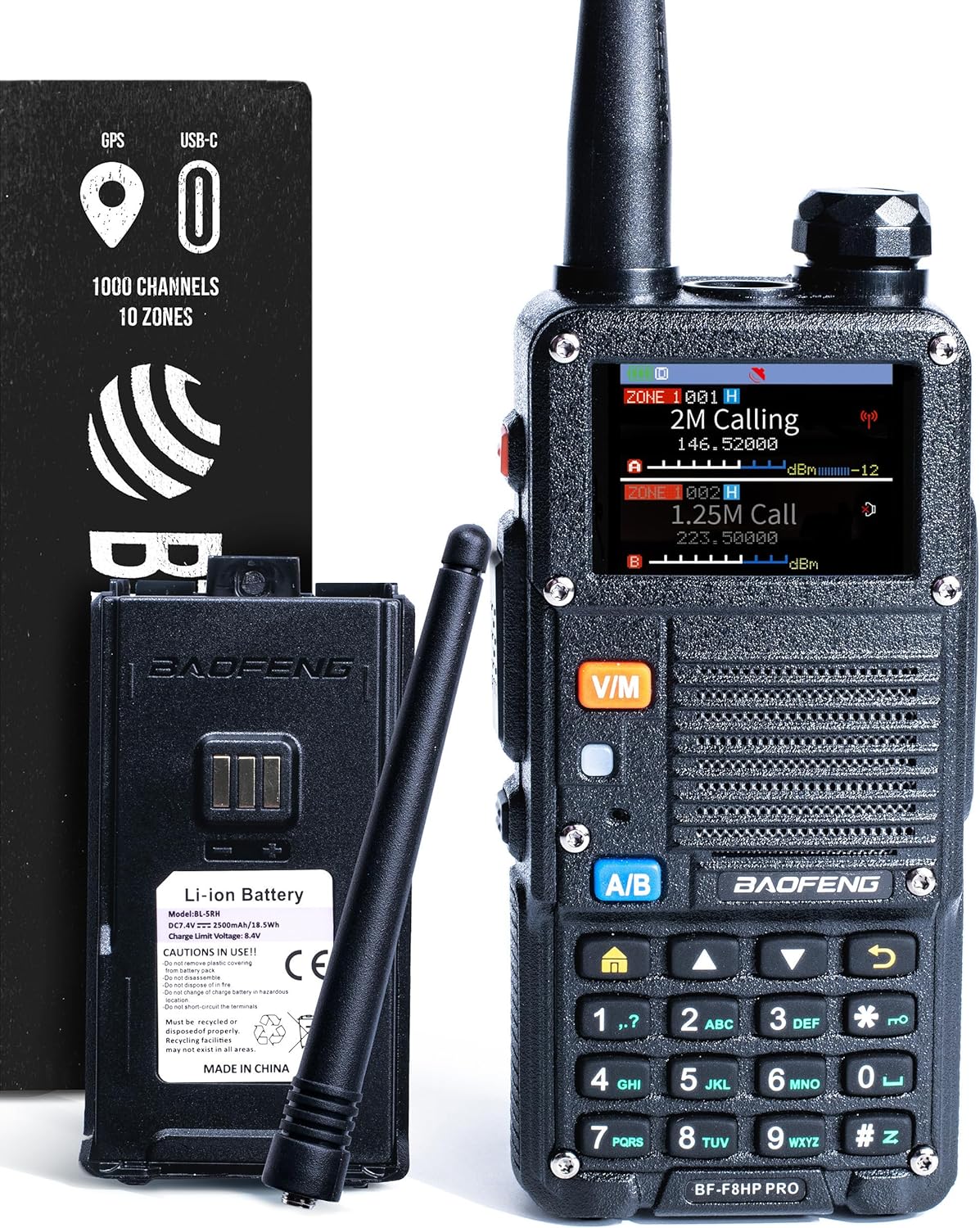
This tri-band handheld provides up to 1,000 channel memories for organizing amateur radio operation. It also includes GPS, NOAA and aviation-band receive, USB-C charging, an IP54 enclosure, and firmware update support. Those features give a new operator one flexible radio for monitoring and joining local nets after the correct repeater settings are programmed.
Check On AmazonIf you click this link and buy, we earn a commission at no additional cost to you.
What Is a Ham Radio Net?
A ham radio net is a scheduled or organized on-air gathering built around a shared purpose. Many local nets use a repeater, while others operate on simplex or an HF frequency. Some are tightly directed by a net control station, and others become more conversational after the initial roll call.
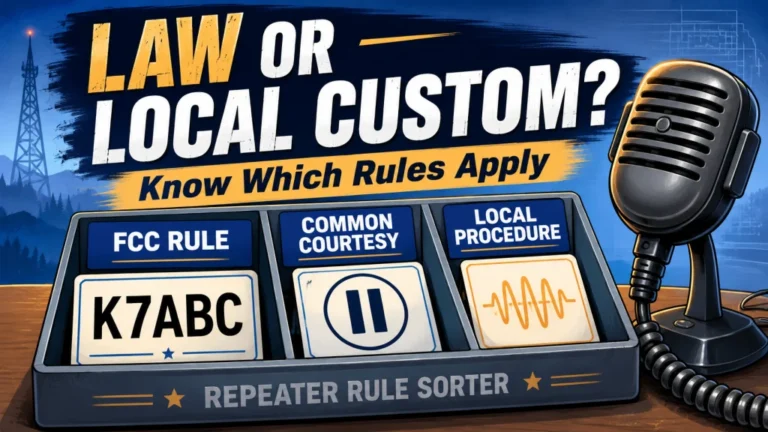
The word “net” does not describe one universal operating style. A weekly club check-in may ask only for call sign and name, while a traffic or public-service training net may sort stations by message status, location, or assignment. The correct procedure comes from that net’s preamble and net control, not from a script copied from another region.
| Net type | Typical purpose | What a beginner should expect |
|---|---|---|
| Social net | Conversation, introductions, and regular local contact | A simple check-in followed by a topic, comments, or a roundtable |
| Club net | Announcements, event reminders, and member contact | A roll call or open check-in with local club information |
| Technical net | Equipment, antennas, programming, and troubleshooting | A check-in followed by questions or discussion around a technical theme |
| Traffic net | Handling formal written messages through an established system | More specific language and procedures than a casual voice net |
| Public-service training net | Practicing communication for events or served organizations | Directed operation, assignments, status reports, or training messages |
| Emergency-preparedness net | Readiness checks, local coordination, and procedure practice | Clear control, priority categories, and local participation rules |
| Specialty net | A shared interest, location, occupation, radio mode, or activity | Procedures that reflect the group’s specific purpose |
A social or club net is usually the easiest first choice because the expected exchange is short and the pace is familiar after one listening session. Traffic and public-service nets can still be welcoming, but their vocabulary and operating rhythm may assume that participants understand a local procedure.

The NA-320A is a 17.7-inch SMA-Female handheld antenna designed for 144, 220, and 440 MHz operation. It provides tri-band coverage for compatible BTECH and BaoFeng handheld radios. That makes it a practical antenna for monitoring local repeater or simplex nets across the amateur bands supported by the radio.
Check On AmazonIf you click this link and buy, we earn a commission at no additional cost to you.
Listen Through the Preamble Before You Check In
Turn on the radio several minutes early and make sure you are monitoring the correct repeater or simplex frequency. The opening announcement, often called the preamble, usually explains the net’s purpose, who may participate, how check-ins will be collected, and whether the frequency is being used as a directed net. Missing that first minute is one of the easiest ways to answer at the wrong time.
A directed net asks stations to communicate through net control rather than calling one another freely. Net control may request emergency or priority traffic first, then mobile stations, visitors, members, stations with traffic, or general check-ins. Wait for the category that fits you, even if several people have already transmitted.
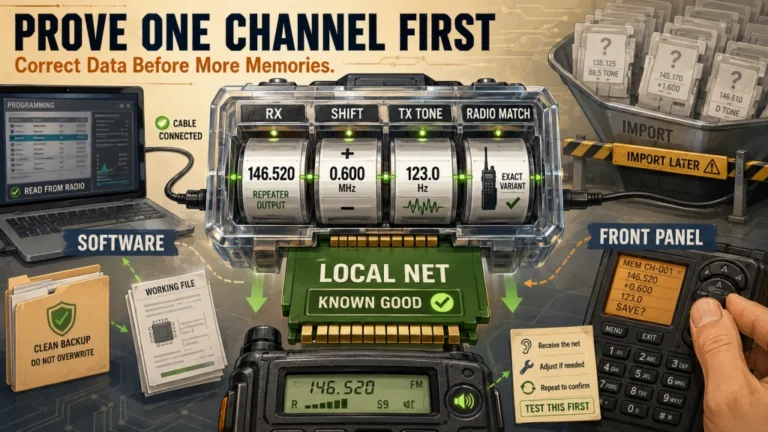
- Confirm the correct frequency, offset, access tone, and mode before the scheduled start.
- Listen for the net name and date so you know the listing is current.
- Determine whether the net is directed or informal.
- Write down the call sign of the net control station.
- Note the requested check-in categories and their order.
- Wait for the repeater carrier or courtesy tone to drop before transmitting.
The listening step is also a radio test. If you hear only fragments, cannot open the repeater reliably, or miss several participants, solve that path problem before checking in. The guide to finding and verifying local repeaters explains why a directory entry alone does not prove that a system is active or reachable from your location.
Key point: One complete listening session gives you the local procedure. Ten generic check-in scripts do not.
When the preamble is unclear or you arrive late, keep listening until net control invites late or additional check-ins. There is no penalty for observing one session and returning the following week with better notes.

The NA-771 is a 15.6-inch SMA-Female whip designed for 144 and 430 MHz VHF/UHF operation. Amazon lists a 50-ohm impedance and a 10-watt maximum power rating for the antenna. On a compatible handheld, it is a practical option when the first task is to hear a local repeater clearly before checking into a net.
Check On AmazonIf you click this link and buy, we earn a commission at no additional cost to you.
What the Net Control Station Is Doing
The net control station, commonly shortened to NCS, manages the order of communication. NCS opens the net, explains the procedure, records or acknowledges check-ins, passes instructions, and keeps multiple stations from transmitting over one another. On a directed net, treat NCS as the station that controls the conversation flow.
That does not mean net control is the most powerful station or the only person allowed to speak. NCS may ask another operator to relay a weak station, invite a technical answer, call a specific participant, or move a longer conversation away from the main frequency. The role is coordination, and the best way to help is to transmit only the information requested.
Priority categories can sound intimidating when you first hear them. Emergency traffic refers to an immediate situation involving safety of life or protection of property, while priority, welfare, routine, and other terms may have specific meanings within a formal system. A casual beginner should not guess at a category simply to get called sooner.
If you hear an emergency station, stop and allow net control to manage it. FCC rules require amateur operators to give priority to stations providing emergency communications, and normal check-ins can wait. A training exercise is different from an actual emergency, so listen for the language NCS uses before deciding what is happening.

The QHM22 is an IP54-rated shoulder speaker microphone for compatible BaoFeng, BTECH, Retevis, pxton, and Kenwood K1-style radios. Its push-to-talk control lets the radio stay clipped or secured while the microphone remains accessible. That can make it easier to follow net control and respond briefly when your station is called.
Check On AmazonIf you click this link and buy, we earn a commission at no additional cost to you.
How to Find Local Ham Radio Nets That Are Still Active
Finding local ham radio nets requires more than locating an old schedule. Start with the website or current communication channel of the club that operates the repeater. Club calendars and repeater pages are often closer to the operators who can confirm a cancellation, time change, seasonal schedule, or new access tone.
The ARRL Net Directory, ARRL affiliated-club search, regional net directories, repeater listings, and recommendations from local operators can widen the search. Each source is a lead, not proof that the next session will occur exactly as listed. Nets move, daylight-saving changes create confusion, and pages can remain online after activity has stopped.
Some nets are also carried through linked systems such as EchoLink, AllStarLink, IRLP, or digital voice talkgroups. Those links can let a new operator listen or participate from outside the repeater’s local RF footprint, but they add another compatibility check. Confirm the exact platform, room or node, talkgroup, access method, and local participation rules before assuming an app or digital radio will reach the same net.
| Item to verify | Why it changes the result | Best confirmation |
|---|---|---|
| Date and day of week | A directory may retain an old recurring schedule | A recent club calendar, announcement, or successful monitoring session |
| Local time and time zone | Regional and linked nets may be listed in another zone | The current net page or a local operator |
| Repeater and access settings | The net may move or the repeater configuration may change | The repeater owner or sponsoring club |
| Participant eligibility | Some nets are open, while others serve a defined group or training purpose | The current preamble or net description |
| Check-in procedure | Categories and requested information vary locally | Listening to the current net |
A practical search sequence is to find one reachable repeater, identify the organization responsible for it, inspect that organization’s current calendar, and monitor at the listed time. If the net does not appear, check whether the date, time zone, tone, or repeater changed before assuming the listing or radio is wrong.
Once you find a current beginner-friendly net, stop searching for a moment. Using the same net repeatedly builds recognition, timing, and confidence faster than visiting a different procedure every night.

The PC03 uses an FTDI interface and is built as a USB programming cable for compatible BTECH, BaoFeng, and Kenwood radios. Amazon lists support for models including the UV-5R, BF-F8HP, GMRS-V2, and UV-82HP. It is useful for loading or correcting repeater memories when a local net changes frequency, tone, or access settings.
Check On AmazonIf you click this link and buy, we earn a commission at no additional cost to you.
How to Join a Ham Radio Net Without Forcing a Script
When net control asks for check-ins, key the microphone, pause briefly, and give only the information requested. A common ham radio net check-in includes a call sign, name, location, and whether the station has traffic. Some nets want the call sign first and last, some request phonetics, and some collect only call signs before returning to each station.
A safe preparation line is not a sentence to transmit word for word. Write four prompts on paper: identification, name, operating location, and whether you have anything for the net. Then listen to the first few stations and match the local format. This keeps the exchange short while preventing the blank-mind moment that often appears as soon as the push-to-talk button is pressed.
Transmit a long introduction copied from an online example before hearing what the net control station requested.
Listen to the preamble and two or three check-ins, then provide the same categories in your own clear voice.
If NCS asks for phonetics, use a recognized phonetic word for each letter of the call sign. Phonetics can also help when one letter is repeatedly misunderstood, but they do not need to make every transmission longer. The guide to using phonetics for clear call signs explains when they add clarity and when the plain call sign is enough.
The word “traffic” causes unnecessary confusion. In a net, it usually means information, a message, a question, or another item that needs airtime under that net’s procedure. If you are checking in only to participate and have nothing to pass, say “no traffic” only when NCS asks for traffic status.
Most first-net mistakes are timing errors rather than serious operating failures. New operators may key at the same moment as another station, begin before the repeater finishes resetting, hold the microphone too close, forget to release push-to-talk, or continue speaking after their audio path has dropped. Pause, watch or listen for the channel to clear, speak at a normal pace, and release the button as soon as the requested information is complete.
New operators can say “new operator” after the requested information if the net is conversational and they are comfortable doing so. Most friendly local nets will slow down or explain the next step, but the announcement is optional. Your call sign and compliance with the requested format matter more than sounding experienced.

The QHM22D is an IP54 rainproof shoulder microphone with dual push-to-talk controls for compatible BaoFeng, BTECH, and Kenwood radios. Its dual-PTT layout is designed for radios that support separate push-to-talk operation. Keeping the radio secured while using a dedicated microphone can make short net check-ins and PTT timing easier to manage.
Check On AmazonIf you click this link and buy, we earn a commission at no additional cost to you.
What to Do After Net Control Acknowledges You
Once NCS repeats your call sign or otherwise confirms the check-in, return to listening. The acknowledgment means you are on the list; it does not always mean you should begin talking. Net control may finish collecting stations before returning to each participant for comments, reports, or questions.
Keep the radio available and follow the sequence you heard in the preamble. If NCS calls your sign, answer promptly and keep the response appropriate to the net. If your audio is weak or broken, net control may ask for a repeat, a location change, higher power, or a relay through another station.
Some informal nets allow participants to leave whenever needed. Other nets expect stations with assignments, formal traffic, or training roles to remain until released or to advise NCS before leaving. Follow the stated procedure rather than assuming that one check-in completes every obligation.
Your first net can also become your first real conversation. If you need a broader structure for opening, exchanging basic information, and closing cleanly, review the steps for making your first ham contact. The net simply supplies a predictable place to use those skills.

The BL-5RHL is a 5,200 mAh Li-ion battery pack with USB-C charging for the BaoFeng BF-F8HP PRO and BTECH BL-5RH series. It provides a higher-capacity power option for compatible radios without changing the operating setup. A charged spare helps a station remain available after net control acknowledges the check-in and the net continues through additional rounds.
Check On AmazonIf you click this link and buy, we earn a commission at no additional cost to you.
A Simple Plan for First-Net Nerves
Monitor one full session before planning to transmit. Write down the net name, NCS call sign, order of categories, three sample check-ins, and the closing procedure. By the second session, the voices and timing will no longer feel completely unfamiliar.
Before the next meeting, confirm that your call sign is written where you can see it, set the radio to the correct memory, reduce distractions, and perform any radio check outside the active net. When general check-ins are called, breathe, key the microphone, pause, and read the short prompts rather than trying to invent a polished introduction.
- Listen to one complete session.
- Prepare four written prompts.
- Practice the call sign once at normal speaking speed.
- Wait for the correct check-in category.
- Give only the requested information.
- Listen for acknowledgment before doing anything else.
I tell new operators to judge the first attempt by one standard: did net control understand the call sign and acknowledge the station? A missed word, a pause, or a request to repeat one letter is normal radio communication, not a failed first contact.
Repeated participation removes the nerves more reliably than waiting to feel completely ready. Use the broader steps for getting on ham radio if the obstacle is not only the net, but also programming, repeater access, microphone confidence, or deciding what activity to try first.
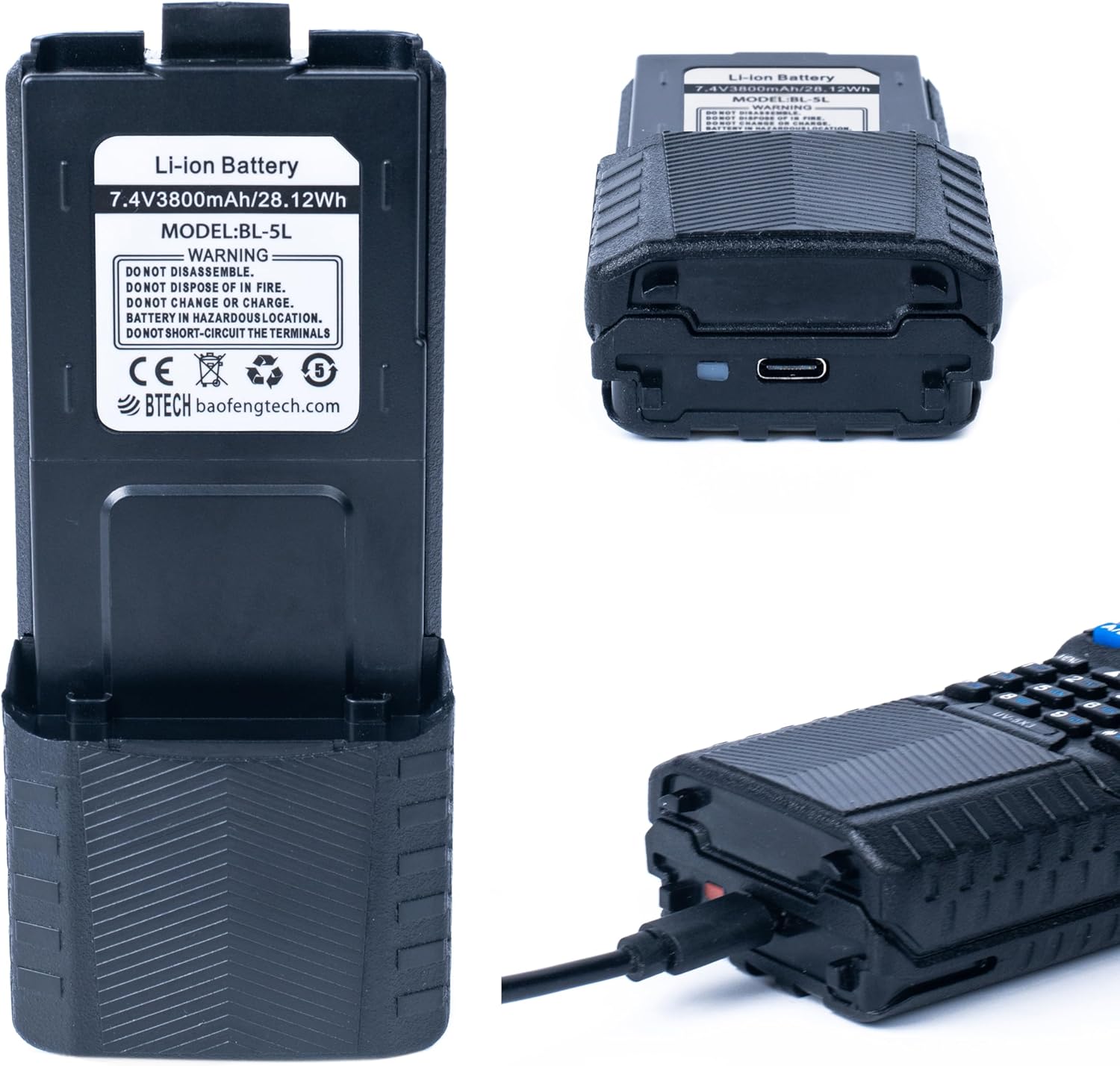
The BL-5L is a 3,800 mAh extended Li-ion battery pack for compatible UV-5X3, BF-F8HP, and UV-5R radios. Its high-capacity design is intended to extend operating time for those compatible handhelds. For a beginner, a charged battery helps keep the radio available through a full listening session, practice period, and eventual check-in.
Check On AmazonIf you click this link and buy, we earn a commission at no additional cost to you.
A Training Net Is Practice, Not an Emergency Qualification
Emergency-preparedness and public-service nets can teach disciplined listening, concise reporting, and directed-net procedure. Those are valuable operating skills, but a routine check-in does not prove that an operator is ready for deployment or authorized to represent a local organization. Formal roles may require additional courses, local registration, exercises, equipment standards, or approval from the group and served agency.
ARRL describes ARES participants as trained radio amateurs, which is the important distinction. Owning a radio and checking into a weekly readiness net can be an entry point, while actual assignments depend on the local program. Ask the sponsoring organization what training and authorization are required before presenting yourself as an emergency communications volunteer.
This boundary also protects the beginner experience. You do not need emergency credentials to join an open social or club net, and you should not avoid all nets because one schedule sounds formal. Choose a net that matches your current goal, then move into specialized training only when you want that responsibility.
Warning: Do not use an active emergency or directed incident frequency for practice. If real emergency traffic appears during a normal net, stop transmitting and follow net control’s instructions.
A beginner net should build reliable habits without creating false confidence. Clear identification, accurate listening, short transmissions, and following local instructions are the foundation; deployment skills come later.

The BL-5RH Battery Eliminator provides continuous radio power from compatible 12V to 24V DC sources. It is designed for the BF-F8HP PRO and other handheld radios using the BL-5RH battery platform. For preparedness or training use, it can keep a compatible station powered from a vehicle source without implying any emergency-service qualification.
Check On AmazonIf you click this link and buy, we earn a commission at no additional cost to you.
Keep a Small Net Log and Return to the Same Group
After the session, record the information that will make the next check-in easier. A simple net log should include the net name, day and local time, time zone, repeater or frequency, access tone, NCS call sign, sponsoring club, check-in format, and any change announced during the net.
Add one short note about your station. Record whether the signal was clear, whether NCS needed a repeat, where you were operating, and whether a different antenna position or power level helped. This is more useful than writing only “checked in,” because it gives you a practical setup to repeat.
- Net name and purpose
- Day, date, local time, and time zone
- Frequency or repeater memory
- Offset, tone, and mode when applicable
- Net control call sign
- Requested check-in format
- Club or organizer contact
- Signal and station notes
Return for several sessions before deciding whether the net fits you. The first night is spent decoding the procedure, the next few build timing, and later sessions give you enough familiarity to ask a question or contribute to the topic. That repeated, low-pressure practice is the real value of local ham radio nets.

This three-pack includes compact 3 x 5 inch top-spiral notebooks with black covers and a weatherproof design. The universal page pattern provides a simple format for short operating notes. It gives a new operator a convenient place to record net times, repeater settings, net control call signs, check-in formats, and signal notes.
Check On AmazonIf you click this link and buy, we earn a commission at no additional cost to you.
Final Thoughts: Learn One Local Procedure by Listening
Your first net does not require a perfect radio voice or a memorized speech. Find one current schedule, verify the local time and repeater, listen through the preamble, wait for the correct category, and give the information NCS requests. The procedure becomes much easier once you have heard it used by real local operators.
I would rather see a new licensee check into the same welcoming net four times than save forty unverified schedules. Repetition turns the call sign, microphone timing, and acknowledgment into ordinary operating habits. Once that feels normal, the rest of the hobby opens up much more naturally.

The BF-F8HP is an 8-watt dual-band handheld covering 136-174 MHz VHF and 400-520 MHz UHF. Amazon lists it as a full kit with a large battery. For a licensed operator, a VHF/UHF handheld provides a straightforward platform for returning to the same local repeater net and building routine through repeated participation.
Check On AmazonIf you click this link and buy, we earn a commission at no additional cost to you.
FAQs
📻 Do I need permission to join a local ham radio net?
Many social and club nets invite all licensed amateurs, but some nets serve members, trainees, or a defined group. Listen to the preamble or check the current organizer information before transmitting.
🎙️ What should I say when checking into a ham radio net?
Give only what net control requests. That may include your station identification, name, operating area, or whether you have a message or comment; listen to several check-ins first because the sequence varies by net.
🔤 Do I have to use phonetics for my call sign?
Use phonetics when NCS requests them or when a letter is misunderstood. A plain call sign is often enough when the signal is clear and the local procedure does not ask for phonetics.
🕒 What if I arrive after the net has started?
Listen until NCS asks for late, additional, or general check-ins. Do not interrupt an active exchange unless you have genuine emergency traffic.
📡 Can I check into a net with a handheld radio?
Yes, if the handheld can reliably reach the repeater or other stations from your operating location. Listen first and solve weak or broken audio before attempting the check-in.
📝 What does “traffic” mean during net check-in?
Traffic usually means a message, report, question, announcement, or other item that needs time during that net. Say “no traffic” only when NCS asks for traffic status and you have nothing to pass.
🚨 Does joining an emergency net qualify me for deployment?
No. A training-net check-in builds operating practice, while formal emergency roles may require local courses, registration, exercises, equipment checks, and authorization.