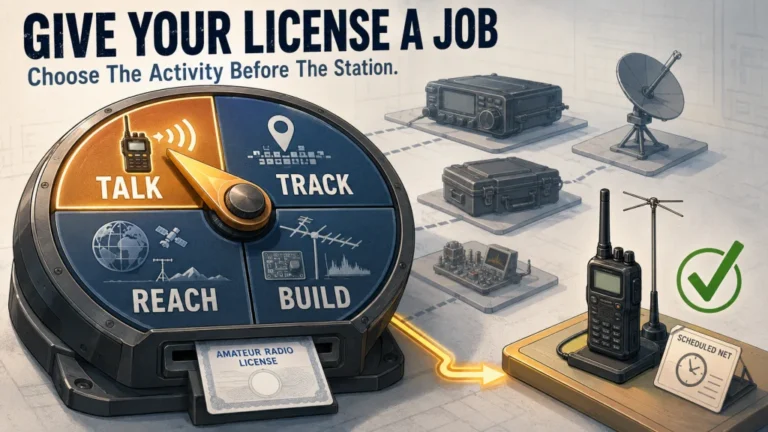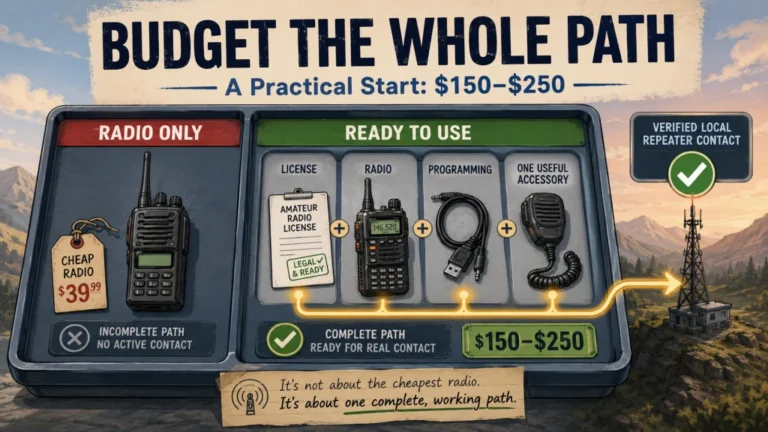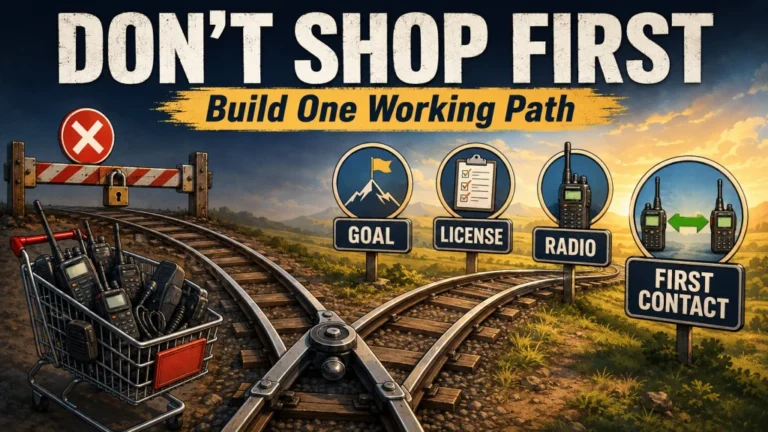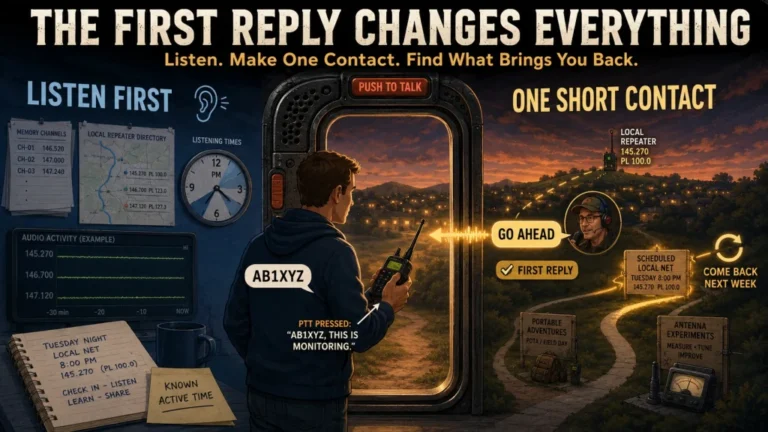
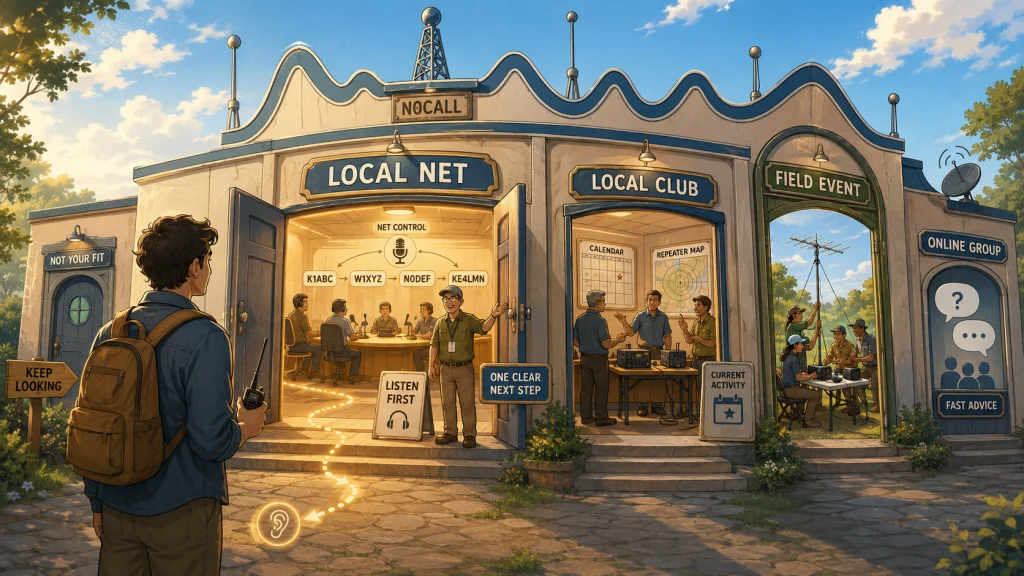
The ham radio community is not one uniform social group. Local clubs, repeater users, scheduled nets, event volunteers, and online groups can feel very different from one another, so the best way to judge the culture is to sample the part you may actually join. A welcoming local net or a practical mentor can shorten the distance between earning a call sign and feeling comfortable on the air. You will leave with a clear process for finding local groups, evaluating whether they fit, and making a low-pressure first introduction.
The Ham Radio Community Is Older in Places, but That Is Not the Whole Story
The reputation of ham radio as an old man’s hobby did not appear from nowhere. Walk into some club meetings or listen to some daytime repeater conversations, and the active group may clearly lean older and male. That observation can be useful when setting expectations, but it should not be turned into a national statistic without reliable data.
That visible age pattern can shape a newcomer’s first impression, especially when the easiest meeting to find is a traditional daytime gathering. It still tells you very little about every operator nearby or about groups built around different activities. A portable-operating event, evening net, school club, or online regional group may have a noticeably different mix from the first room you enter.
That distinction matters to a newcomer. An older membership does not automatically mean an unwelcoming membership, and a younger online group does not automatically provide useful local help. The better question is whether a group makes room for new operators, explains its routines, and supports the part of the hobby you want to try.
This discussion stays with community culture, clubs, mentors, and local nets. It does not cover the licensing process or recommend equipment. For a broader picture of what ham radio feels like in practice, the social side makes more sense when viewed alongside the technical and operating sides.

Written by H. Ward Silver, Ham Radio For Dummies covers station setup, communicating with other operators, FCC exam preparation, and digital-mode operating. The book also discusses clubs and mentoring, giving newcomers context for both the technical and social sides of amateur radio. Its broad beginner focus makes it a useful companion for readers trying to look past the hobby's old-school reputation and understand how people actually participate.
Check On AmazonIf you click this link and buy, we earn a commission at no additional cost to you.
Community Culture Changes with the Place You Enter
A newcomer can meet operators through a club meeting, a repeater, a scheduled net, a public-service event, a hamfest, or an online discussion group. Those spaces overlap, but they do not behave the same way. One unpleasant repeater conversation is not proof that every club is hostile, just as a friendly online server is not proof that it can help with a weak signal from your home.
I would judge each setting by what it is good at instead of asking whether the entire hobby is friendly or unfriendly. A club can provide local knowledge and hands-on help. A net gives you a predictable place to speak on the air. An online group can answer a narrow question quickly, but its members may not know your terrain, repeater coverage, or local operating habits.
| Where You Meet Operators | What It Does Well | What to Watch For |
|---|---|---|
| General-interest local club | Local repeaters, meetings, mentors, events, and practical introductions | The club may be active in areas that do not interest you |
| Scheduled local net | A predictable first contact with a clear net-control structure | Procedures differ, so listen before transmitting |
| Repeater conversations | A quick sense of who is active and when | A few frequent voices may not represent the larger local group |
| Public event or operating day | Shows what members do together rather than what they say they do | Busy volunteers may have limited time for a long introduction |
| Online community | Fast access to many viewpoints and specialized knowledge | Advice may not fit your location, license privileges, or local systems |
The useful test is simple: does the setting help you take a real next step? A group that can identify an active local net, explain its check-in procedure, or introduce you to someone who understands your operating goal is giving you more than social conversation. It is helping turn the license into a usable hobby.
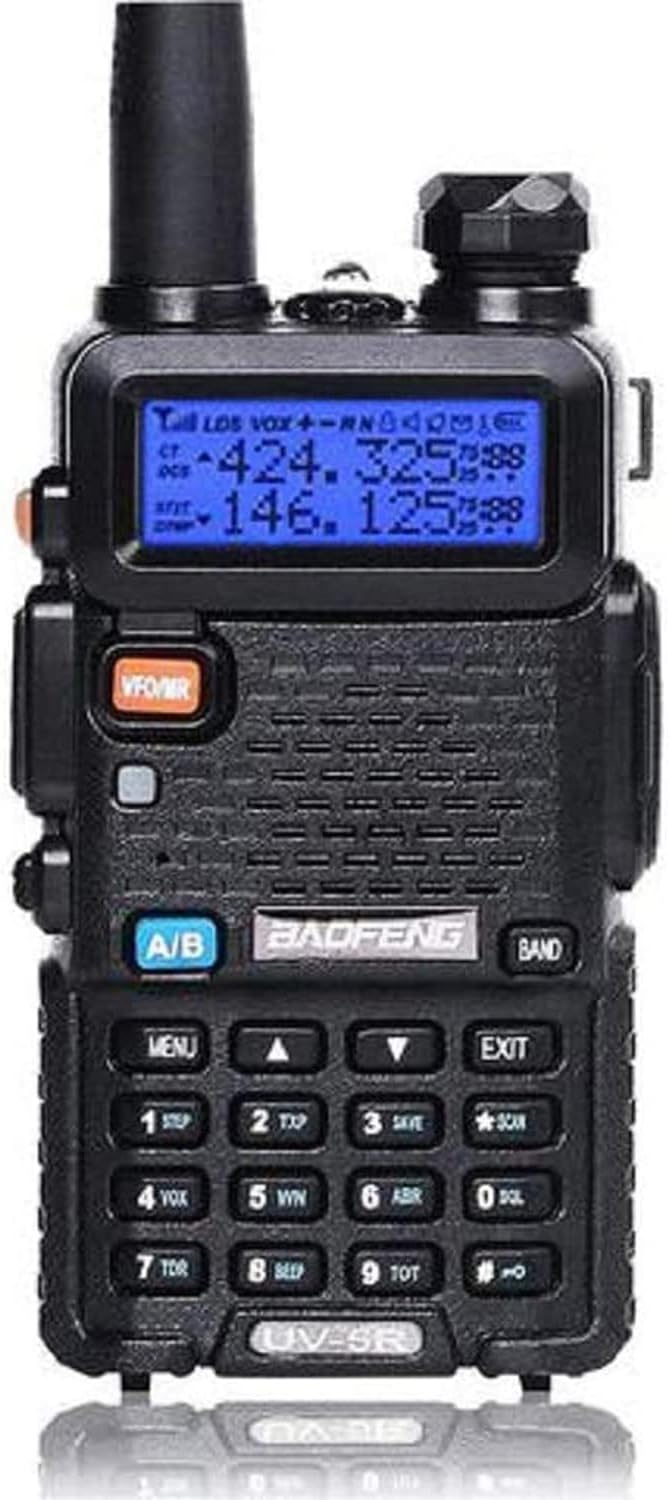
The Baofeng UV-5R is a black dual-band handheld two-way radio covering 144-148 MHz and 420-450 MHz. It includes an 1800mAh lithium-ion battery and is designed for portable operation. A handheld like this gives a newcomer a practical way to monitor local repeater activity and experience one of the community settings discussed in this section.
Check On AmazonIf you click this link and buy, we earn a commission at no additional cost to you.
How a Ham Radio Elmer Mentors a New Operator
An Elmer is an experienced amateur operator who helps a newer operator learn. The unusual part is not the nickname. It is the tradition of passing along practical knowledge that never fits neatly into an exam question, such as which repeater is active at commuting time, how a local net expects visitors to check in, or why a signal that works from a parking lot fails inside a house.
The best mentor does not try to turn you into a copy of themselves. Someone who loves contesting may still help you make a first repeater contact, but your goal should remain the center of the conversation. A useful Elmer asks what you want to do, watches you attempt it, and corrects the smallest problem preventing progress.
Field Note: The new hams who actually get on the air within the first month are almost always the ones who found a local net before they bought a second radio. The mentor’s value is often that practical: one frequency, one scheduled time, and one person who explains what will happen when the microphone is keyed.
There is also a boundary worth keeping. Mentoring should build your judgment, not create permanent dependence. After someone shows you how to enter a repeater, read a net schedule, or make a clean check-in, repeat the process yourself and write down the steps. Good help leaves you more capable after every interaction.
What to Ask a Potential Mentor
Do not open with a request to teach you everything about ham radio. Give the person a small, real task that can be completed. You might ask which local repeater carries beginner-friendly activity, whether visitors may check into the weekly net, or whether the club has a meeting where someone can listen to your first transmission.
A specific request makes it easier for a helpful operator to say yes, and it reveals whether their experience matches your goal. The person who maintains a repeater may be ideal for local FM questions, while someone active in portable operating may be more useful when your interest is taking radio outdoors. One mentor does not need to cover every part of the hobby.

The BTECH PC03 uses an FTDI chipset and is a plug-and-play USB programming cable for supported BTECH, Baofeng, and Kenwood radios. The listing names the UV-5R, BF-F8HP, GMRS-V2, and UV-82HP among compatible models. Its driver-free setup makes it well suited to a mentor-assisted session where a newcomer learns how to configure a supported radio.
Check On AmazonIf you click this link and buy, we earn a commission at no additional cost to you.
Ham Radio Clubs: How to Find a Good Local Fit
People searching for a nearby club often stop at the first organization with a local mailing address. Distance matters, but activity matters more. A club fifteen minutes away with an outdated calendar may be less useful than an active group thirty minutes away that runs a weekly net, welcomes visitors, and answers email.
The ARRL maintains a nationwide locator for affiliated clubs. Search by ZIP code or state, then treat every result as a lead rather than proof that the group is currently active. Club records can include specialties and services such as mentoring, repeaters, classes, test sessions, newsletters, and public-service activities, but the club’s own current calendar should confirm what is happening now.
- Check for a recent date. Look for a meeting notice, newsletter, event, or net schedule from the last few months.
- Find the on-air entry point. Note the repeater, frequency, day, time, and whether the net invites visitors or new operators.
- Look for beginner evidence. Mentoring, introductory presentations, open operating events, and clear contact information matter more than a polished homepage.
- Send one concrete message. State that you are considering the hobby or newly licensed, name the activity that interests you, and ask which meeting or net is best for a first visit.
- Try more than one group. Two clubs in the same county can have completely different personalities and priorities.
The point is not to collect names from a map. Verify recent activity, identify a beginner-friendly point of entry, and see whether the group supports your intended use of radio before investing time in a meeting.
Green Flags and Warning Signs
A healthy first contact does not require a club to organize its entire schedule around newcomers. It should, however, be able to explain when to visit, what activity is appropriate for a beginner, and who can answer a practical question. Members do not have to share your age or background to make space for you.
Be cautious when every beginner question becomes a lecture, when members insist there is only one legitimate way to enjoy the hobby, or when nobody can identify a current activity beyond monthly business meetings. A club can be technically accomplished and still be a poor fit for a person seeking an easy first contact. Leaving one club does not mean leaving the hobby.

The ARRL Repeater Directory 2026 Edition contains more than 22,000 U.S. and Canadian repeater listings organized by state or province, county, and city or town. It includes a City Quick Find Index plus information on digital repeater systems, band plans, emergency power, and selected public-service affiliations. The directory gives a newcomer a concrete way to locate nearby repeaters and identify local on-air entry points.
Check On AmazonIf you click this link and buy, we earn a commission at no additional cost to you.
What the Demographic Picture Can and Cannot Tell You
The visible age imbalance is real in many local settings, but there is no methodologically clear public national dataset that supports a precise current average age or gender split for every U.S. license holder. License records are designed to administer authorizations, not to function as a demographic census. Any neat number should therefore be checked for its sample, date, and population before it is repeated.
There are visible efforts to broaden participation. School clubs, youth nets, Kids Day activities, Youth on the Air programs, scouting events, collegiate groups, women-focused organizations, and local outreach projects all create entry points beyond the traditional monthly club meeting. Their existence shows active outreach, but it does not by itself prove that the national population is becoming younger or more diverse at a measurable rate.
For an individual newcomer, national averages are less useful than local access. A twenty-five-year-old may feel isolated in one club and find peers through a regional youth net or portable-operating group. A retired beginner may feel equally out of place in a technically intense online group and find a patient local mentor at a general-interest club.
The practical rule is to search by activity as well as geography. Look for groups built around public service, portable operating, digital voice, experimentation, education, or casual local communication, depending on what you want to do. Shared purpose often bridges an age gap more effectively than waiting for a room full of people who look alike.

The BTECH DMR-6X2 is a dual-band DMR and analog handheld covering 136-174 MHz VHF and 400-480 MHz UHF. It supports GPS, Talker Alias, APRS, and voice recording, with 4,000 channels and an accessory kit that includes two batteries. It fits the section's activity-based advice by giving readers interested in digital voice a radio built for both DMR networks and analog operation.
Check On AmazonIf you click this link and buy, we earn a commission at no additional cost to you.
What to Expect from Other Operators
Most established groups understand that a new operator will hesitate, forget a local procedure, or ask a question whose answer seems obvious after years on the air. Honest mistakes are usually corrected with a reminder. The fastest way to earn patience is to identify yourself properly, listen to instructions, and accept a correction without turning it into an argument.
That tolerance has limits. Amateur radio culture includes a strong self-policing tradition because one operator’s conduct affects a shared frequency. Deliberate interference, transmitting without a licensed control operator or other legal authority, obscene or indecent language, false identification, and knowingly ignoring net control are not treated like harmless beginner errors.
The distinction protects newcomers as much as it protects the frequency. You do not need perfect technique before speaking. You do need a good-faith effort to follow the rules and the local procedure. A community that humiliates someone for a minor first-contact mistake is not demonstrating high standards; it is confusing knowledge with gatekeeping.

The BTECH QHM22 is an IP54-rated heavy-duty speaker microphone for compatible radios. The listing specifically names BaoFeng UV-5R and BF-F8HP models along with selected pxton, Retevis, and Kenwood K1 radios. Its shoulder-microphone format puts push-to-talk and speaker audio at the mic, supporting deliberate, controlled operation during repeater conversations and structured nets.
Check On AmazonIf you click this link and buy, we earn a commission at no additional cost to you.
Joining the Ham Radio Community Through a Local Net
A net is a scheduled on-air gathering held on a specific frequency or repeater at a stated time. A net-control station manages the order of communication, announces the purpose, and calls for check-ins. That structure makes a local net one of the least awkward places to make an early contact because you do not have to invent a conversation from silence.
The common mistake is transmitting as soon as the listed start time arrives. Schedules change, repeaters may be linked, and some nets call for emergency traffic, mobile stations, officers, or other groups before general check-ins. Listen to at least one full round if possible, and follow the wording used by net control rather than relying on a universal script.
- Confirm the correct repeater or frequency, day, time, and time zone.
- Listen for the net name and instructions before transmitting.
- Wait for visitors, new operators, general check-ins, or the group that applies to you.
- Give your call sign clearly, then provide only the name, location, or comment the net requests.
- Write down any question before your turn so nerves do not turn a short check-in into a long explanation.
- Remain available in case net control returns to you for a comment or clarification.
For example, net control may ask for call signs only on the first pass, then return to each station for a name and comment. Another net may request the call sign, first name, and location in one transmission. Neither format is universally correct; the correct format is the one announced for that net.
If your first check-in is imperfect, keep perspective. A doubled transmission, missed instruction, or nervous sign-off is usually a small event that everyone else forgets quickly. The contact still gives you something valuable: a known active frequency, recognizable call signs, and a reason to return the following week.

The Nagoya NA-771 is a 15.6-inch VHF/UHF whip antenna for 144/430 MHz operation. It uses an SMA-Female connector and is listed for compatible BTECH and BaoFeng handheld radios. Its whip format provides an antenna option for a compatible handheld used to monitor and work local VHF/UHF repeater activity during scheduled nets.
Check On AmazonIf you click this link and buy, we earn a commission at no additional cost to you.
A Low-Pressure First Month in the Community
Joining the ham radio community does not require immediate club membership, event volunteering, or a long technical conversation. A better entry path is a sequence of small exposures. Each step should answer one question before you commit more time.
| Step | Action | What You Learn |
|---|---|---|
| 1 | Identify two active local groups and one recurring net | Whether there is real activity near you |
| 2 | Listen to the net before checking in | The pace, tone, and exact procedure |
| 3 | Send a short introduction to a club contact | How the group responds to newcomers |
| 4 | Attend one meeting or public operating event | Whether the activities match your interests |
| 5 | Ask for help with one defined task | Whether a useful mentoring relationship is available |
This approach prevents one quiet repeater or awkward meeting from deciding the entire hobby for you. It also avoids the opposite mistake, joining every group before you know what you want from them. The aim is not to become socially busy. It is to find one reliable path from curiosity to regular participation.
That path is one part of deciding whether ham radio works as a long-term hobby for your schedule and personality. Someone who prefers independent technical projects may use the community occasionally, while another operator may find that nets, events, and mentoring are the main reason to stay involved.

The BTECH BL-5L is a 3800mAh lithium-ion extended battery pack in the BaoFeng BL-5 battery series. It is listed for the UV-5X3, BF-F8HP, and UV-5R radio families. Its high-capacity design gives a compatible handheld extra battery reserve for repeated listening sessions, net check-ins, and other practice during a newcomer's first month.
Check On AmazonIf you click this link and buy, we earn a commission at no additional cost to you.
Final Thoughts: Find One Active Doorway, Not the Perfect Community
You do not need to decide whether every ham operator is friendly, whether every club is modern, or whether the hobby’s demographics will change. Find one active doorway that fits your next step: a welcoming weekly net, a general-interest meeting, a public operating event, or an Elmer willing to help with a defined task.
I would start with the local net because it reveals activity, procedure, and personalities without requiring a membership decision. Listen once, check in once, and then decide whether the group deserves more of your time. For the larger sequence from curiosity to practical participation, the beginner path into ham radio connects this social step to the other decisions a new operator faces.

The BAOFENG UV-5R Mini is a rechargeable handheld two-way radio with dual PTT controls, app programming, frequency-copy functionality, and 999 channels. The listing also includes NOAA weather reception and USB-C charging. Its handheld format gives a newcomer one radio for listening to local activity, programming recurring channels, and returning to the same net while building a regular on-air routine.
Check On AmazonIf you click this link and buy, we earn a commission at no additional cost to you.
FAQs
📻 Do I have to join a ham radio club?
No. You can operate independently, but an active local club can make it easier to find repeaters, nets, events, and practical help. Attend or listen first, then join only if the group adds value to the part of ham radio you want to pursue.
👥 Can I visit a club before I have a license?
Many clubs welcome interested visitors, but meeting policies vary. Contact the group first, explain that you are exploring ham radio, and ask which meeting or public event is most suitable for a first visit.
🧭 What is an Elmer in ham radio?
An Elmer is an experienced operator who mentors someone newer to the hobby. The most useful relationship begins with a specific task, such as finding an active net or practicing a first check-in, rather than a request to teach every subject at once.
🎙️ What should I say when checking into a local net?
Listen to the net-control instructions because formats differ. Usually you will give your call sign and then the name, location, or comment requested, but some nets collect call signs first and return to each operator later.
🚪 What if my local club is not welcoming?
Try another club, net, event, or activity-focused group before judging the entire hobby. Two nearby organizations can have very different cultures, and you are not obligated to remain in a group that treats reasonable beginner questions with contempt.
🌱 Are there younger people in ham radio?
Yes, but they may be easier to find through youth nets, school or collegiate clubs, portable-operating groups, and regional events than through a traditional daytime meeting. There is no reliable public national dataset that supports a precise current age breakdown for all U.S. license holders.