A vehicle ham station can reach local repeaters, report position through APRS, support organized communication, and, with the right license and equipment, make HF contacts far beyond the local area. Its advantage over CB or GMRS is not guaranteed mileage; it is access to more bands, more operating methods, and a larger set of communication paths. That flexibility comes with a Technician exam, a complete vehicle installation, local programming, and safe operating habits. The right choice depends on whom you need to reach, where you drive, and whether the people at the other end are licensed amateur operators.

What Ham Radio in a Car or Truck Actually Adds
Ham radio for car and truck use makes sense when the vehicle is part of a real communication path, not merely a convenient place to mount another radio. A mobile VHF/UHF station can use amateur repeaters, join local nets, monitor activity while traveling, and communicate through an external antenna that usually performs better than a handheld antenna inside the cab. APRS can add position and status reporting, while an HF mobile station can open longer-distance contacts when the operator has the required privileges.
The honest comparison starts with what mobile ham radio does not provide. It does not create universal coverage, replace a phone or satellite messenger, or guarantee that someone is listening when help is needed. A repeater may be excellent on one side of a mountain and unreachable on the other. An HF band may support contacts across several states in the morning and provide a completely different path later in the day.
Field Note: My rule is that a mobile station is not ready merely because it powers on. The operator should know which local path the radio is programmed for, where that path normally works, and what backup exists when it does not.
This article covers the vehicle use case and the decision between ham radio, CB, and GMRS. It does not teach wiring, antenna installation, or radio programming step by step, and it does not recommend a specific transceiver. Readers comparing this use case with other parts of the hobby can review the practical uses for ham radio before committing to a vehicle installation.

This bundle includes the Icom IC-2730A VHF/UHF mobile transceiver and a Ham Guides quick-reference card. The IC-2730A provides 50-watt output on both VHF and UHF and supports simultaneous receive configurations. The radio uses a 13.8-volt DC supply and a 50-ohm SO-239 antenna connection for a conventional vehicle installation.
Check On AmazonIf you click this link and buy, we earn a commission at no additional cost to you.
What Mobile Ham Radio Adds Over CB
CB is useful because it is simple, license-free for individual users in the United States, and still familiar to many truck drivers. For direct vehicle-to-vehicle communication, a properly installed CB station often covers a few miles. Five to ten miles can be possible in favorable open conditions, but terrain, antenna quality, vehicle noise, and local interference can reduce that distance sharply.
CB signals can also travel much farther when ionospheric conditions support skip. That can be entertaining, but it is not the same as dependable local range. A distant station arriving through skip may be loud while a vehicle ten miles away remains difficult to hear. Someone choosing CB for road information should value its user community and direct simplicity, not treat occasional long-distance propagation as a reliable communication plan.
A mobile amateur VHF/UHF station works differently. Instead of relying only on a direct path, it can transmit to a repeater installed at an elevated location. A well-sited repeater may cover tens of miles, sometimes around 50 miles or more, and may provide useful coverage across a metro area. That figure is an example rather than a promise because repeater height, terrain, receiver sensitivity, antenna systems, interference, and the vehicle’s location all change the result.
| Vehicle communication path | Main advantage | Main limitation |
|---|---|---|
| CB direct | Simple access and an established road-user audience | Local range is usually limited and channels may be noisy |
| Ham VHF/UHF simplex | Direct communication on amateur frequencies with flexible operating options | Both stations still need a usable line-of-sight path |
| Ham repeater | An elevated relay can extend practical regional coverage | Coverage, access settings, activity, and availability vary by location |
| Ham HF mobile | With appropriate privileges, contacts may extend across states or countries | The installation, antenna, noise control, propagation, and driver workload are more demanding |
Ham radio also adds amateur UHF operation and, after a General upgrade, much broader HF access. That does not make it the automatic winner. A truck driver who mainly wants immediate channel activity from nearby commercial drivers may get more useful information from CB, while a licensed operator who wants repeater nets, technical experimentation, or contacts beyond the highway corridor gains more from amateur radio.

The Uniden PRO520XL is a compact 40-channel mobile CB radio with a full 4-watt transmit output. It includes squelch and RF gain controls plus an automatic noise limiter for managing noisy road environments. The front-mounted microphone and compact chassis suit direct vehicle-to-vehicle CB use from a truck or car.
Check On AmazonIf you click this link and buy, we earn a commission at no additional cost to you.
What Mobile Ham Radio Adds Over GMRS
GMRS is often the closer comparison because it supports UHF mobile radios and repeaters without an examination. A valid GMRS license is still required for transmitting, but the licensing path is simpler and can cover eligible immediate family members under one individual license. That makes GMRS practical when the goal is communication among relatives who do not want to study for separate amateur licenses.
Ham radio opens a different ecosystem. A Technician can use broad VHF/UHF amateur privileges, participate in local repeater networks and nets, explore APRS and other data applications, and communicate with other licensed amateurs across many communities. A General license expands the useful mobile options into more HF voice and data segments. The trade-off is that every amateur operator who transmits must hold the appropriate individual license.
Legal equipment distinction: GMRS transmitting requires equipment certified for GMRS under Part 95E. Holding a ham license does not authorize GMRS transmission, and an amateur transceiver does not become legal GMRS transmitting equipment merely because it can be programmed to a GMRS frequency.
The decision is therefore less about which service is more powerful and more about who must participate. GMRS can be the better family or convoy tool when everyone needs simple shared access. Ham radio makes more sense when the operators are willing to earn licenses and want amateur repeaters, APRS, nets, experimentation, or HF operation. A reader who has not yet decided whether the exam and individual-license model fit can start with the beginner route into ham radio.

The Midland MXT275 is a 15-watt GMRS mobile radio with controls integrated into the microphone. It is repeater capable and provides eight split-tone repeater channels for extending a local communication path where a compatible repeater is available. The package includes an external magnetic-mount antenna and a DC vehicle adapter for a compact mobile installation.
Check On AmazonIf you click this link and buy, we earn a commission at no additional cost to you.
What APRS Does in a Vehicle
APRS can transmit a vehicle’s position, movement, status, short messages, weather information, or other packet data over amateur radio. A receiving station or digipeater may hear the packet directly. An internet gateway, commonly called an iGate, may also pass received information into online APRS systems, allowing the position to appear on public mapping services.
That distinction matters because APRS is not private tracking. A transmitted beacon can be received by nearby stations, relayed through the radio network, stored by online services, and associated with the operator’s call sign. The operator should decide what information to transmit, how frequently to beacon, whether a particular trip should be visible, and whether the chosen path actually has RF or gateway coverage.
APRS coverage is also different from voice repeater coverage. A voice repeater working from a parking area does not prove that an APRS digipeater can hear the vehicle, and an online map position does not prove that another driver can contact the station by radio. The useful test is to separate direct reception, radio relays, and internet forwarding instead of treating them as one guaranteed network.
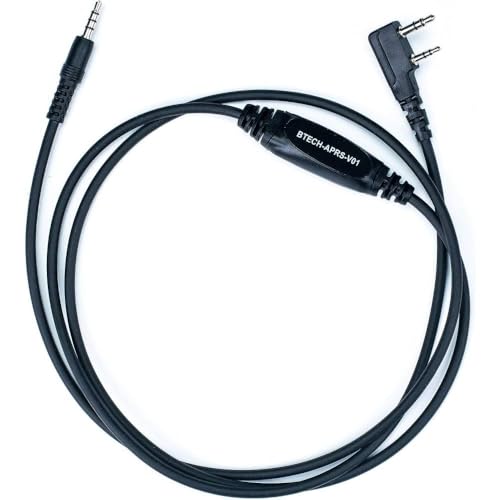
The BTECH APRS-K1 is an audio interface cable for radios that use the Kenwood K1 dual-pin accessory standard. Its built-in circuit adjusts audio for packet operation and the cable can connect compatible radios to phones, tablets, or computers through a 3.5mm audio interface. It supports APRS applications such as APRSpro and APRSdroid when used with compatible radios and devices.
Check On AmazonIf you click this link and buy, we earn a commission at no additional cost to you.
The Off-Road and Remote-Trail Use Case
A vehicle-mounted VHF/UHF station can outperform a handheld in remote driving because it can use a better-positioned external antenna, a stable electrical supply, and more transmit power. That advantage is most useful when the path exists but the handheld inside the vehicle cannot complete it. Moving the antenna outside the metal cab can matter more than adding another few watts to a poorly placed handheld.
Canyons, ridges, dense terrain, and deep valleys can still block both stations. A repeater shown on a map may be hidden behind a ridge, require an access tone the radio does not have programmed, or be inactive when the group arrives. Ham radio is valuable off-road when the operator has researched the route, tested likely repeaters, prepared simplex channels, and agreed on a communication plan with the other licensed participants.
- Known repeater path: Confirm current frequency, offset, access tone, location, and expected coverage before the trip.
- Simplex plan: Agree on legal direct frequencies and a schedule for check-ins when no repeater is reachable.
- External antenna: Use a safe vehicle antenna location that clears the cab and suits the intended band.
- Power independence: Protect the vehicle battery and understand how long the radio can operate with the engine off.
- Non-radio backup: Carry a suitable backup for the route, which may include a satellite-based device where immediate outside assistance is important.
The final item is not an admission that ham radio failed. It is a recognition that amateur radio reaches other operators, not a guaranteed dispatch center. For a casual trail group of licensed operators, the mobile station can be extremely useful. For a solo traveler whose main requirement is a dependable emergency alert to a named contact, a different service may need to remain part of the plan.

The Nagoya UT-72 is a 20.27-inch magnetic-mount antenna for amateur VHF and UHF operation around 144 and 430 MHz. It includes 13 feet of RG-58A/U coax, a PL-259 connector, and an SMA adapter for compatible handheld radios. Its magnetic base and up to 3.5 dBi gain make it a practical external-antenna option for temporary vehicle and trail setups.
Check On AmazonIf you click this link and buy, we earn a commission at no additional cost to you.
Who Benefits Most From Mobile Ham Radio
Daily commuters benefit when active local repeaters and nets make the drive more useful than listening to an empty direct channel. A commuter may hear weather reports, road observations, scheduled check-ins, or ordinary conversation from operators across a larger area. The value depends on local activity, so checking the repeaters before buying equipment is more useful than comparing maximum wattage first.
Truck drivers can use amateur repeaters across different cities and regions, but the phrase nationwide repeater access needs context. There is no single universal amateur channel that follows the driver everywhere, and repeater directories are not proof that every listed machine is current or active. The operator must change programming and operating expectations as the route changes.
Off-roaders and overlanders gain the most when several licensed vehicles need a stronger local RF path beyond handheld performance. Traveling hams may value the ability to continue joining nets, use APRS, or operate from parked locations. Emergency-communication volunteers can also use a mobile station as part of a practiced organization, but owning the radio alone does not enroll the operator in a network or make the station ready for deployment.
| Driver profile | Mobile ham radio fits when | Another choice may fit better when |
|---|---|---|
| Daily commuter | Local amateur repeaters and nets are active along the route | The driver only wants traffic information already available by phone or broadcast |
| Truck driver | The driver wants amateur communities, repeaters, and technical operating options | The main goal is immediate communication with nearby truckers on established CB channels |
| Family convoy | Every intended transmitter is individually licensed and practiced | One shared family GMRS license and simpler radios better match participation |
| Off-road group | The route has tested repeater or simplex paths and multiple licensed operators | The group needs a guaranteed connection to a named outside contact |
| Traveling operator | The operator enjoys finding local activity and adapting programming by region | The radio would remain unused except for an imagined emergency |
The common thread is participation. Mobile ham radio works best when the driver wants to operate, learn local systems, keep programming current, and practice. It is a weak purchase when the entire plan is based on a radio sitting silently under the dashboard until a crisis.
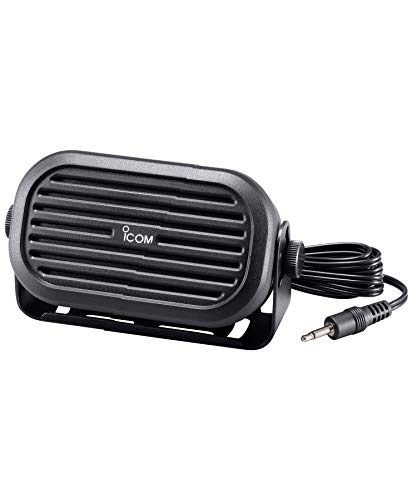
The Icom SP-35 is an external speaker designed for mobile radios. It is rated for 5 watts with a 7-watt maximum input, uses a 4-ohm impedance, and has a 6.6-foot cable. The compact 4.8-by-2.9-by-1.8-inch enclosure provides a dedicated speaker location for vehicle stations used for regular repeater and net listening.
Check On AmazonIf you click this link and buy, we earn a commission at no additional cost to you.
What a Mobile Ham Radio Installation Involves
A truck ham radio setup is a complete electrical and RF system. It includes the radio body or control head, a secure mounting location, fused power wiring, an antenna and mount suited to the vehicle, coax routing, strain relief, grounding or bonding where required, and final verification for noise and RF interaction. A radio placed in a cup holder with a loose power lead is portable equipment inside a vehicle, not a finished mobile installation.
Power should be planned around the radio’s transmit current and the vehicle manufacturer’s guidance, not around whichever accessory socket is easiest to reach. Wiring that passes through a firewall needs an appropriate protected route. Fusing, cable size, connector quality, and protection from abrasion matter because a fault can damage the vehicle or create a fire risk.
Antenna placement requires the same care. The mount must suit the body material and structure, the coax must avoid crushing and sharp edges, exterior entry points must resist water, and the finished antenna must clear doors, garages, branches, and other hazards. Modern vehicles may also have side-curtain airbags, roof wiring, sensors, sunroof mechanisms, and electronic systems hidden behind apparently empty trim.
Vehicle safety: Never place a radio, control head, microphone, cable, or bracket in an airbag deployment path. Check the vehicle manufacturer’s current radio-installation guidance and warranty terms before drilling, connecting power, or transmitting near vehicle electronics.
Installation quality affects usability. Poor routing can create alternator noise, computer interference, water leaks, intermittent coax faults, or a microphone that becomes a projectile during a sudden stop. This article stops at those decision points because the actual routing and mounting procedure depends on the specific vehicle. Readers choosing the equipment class before planning the installation can use the guide to selecting a radio for mobile use.
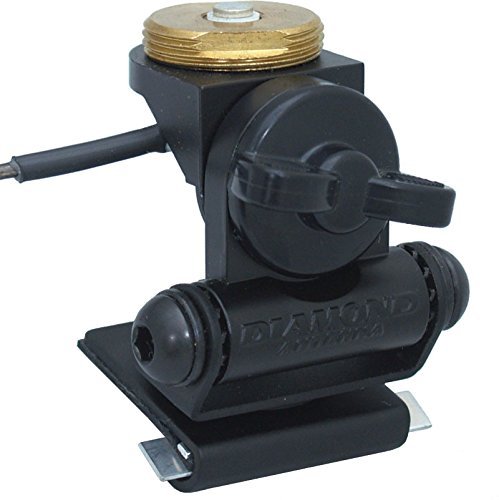
The Diamond K412SNMO is a heavy-duty adjustable mobile antenna mount for trunk and hatchback installations. It uses an NMO antenna base and is marketed for sedan, hatchback, and compact-vehicle applications. The adjustable vehicle-edge mounting format makes it directly relevant to planning an external antenna location before routing coax into the cabin.
Check On AmazonIf you click this link and buy, we earn a commission at no additional cost to you.
What the Experience Is Like From the Driver’s Seat
The safest mobile station is prepared before the vehicle moves. Repeaters, offsets, tones, scan groups, APRS settings, and microphone placement should already be configured and tested while parked. The driver should be able to listen, identify the selected channel, and make a short transmission without navigating software menus or reading a small display.
State and local distracted-driving laws differ, and an amateur-radio exemption should never be assumed. Even where two-way radio use is permitted, the driver remains responsible for safe and attentive operation. Complicated programming, logging, HF tuning, map viewing, and troubleshooting belong at a stop, not in moving traffic.
Normal repeater use is usually brief: listen first, identify, make the call, exchange the necessary information, and release the channel. A microphone mounted within easy reach is less distracting than one sliding across the passenger floor. A remote control head can improve placement, but only if it is positioned outside airbag paths and does not block controls or visibility.
The practical standard is not whether an operator can transmit while driving. It is whether the station reduces workload enough that the operator knows when to leave it alone. Road conditions, traffic, weather, and vehicle control always outrank the contact.

Magnetic Mic is a magnetic holder that replaces a conventional two-hole radio microphone hang-up clip. The kit uses a magnetic base plus a microphone adapter so the mic can be returned to its holder without lining up a metal clip. The manufacturer says it can be installed within the driver's reach and is designed to work with major radio microphone manufacturers.
Check On AmazonIf you click this link and buy, we earn a commission at no additional cost to you.
When Mobile Ham Radio Is Worth Pursuing
Mobile ham radio is worth pursuing when there is a defined person or network to reach, an amateur path that exists along the route, and an operator willing to earn the license and practice. The strongest case is not “I may need a radio someday.” It is “I want to use these repeaters, this simplex plan, APRS, these nets, or this HF operating opportunity from my vehicle.”
CB may be the better answer for nearby trucker activity. GMRS may be the better answer for a family group that needs one license without examinations for each person. A satellite messenger may be the better answer when a solo traveler needs a direct alert path to a named contact. Mobile ham radio wins when its wider range of bands, modes, repeaters, and operator communities matches the actual job.
- Identify whom the station must reach.
- Map the likely repeater, simplex, APRS, or HF path.
- Confirm every intended transmitter will hold the required license.
- Check whether CB or GMRS already solves the same job more simply.
- Plan the antenna, power, controls, and cable route as one vehicle system.
- Test the station while parked under the conditions in which it will be used.
If those six answers are clear, the installation has a reason to exist. If they are not, the next step is not buying a radio. It is defining the communication goal and confirming the path.

The Surecom SW-102S is a digital VHF/UHF power and SWR meter covering 125 to 525 MHz. It measures forward and reflected power, SWR, and frequency, with a measurable power range of 0.5 to 120 watts. The 50-ohm SO-239 interface is intended for analog-radio testing, making the meter useful for verifying a mobile VHF/UHF antenna system while parked.
Check On AmazonIf you click this link and buy, we earn a commission at no additional cost to you.
Final Thoughts: Build the Path Before the Dashboard
A mobile amateur station can add far more than short-range road chatter. It can open elevated repeaters, APRS reporting, local nets, VHF/UHF simplex, and, with the right license and installation, HF operation from parked or moving locations. None of those benefits is automatic, and none can be judged from radio wattage alone.
Choose the service by the people, path, and operating style involved. Then treat the radio, power wiring, antenna, coax, programming, vehicle structure, and driving habits as one system. The result should be a station you can use safely and repeatedly, not a box under the dashboard waiting for an emergency it has never been tested to handle.

The Nagoya NMO-72 is a 19.25-inch dual-band VHF/UHF antenna for amateur operation around 145 and 440 MHz. It uses a standard NMO connection and is compatible with NMO antenna mounts for mobile or stationary setups. Its vehicle-oriented design provides a dedicated exterior antenna element for the integrated radio, mount, and coax system described in this section.
Check On AmazonIf you click this link and buy, we earn a commission at no additional cost to you.
FAQs
🚗 Do I need a ham license to use a radio in my car?
You need an appropriate FCC amateur license before transmitting on amateur frequencies. You may listen without an amateur license, but do not transmit until the license grant and call sign are active.
📡 How far can a mobile ham radio reach?
There is no fixed mileage. Direct VHF/UHF range depends heavily on terrain and antenna position, while a well-sited repeater may cover tens of miles or more. HF range depends on the band, propagation, antenna, noise, and license privileges.
🚚 Is ham radio better than CB for truck drivers?
Ham radio offers repeaters, more bands, and more operating options, but CB has a larger established audience for nearby trucker communication. The better service depends on whom the driver actually wants to reach.
👨👩👧 Is ham radio better than GMRS for a family convoy?
Not automatically. Every ham transmitter needs an individually licensed operator, while one GMRS license can cover eligible immediate family members. GMRS transmitting must use Part 95E-certified equipment.
🗺️ Is an APRS vehicle location private?
No. APRS packets can be heard by other stations, relayed by digipeaters, and forwarded through internet gateways to public services. Choose beacon content and timing with that visibility in mind.
🏔️ Will ham radio work when there is no cell service?
It can work independently of cellular service when a usable direct or repeater radio path exists. Mountains and canyons can still block signals, and amateur radio does not guarantee that another operator or emergency agency is listening.
🔧 Can I power a mobile radio from the accessory socket?
That depends on the radio’s current requirement and the socket’s rating, but higher-power mobile stations commonly need a properly fused power path designed for the load. Follow the radio and vehicle manufacturer guidance rather than assuming the socket is adequate.
⚠️ Can I use ham radio while driving?
Check current state and local law because rules and exemptions vary. Even where use is legal, program and test the station while parked, keep transmissions brief, and stop using it whenever it distracts from driving.