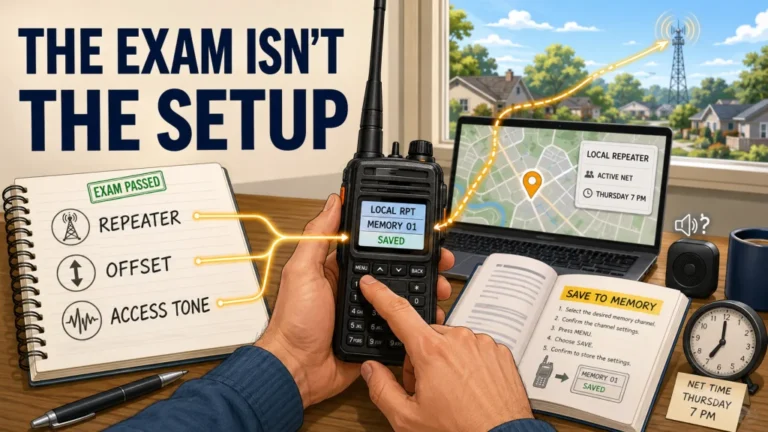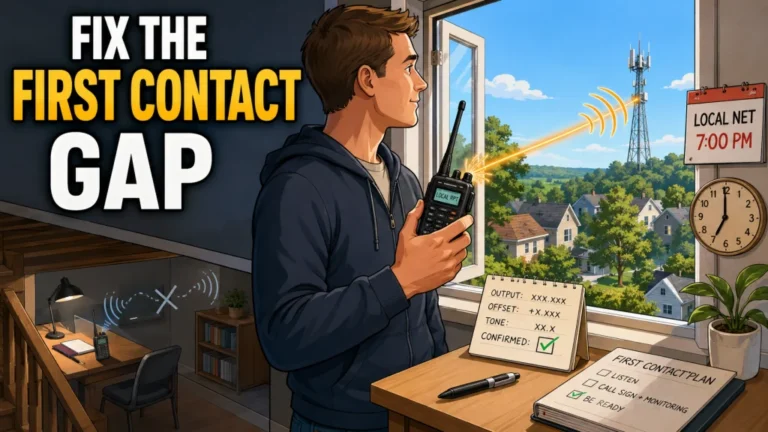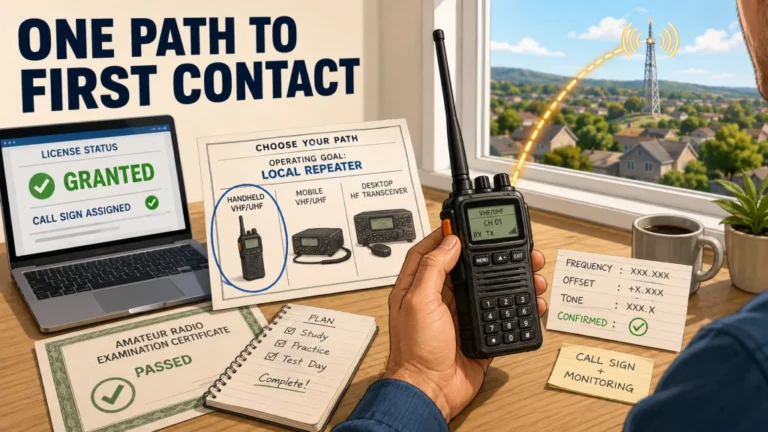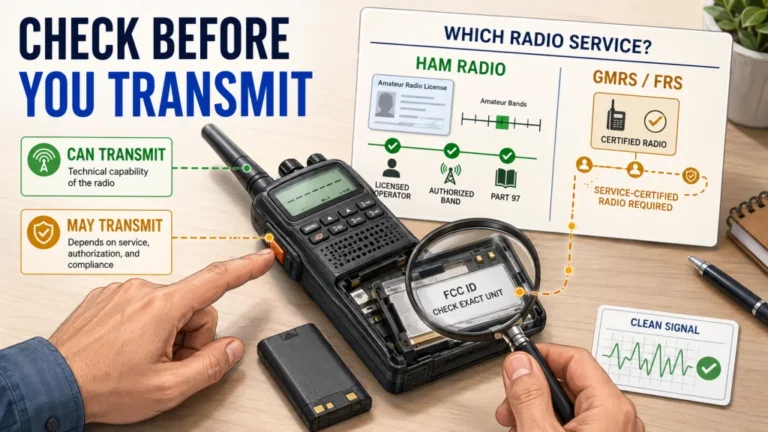
The question I wish someone had asked me at the start was not which radio I planned to buy. It was what I actually wanted to do with ham radio. Local repeater conversations, long-distance HF contacts, emergency communication, balloon tracking, and an ISS contact may all belong to the same hobby, but they lead a beginner in very different directions. A new ham does not need a permanent answer, only one honest first goal that keeps the equipment from deciding what the hobby will become.
I Researched Radios Before I Knew What I Wanted From One
When I started in ham radio, the first question anyone asked me was what radio I was going to buy. I spent two weeks researching rigs before I had ever turned one on. I had no idea what I wanted to do with it. I just knew I wanted one.
That order felt normal because a radio gave me something concrete to compare. I could study features, prices, and limitations without answering the less comfortable question underneath all of it: what experience was I hoping the radio would create? Until I knew that, almost every recommendation sounded relevant and almost every missing feature felt like a future regret.
This is not a buying guide, a licensing walkthrough, or a setup tutorial. It is a reflection on the question that should come before all three. The goal is not to choose one corner of amateur radio forever. It is to avoid spending the beginning of the hobby preparing for activities you may not even want.
The Question Nobody Asked Was What I Actually Wanted to Do
“Communication” would not have been a useful answer. Neither would “emergency preparedness.” Those phrases sound specific until someone asks who I wanted to reach, from where, over what distance, and under what conditions.
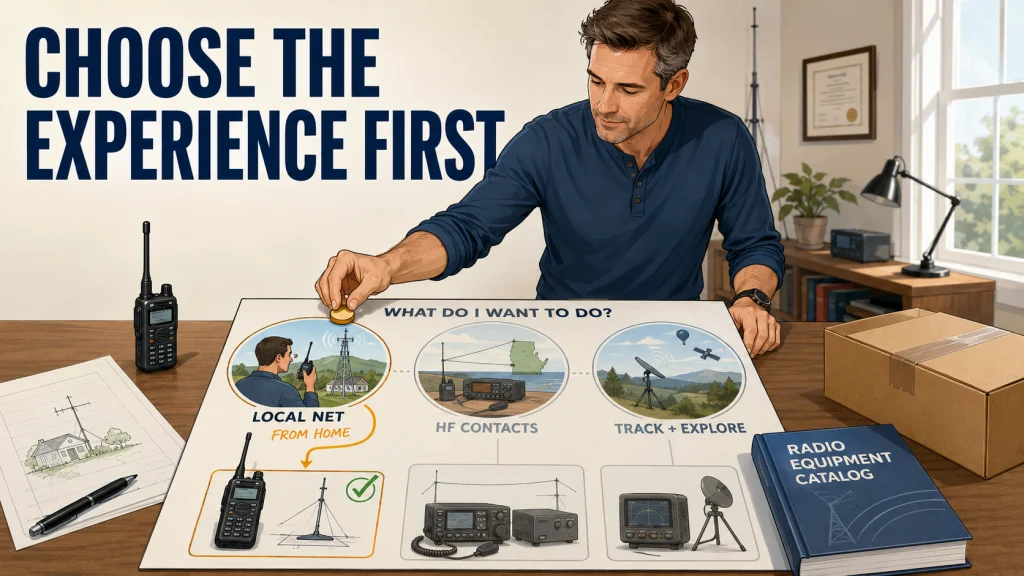
I might have wanted to talk with people around town through a local repeater. I might have wanted to reach another state on HF, train with an emergency communications group in my county, receive data from weather balloons, or explore an amateur radio contact with the International Space Station. Each one is a real use of amateur radio, but none asks for the same license path, station, antenna, or first months of learning.
That difference is what the usual question about radios hides. Once a beginner starts with equipment, the most visible and affordable option can quietly become the definition of the hobby. If it does not produce the experience the person imagined, disappointment gets blamed on amateur radio rather than on the mismatch between the goal and the starting point.
The answer does not need to be polished. “I want to join a local weekly net from home” is enough. So is “I want to find out whether HF conversations interest me.” A temporary goal is still more useful than a shopping decision with no destination attached to it.
Why the Wrong First Question Creates the Wrong Expectations
The mismatch I have seen at exam sessions often becomes clear only after someone explains what they hoped the radio would do. A new operator may already own a VHF/UHF handheld because it was affordable and widely presented as the normal first radio, then mention that the real goal is reliable long-distance conversation.
There is nothing wrong with the handheld. It can be a sensible tool for nearby simplex contacts or reachable repeaters. It simply does not create the same operating experience as HF. Terrain, buildings, antenna position, and local repeater coverage shape VHF and UHF use, while HF brings a different set of privileges, antenna decisions, propagation conditions, and learning demands.
License class is part of that difference, but it does not need to take over the reflection. Technician licensees have broad privileges above 30 MHz and some limited HF privileges. A General license opens most HF privileges and is usually the more relevant path for someone who wants broad HF voice or data operation across several bands.
The lesson I wish I had understood is simpler than the rule details. The most common beginner option is not automatically the best introduction to every goal. A low-cost start only saves money when it leads toward the experience the person actually wants.
One Honest Answer Changes Every Decision That Follows
Once a new ham can say, “I want to do this first,” the rest of the hobby becomes less noisy. License privileges can be judged against that activity rather than treated as an abstract ladder. A radio can be judged by the band and operating style it must support. An antenna can be considered in the context of the place where it will actually be used.
The same answer also changes which people are helpful. A club member who enjoys local repeater nets may be exactly the right mentor for one beginner and the wrong person to guide another beginner toward HF. The advice is not bad; it is simply rooted in a different version of the hobby.
When the goal is still unclear, the beginner overview of ham radio is the better next step because it shows the main paths before a purchase narrows the experience. After the goal becomes clearer, the guide to choosing a ham radio can be read as a comparison of tools for a known purpose rather than a contest to find the radio with the most features.
The answer will not remove every trade-off. It will make the trade-offs relevant. Portability matters when the station needs to travel. Antenna space matters when home operation is the goal. Local activity matters when the beginner wants nearby conversation. Those factors should not carry equal weight for everyone.
The First-Year Regret I Would Try to Avoid
First-year regret is often described as buying the wrong radio. I think the deeper regret is spending months preparing for activities that were never tried. It is easy to research accessories, future bands, upgrades, and unlikely edge cases while the station remains entirely theoretical.
Real use has a way of correcting imagined priorities. A limitation discovered while operating teaches something. A limitation found in a specification table may never matter. That is why observing a club station, borrowing equipment when possible, or watching someone operate can be more valuable than buying an entire future setup in advance.
A local club can shorten the process, but the question still matters. Asking “What should I buy?” often produces a list of someone else’s preferences. Explaining the activity you want to try gives that person a chance to tell you what the experience actually requires and which parts can wait.
I would rather discover that my first goal was imperfect than spend a year protecting myself from every possible purchasing mistake. An imperfect goal can be revised after real experience. A station assembled for no clear purpose can keep a beginner busy without ever making the hobby feel meaningful.
What I Would Tell Myself at the Start
I would keep the advice short because the original problem was too much information without enough direction:
- Buy less equipment than you think you need.
- Get on the air sooner than you think you are ready.
- Ask more questions at a local club than feels comfortable.
- Decide what you actually want to do before treating a purchase as progress.
Getting on the air sooner does not mean rushing into a station you do not understand. It means having one small experience that can challenge your assumptions. Listening to a local net, observing an HF station, visiting a club operating event, or arranging a first contact can reveal more about your interests than another week spent comparing features.
Field Note: At exam sessions, the buying question can arrive before the candidate has named a band, a local repeater, an operating location, or a person they hope to contact. That missing context is often more important than the equipment question itself.
I would also give myself permission to change direction. The first goal is not a promise about what kind of operator I must become. It is only a way to enter the hobby through a door I chose rather than one chosen for me by price, popularity, or a feature list.
Final Thoughts: Choose the Experience Before the Equipment
The best ham radio purchase serves something the operator genuinely wants to do. The difficult part is naming that activity before enough experience exists to make the answer obvious. That uncertainty is normal, and it is still better than allowing the first affordable radio to define the entire hobby.
I would start with one sentence about what I wanted from the first six months, then let that answer guide what to learn, whom to ask, and what not to buy yet. A radio can open the door, but it should not choose the destination.
FAQs
📻 What should I know before buying my first ham radio?
Know which activity you want to try first and where you expect to operate. That context matters more than finding one radio that appears capable of doing everything.
🧭 What if I do not know which part of ham radio interests me?
Observe several parts of the hobby before making a large purchase. A club visit, local net, operating event, or demonstration can help you choose one first experience without committing to it forever.
🎙️ Is a handheld always the best place for a beginner to start?
No. It can be a practical start for reachable repeaters and nearby VHF or UHF communication, but it may not match a beginner whose main interest is broader HF operation.
🔄 What if my interests change after I get licensed?
That is normal. The first goal only needs to guide the first stage of learning and prevent unrelated equipment from taking over the decision.
🤝 Can a local ham radio club help me choose a direction?
Yes. Ask members about the specific activity you want to observe rather than requesting one universal equipment recommendation.
Sources and References
- ARRL, Buying Your First Radio: guidance on identifying intended operating activities and needed functions before selecting a first station.
- ARRL, Getting Your Technician License: overview of Technician privileges and common VHF and UHF activities.
- ARRL, Upgrading to a General License: context for broader HF privileges available with a General license.
- ARRL, Amateur Radio on the International Space Station: confirmation that ISS communication is a real but specialized amateur radio activity.