A U.S. amateur radio license normally lasts 10 years, and you may file for renewal during the final 90 days before it expires. A straightforward online filing often takes about 10 minutes once your FCC account access is working, but the job is not complete until the application is submitted, the $35 fee is paid, and the renewed grant appears in the FCC record. If the license expires first, the two-year grace period lets you file late, but it does not let you transmit. I recommend treating renewal as a three-part check: confirm the date, file inside the correct window, and verify the new grant before you assume everything is finished.

The Renewal Window Determines What You Can Do Next
The ham radio license renewal process becomes much easier when you identify which side of the expiration date you are on. More than 90 days before expiration, you can prepare, but the renewal filing is not yet available. During the final 90 days, you can submit the application and keep your operating authority continuous. After expiration, you may still renew for two years, but you must stop transmitting until the FCC grants the renewal.
The grace-period misunderstanding is the one I warn operators about most. The words “two-year grace period” sound like extra licensed time, but they describe only an extra filing period. A Technician using a handheld on a local repeater, a General operating HF, and an Extra using any amateur privilege all face the same rule: an expired grant does not authorize transmission.
| Your license status | What you can do | Can you transmit? |
|---|---|---|
| More than 90 days before expiration | Confirm account access, check contact information, and set a reminder for the opening date. | Yes, while the license remains active. |
| Within 90 days and not expired | File the renewal, pay the required fee, and monitor the application. | Yes. A timely application received on or before expiration continues operating authority while it is pending. |
| Expired for less than two years | File during the grace period and wait for the renewed grant. | No, not until the FCC renews the license. |
| Expired for more than two years | The old grant cannot be renewed. Re-enter through the examination process. | No, not until a new license is granted. |
This status check prevents the most expensive mistake in the process, which is assuming that an application option and operating authority are the same thing. They are not. The filing system may still accept a renewal during the grace period, while the radio must remain on receive until the grant is active again.

MaxGear’s 16 x 12-inch dry erase board is double-sided, with a monthly calendar on one side and a blank writing surface on the other. The magnetic board comes with three markers, four magnets, one magnetic eraser, and four pieces of double-sided tape. Its lightweight, portable format is designed for planning, memos, and to-do lists at home or in an office.
Check On AmazonIf you click this link and buy, we earn a commission at no additional cost to you.
Find the Controlling Expiration Date Before You File
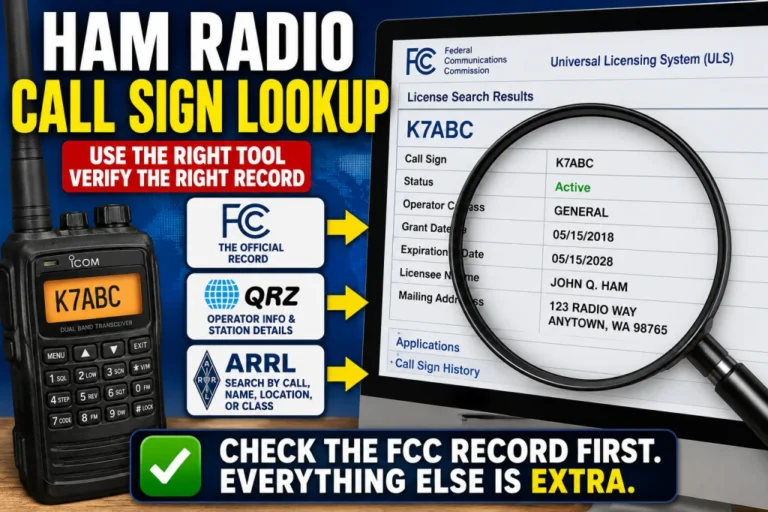
Start with the FCC record, not an old paper copy, a club roster, or the date you remember passing an exam. Sign in to the FCC ULS License Manager with the FRN and password connected to your license. The license list shows the call sign, status, grant date, and expiration date that control the renewal. If the listed expiration date is 90 days or less away, the renewal option should become available.
The QRZ license database can be a convenient second check because its license information is drawn from FCC data, but the FCC record remains the authority. A delayed database update, an old screenshot, or a forgotten calendar entry should never overrule what appears in ULS. For a separate walkthrough of public-record checks, use the guide to check your FCC call sign record.
While you are signed in, inspect the mailing address and email address attached to the license. Renewal is a bad time to discover that your FCC messages go to an account you stopped using years ago. If contact information is wrong, choose the filing path that allows renewal with the needed modification rather than submitting inaccurate information just to move faster.

Peter Pauper Press’s password logbook uses tabbed A-to-Z pages with fields for websites, usernames, passwords, and extra notes. The 144-page book also has space in the back for items such as home network details and software license numbers. An attached elastic band keeps the book closed, while the removable label gives the cover a more discreet appearance.
Check On AmazonIf you click this link and buy, we earn a commission at no additional cost to you.
How to Renew an Amateur Radio License Online
The current FCC ham radio license renewal path uses ULS for the application and CORES for account management and payment. Those systems are connected to the same FRN, but they serve different jobs, which is why operators sometimes finish the form and then wonder why the fee is still waiting elsewhere. I do not consider the renewal complete when the application merely says submitted. The practical finish line is a paid application followed by an active renewed grant in ULS.
Exact button names and screen layouts can change, so follow the function of each step rather than relying on an old screenshot. Have the FRN, account credentials, current contact information, valid email access, and a payment method ready before you start. Then work through this sequence without skipping the final verification:
- Sign in to ULS and select the amateur license that is eligible for renewal.
- Choose renewal only if the record is correct, or renewal with modification if contact information must change.
- Review the licensee information and answer the required application questions accurately.
- Certify and submit the application, then save the confirmation or file number.
- Move to the FCC CORES payment system and pay the required application fee.
- Return to ULS later and confirm that the application is granted and the expiration date has advanced by another license term.
A clean filing can take about 10 minutes, but account recovery can take longer than the renewal itself. The common trouble points are an FRN that is not associated with the current FCC Username, an old password, an inaccessible email account, or a payment item that does not appear where expected. Resolve those account issues before the expiration date whenever possible, because a password problem is inconvenient during the 90-day window and legally consequential after the license expires.
If a fee or license does not appear under the expected account, do not create a second FRN as a shortcut. First confirm that the existing FRN on the license is associated with the FCC Username being used and that the application was actually submitted. If the record still does not line up, use FCC licensing support rather than guessing through duplicate accounts.
The $35 Renewal Fee Is Separate From Filing the Form
The FCC currently charges a $35 application fee to renew a ham radio license. Amateur renewals were free before the fee system took effect in April 2022, so operators returning after a long gap may be surprised by the payment step. The fee is paid to the FCC through CORES after the renewal application is submitted in ULS. Completing only the application or only the payment does not complete the full transaction.
The current $35 application fee also applies to new amateur licenses, rule-waiver requests, and vanity call sign requests. Ordinary operator-class upgrades and requests for a sequentially issued call sign are exempt from that FCC application fee. Any charge collected by a VE team or VEC for an examination session is separate and may vary, although an exam is not part of an ordinary on-time renewal.
Warning: A letter, postcard, or email offering to renew your license for an added service charge is not required to complete the FCC process. Third parties can find call signs and mailing information in public license records, which can make a solicitation look official. You may file directly through the FCC systems and pay only the required FCC fee unless you knowingly choose outside assistance.
The useful test is simple: identify who receives the money and what service is being sold. A payment made inside the FCC account is the government application fee. A separate company charging more is selling convenience, not a different or stronger license renewal.
The Two-Year Grace Period Preserves Filing, Not Operating
If the expiration date passes before the FCC receives a timely renewal, the license enters a two-year filing grace period. You can still submit the renewal during that period and recover the license grant, including the call sign through the normal renewal path. What you cannot do is transmit while the grant is expired. The operating privileges return only when the FCC renews the license.
That distinction matters because the radio itself gives no warning. A programmed handheld will still key a repeater, a mobile radio will still produce its rated output, and an HF transceiver will still load the antenna. The equipment working normally does not make the transmission legal. During the grace period, use the station for listening, programming, maintenance, and preparation, but leave amateur transmitting disabled until the renewed status appears.
Field Note: The dangerous assumption is, “I have two years, so I am still covered.” You have two years to file, not two years to operate. I recommend removing the microphone or using a transmit lock if other household members might use the station while the grant is expired.
A timely renewal is different. When the FCC receives the application on or before the expiration date, operating authority continues while that application is pending until the FCC makes its final decision. That protection is one reason not to wait until the final evening, especially when account access, payment, or a wrong email address can turn a routine filing into a support problem.
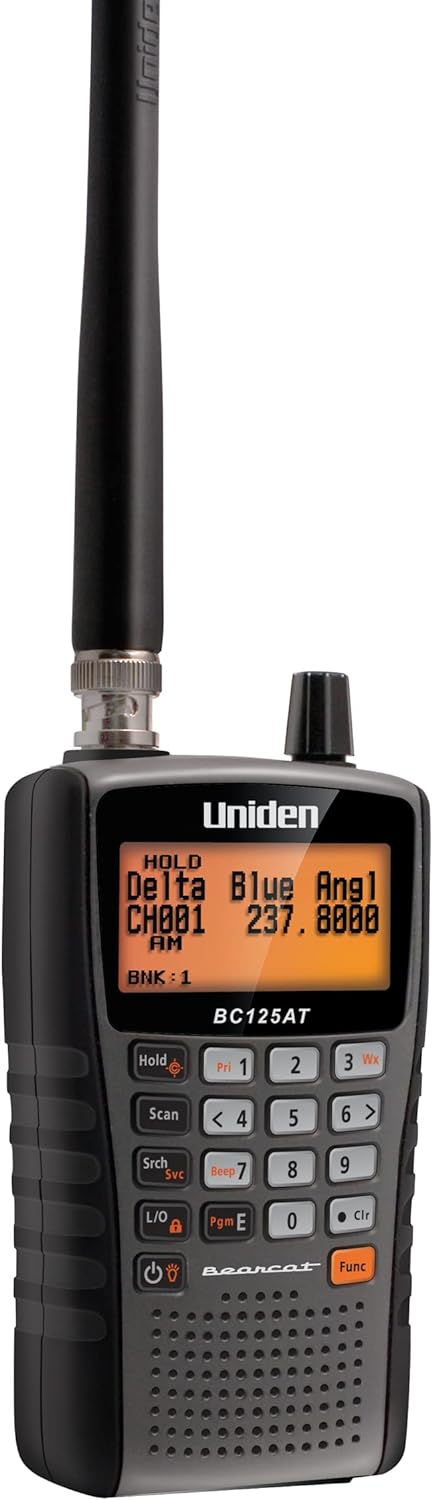
Uniden’s BC125AT is a compact handheld scanner with 500 alpha-tagged channels. The Amazon listing identifies Close Call technology, with service coverage including aviation, marine, railroad, racing, and non-digital public-safety radio. The unit also supports PC programming and alpha tags for identifying stored channels while scanning.
Check On AmazonIf you click this link and buy, we earn a commission at no additional cost to you.
What Happens After the Grace Period Ends
Once more than two years have passed after expiration, the old amateur license is no longer renewable. You cannot restore it by paying a late fee or submitting the ordinary renewal form. The former licensee must qualify for a new license through a VE examination session, and the FCC will issue a new grant rather than revive the old one. The old call sign is not protected through the expired renewal process at that point.
A former Amateur Extra does not normally have to repeat every written element. After passing the current Technician examination, the former Extra can receive credit for the General and Extra examination elements when acceptable proof of the expired license is presented. A former General or Advanced licensee can receive General element credit under the same general framework. The proof requirement matters, so do not arrive at an exam session expecting the VE team to reconstruct an old record from memory.
This article is about renewal, not license upgrades or the full testing path. For the broader sequence from initial examination through license classes and future changes, use the complete ham radio licensing process. The key renewal lesson is narrower: once the two-year deadline passes, the problem is no longer an overdue form.

DocSafe’s hard-shell document organizer combines a 13-pocket accordion file folder with a lockable portable case. The listing describes fire-resistant materials that passed a UL94 V-0/5VA flame-retardant test and a water-resistant construction. The listing also says the case may fit both letter- and legal-size files.
Check On AmazonIf you click this link and buy, we earn a commission at no additional cost to you.
Build a Reminder System That Does Not Depend on a Notice
Do not assume the FCC will deliver a reminder that you will see, open, and act on. Other organizations may offer expiration notices under their own terms, but email filters, address changes, expired memberships, and old accounts can break any one reminder channel. I recommend using your own calendar as the primary control and treating outside notices as backup.
Set one reminder about 120 days before expiration so you can recover passwords and correct contact information before the filing window opens. Set a second reminder for the first day of the 90-day window, then a third two weeks later if the renewed grant has not appeared. An annual license-record check is also sensible, especially after moving or changing email providers.
For ongoing record maintenance, the guide to managing your ham radio license explains how renewal fits with contact updates and other FCC account tasks. The practical goal is not to memorize every FCC screen. It is to keep the correct FRN, working account access, current contact details, and one reliable deadline system connected to the same license.

U Brands’ 30 x 20-inch dry erase calendar has a monthly grid plus dedicated notes and to-do sections. Its painted steel writing surface is magnetic, and the board can hang in either orientation. It includes magnets and mounting hardware, and the surface is designed to resist staining and ghosting.
Check On AmazonIf you click this link and buy, we earn a commission at no additional cost to you.
Final Thoughts: Renew Before the License Becomes the Problem
A renewal filed during the final 90 days is routine. The same task becomes restrictive after expiration and turns into a new-license problem after the two-year grace period. That is why I would rather see an operator spend a few minutes confirming account access early than discover an expired grant immediately before a weekly net or a planned HF contact.
Use the FCC expiration date, not memory. Submit the correct renewal, complete the $35 payment, and verify the renewed grant in ULS. If the license is already expired, stop transmitting first and solve the filing status second.

Uniden’s SR30C is a compact handheld scanner with 500 channels. Its preset service banks cover more than 32,000 frequencies, including ham radio, NOAA weather, marine, racing, civil aircraft, railroad, CB, and non-digital public-safety bands. The listing also identifies Close Call RF Capture and Turbo Search among its scanning features.
Check On AmazonIf you click this link and buy, we earn a commission at no additional cost to you.
FAQs
📅 How early can I renew my ham radio license?
You may file during the 90 days before the expiration date. Filing earlier than that is not accepted as a normal renewal, so use the extra time to verify account access and contact information.
📻 Can I transmit during the two-year grace period?
No. The grace period allows a late renewal application, but an expired license grants no amateur operating privileges until the FCC renews it.
💳 How much does an FCC amateur renewal cost?
The current FCC application fee for renewal is $35. A separate third-party processing charge is optional, not part of the required direct FCC filing.
⏱️ How long does an online renewal take?
The form itself often takes about 10 minutes when the FRN, password, email, and payment access are ready. Account recovery or an FCC system issue can take longer, so do not wait until the expiration date.
🔁 Will renewal change my call sign?
A normal renewal within the allowed period generally keeps the call sign on the renewed grant. After the two-year grace period, the old license cannot be renewed and a new grant may receive a different call sign.
📝 Do I need to retake an exam to renew?
No exam is required for an ordinary renewal filed before the end of the two-year grace period. After that deadline, a former licensee must pass the current Technician examination, with higher-element credit available for qualifying former General, Advanced, or Extra licensees who provide proof.
🔔 Will the FCC remind me before expiration?
Do not depend on receiving or noticing an FCC reminder. Put the expiration date in your own calendar and add alerts before the 90-day filing window opens.